Best rain jacket for spring fishing trips
Oh, the joys of spring fishing in Alberta! One minute the sun's beaming down, the next a sudden squall rolls in, drenching you to the bone and turning what should be a peaceful day on the water into a miserable, shivering ordeal. No one wants to pack up early because they're soaked through, and let's be honest, staying dry is about more than just comfort – it's about staying safe and focused. This comprehensive guide will walk you through everything you need to know to pick the best rain jacket for those notoriously unpredictable Alberta spring fishing trips, ensuring you stay dry, warm, and ready to reel in that next big catch, no matter what Mother Nature throws your way.
Why a Dependable Rain Jacket is Your Most Important Piece of Spring Fishing Gear
Forget that old notion that a rain jacket is just for heavy downpours. In Alberta, especially during the spring, weather can shift faster than a trophy pike chasing a spinnerbait. You might start your day with blue skies over the Bow River, only to find yourself in a sleet shower an hour later. Having a truly dependable rain jacket isn't just a luxury; it's an absolute necessity for any serious angler out here.
The Unpredictability of Alberta Spring Weather
Anyone who's spent a spring day on an Alberta lake or river knows exactly what I'm talking about. The season of rebirth often brings with it a chaotic mix of conditions. Warm sun can quickly give way to biting winds, unexpected snow flurries, or relentless rain. You're not just dealing with rain; you're dealing with sleet, hail, and moisture-laden wind that can cut right through you. A flimsy, "water-resistant" jacket just won't cut it. You need something that actively repels water and keeps the wind out, allowing you to focus on your Spring Trout Fishing Techniques for Alberta Streams instead of how quickly you're getting soaked.
Imagine you're out on Lesser Slave Lake, targeting walleye. The morning starts calm, but by midday, dark clouds gather, and suddenly you're in a driving rain. If your jacket fails, that's not just uncomfortable, it can be downright dangerous. Hypothermia isn't just a winter concern; prolonged exposure to wet and cold conditions, even in "mild" spring temperatures, can lead to serious health risks. A good rain jacket provides that crucial layer of protection, acting as your personal shelter against the elements.
Comfort, Focus, and Extending Your Time on the Water
Let's be real, fishing is supposed to be enjoyable. It's hard to enjoy the tranquility of the Red Deer River or the thrill of a fight if you're constantly shivering or feeling the cold seep into your bones. A truly waterproof and breathable rain jacket keeps you dry from the outside and the inside, preventing that clammy, sticky feeling that can ruin a day. This means you can stay out longer, explore more spots, and maintain your concentration on the fish.
Think about it: every minute you spend feeling uncomfortable is a minute you're not fully present in the moment. When you're warm and dry, you're more patient, more observant, and ultimately, more successful. It allows you to maximize your precious time on the water, whether you're trying How to Catch Northern Pike in Alberta or perfecting your cast. Don't let a bad jacket cut your adventure short. Investing in quality rain gear is investing in your fishing experience.
Essential Features to Prioritize in a Fishing Rain Jacket
When you're sifting through all the options for rain jackets, it can feel overwhelming. There are so many technical terms and different designs. But for spring fishing in Alberta, there are a few core features that truly make a difference between a good jacket and one that will leave you wanting. Focusing on these will guide you to a piece of gear that performs when it matters most.
Waterproofing and Breathability: The Dynamic Duo
This is the holy grail of any good fishing rain jacket. You need a jacket that is genuinely waterproof, not just water-resistant. This means it has a membrane or coating that prevents water molecules from penetrating the fabric. Look for terms like "Gore-Tex," "DryVent," "Pertex Shield," or other proprietary waterproof/breathable technologies. A jacket might have taped seams, waterproof zippers, and DWR (Durable Water Repellent) finish – these are all indicators of serious water protection.
But here's the kicker: being waterproof isn't enough. You're going to be casting, reeling, perhaps even wading or hiking to a new spot. You'll work up a sweat. If that sweat can't escape, it condenses inside your jacket, making you feel wet and cold even when the rain isn't getting in. That's where breathability comes in. A breathable membrane allows moisture vapor (sweat) to escape while keeping liquid water out. Without it, you'll feel like you're wearing a plastic bag. Look for jackets with good ventilation, often indicated by pit zips or mesh-lined pockets, which allow for airflow when you're exerting yourself. Retailers like Bass Pro Shops often have knowledgeable staff who can explain the differences between various waterproof membranes.
Durability and Freedom of Movement
Fishing gear takes a beating, and a rain jacket is no exception. It'll rub against boat gunwales, snag on branches as you bushwhack to a secret spot, and endure constant flexing and stretching. You need a jacket made from robust materials that can withstand the rigors of the outdoors without tearing or delaminating after just a few trips. Look for fabrics that feel substantial but aren't overly stiff. Reinforced shoulders and elbows are a bonus, especially if you carry a pack or frequently cast aggressively.
Beyond just toughness, the jacket needs to allow you to move freely. You should be able to cast without feeling restricted across your back or shoulders. Try on jackets and mimic casting motions, reaching, and bending. Pay attention to how the sleeves are cut – articulated elbows or raglan sleeves can significantly improve mobility. A good fit means it's not too baggy to snag, but also not so tight that it limits your range of motion.
Functional Design: Hood, Pockets, and Cuffs
The devil is in the details, and for a fishing rain jacket, those details matter.
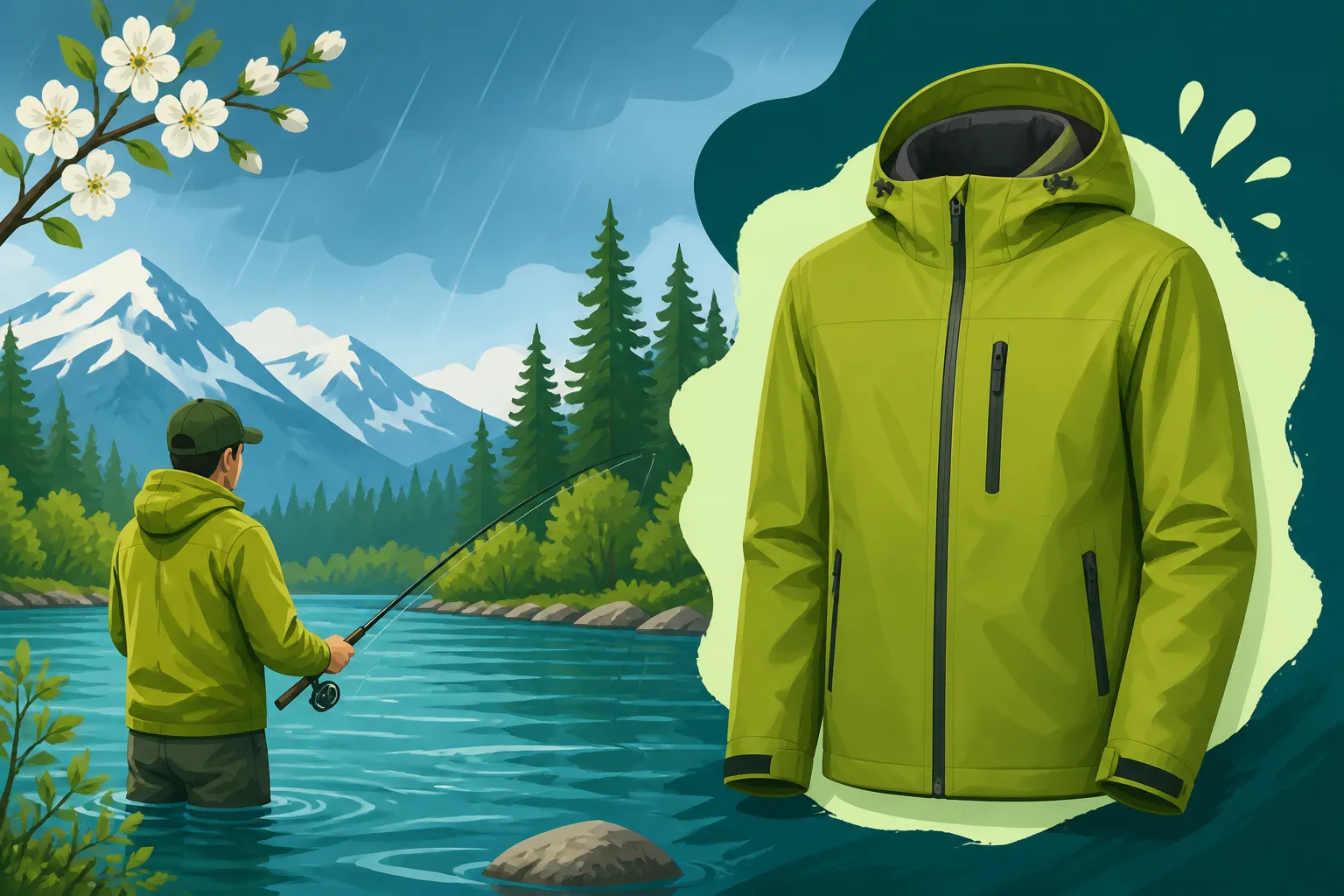
- Hood: This is crucial. It needs to be adjustable, ideally with drawstrings around the face and a toggle at the back, so it stays put in windy conditions and doesn't impede your peripheral vision. It should be large enough to go over a hat or even a light toque, but not so bulky that it's cumbersome. A brim on the hood can help keep rain off your face and sunglasses.
- Pockets: You need secure, waterproof pockets for essentials like your phone, fishing license (especially if you're carrying a digital version, though printing is always a good backup!), and small tackle. Chest pockets are often best for easy access while wearing a PFD or waders. Zippered pockets with storm flaps are ideal to keep water out.
- Cuffs: Adjustable cuffs, usually with Velcro closures, are key. They allow you to cinch them down tight to prevent water from running up your sleeve when casting or reaching into the water, and also to keep cold drafts out. Some higher-end jackets feature an internal watertight cuff system, which is fantastic for keeping your arms dry.
- Main Zipper: A robust, waterproof main zipper (often YKK AquaGuard or similar) that zips high enough to protect your chin and neck is vital. A storm flap over the zipper adds an extra layer of protection.
Here's a quick comparison of common rain jacket materials:
| Feature | Hardshell (e.g., Gore-Tex, DryVent) | Softshell (Water-Resistant) | PVC/Rubberized (e.g., Grundéns) |
|---|---|---|---|
| Waterproofness | Excellent (fully waterproof, taped seams) | Good (water-resistant, repels light rain, not fully waterproof) | Excellent (100% waterproof) |
| Breathability | High (allows sweat to escape) | Moderate to High (better than hardshell in some cases for active use) | None (traps all moisture inside) |
| Durability | Good to Excellent (depending on denier/face fabric) | Good (often stretchy, abrasion-resistant) | Excellent (extremely durable, puncture-resistant) |
| Flexibility | Moderate (can feel a bit stiff, especially cheaper models) | High (very flexible, comfortable) | Low (stiff, can be restrictive) |
| Weight | Light to Moderate | Moderate | Heavy |
| Noise | Can be noisy/crinkly | Quiet | Can be noisy/squeaky |
| Best For | Heavy rain, all-day exposure, active fishing, layering | Light showers, windy days, high activity where breathability is key | Extreme downpours, commercial fishing, stationary exposure |
For spring fishing in Alberta, a good quality hardshell jacket is generally the superior choice due to its balance of waterproofing and breathability. While softshells are great for active pursuits in milder conditions, they usually won't stand up to a persistent Alberta downpour. PVC or rubberized gear is incredibly waterproof but lacks breathability, making it uncomfortable for anything but very cold or stationary fishing.
Sizing, Fit, and Layering for Optimal Performance
Getting the right size and fit for your rain jacket is paramount, especially when fishing in Alberta's changeable spring conditions. It's not just about looking good; it's about maximizing comfort, mobility, and the jacket's performance when the weather turns sour. Overlooking these details can lead to a jacket that's either too bulky or too constricting, undermining its protective qualities.
The Art of Layering Underneath
Alberta's spring weather often swings wildly from cool mornings to warmer afternoons, only to dip again with a passing cloud or a shift in the wind. This is why layering is so critical, and your rain jacket needs to accommodate it. You'll likely wear a base layer (to wick moisture), an insulating mid-layer (like a fleece or puffy jacket for warmth), and then your rain jacket as the outer shell.
When trying on a rain jacket, make sure you do so with the kind of layers you'd realistically wear underneath. If you try it on over just a T-shirt, it will feel too big once you add a fleece. The jacket should allow for comfortable movement, including full arm extension for casting, without feeling tight or pulling across the back, shoulders, or armpits. However, you don't want it to be excessively baggy, as too much excess fabric can catch wind, hinder movement, or even snag on gear. Consider the different types of fishing you do – whether you're fly fishing the Crowsnest River or Trolling Techniques for Alberta Lake Trout on a larger body of water, your range of motion is key. Online stores like Amazon have a huge selection, but it's always best to try on a few different brands and sizes if you can, to get a feel for how they accommodate your typical layering system.
Adjustments and Personalization
A well-designed rain jacket will offer various adjustment points that allow you to customize the fit for maximum protection and comfort.
- Hood Adjustment: As mentioned before, a good hood will have drawstrings and toggles. This isn't just for aesthetics; it allows you to cinch the hood down in high winds, ensuring it stays on your head and continues to shield your face from rain and spray without obstructing your vision. Nothing's more frustrating than a hood that constantly blows off when you're trying to tie on a new lure in a sudden squall.
- Cuff Adjustment: Adjustable cuffs with Velcro or elastic closures are vital. Being able to tighten these around your wrists prevents water from running down your arm when you lift it to cast or when retrieving a fish. It also keeps cold air from entering, which can quickly chill your core. Some jackets even have an internal neoprene cuff or gasket for an extra seal, which is a fantastic feature for serious anglers.
- Hem Adjustment: A drawcord or elastic cinch at the bottom hem of the jacket allows you to tighten it around your waist. This helps to seal out wind and rain from below, preventing updrafts that can steal warmth. It also helps to keep the jacket from riding up when you're bending or reaching. This is especially important if you're wearing waders, as you want the jacket to overlap sufficiently to create a continuous barrier against the wet.
Think of these adjustments as your personal climate control. Being able to fine-tune the fit means you can adapt your jacket to changing conditions throughout the day, ensuring you remain comfortable and focused, ready for whatever the Best Time of Year to Fish in Alberta throws at you.
Maintenance and Care for Your Rain Jacket's Longevity
A good rain jacket is an investment, and like any valuable piece of gear, it needs proper care to perform optimally and last for many seasons. Neglecting your rain jacket can quickly diminish its waterproof capabilities, leaving you just as wet as if you hadn't worn one at all. Understanding how to properly clean and rejuvenate your jacket is crucial for any Alberta angler.
Cleaning Your Rain Jacket Properly
It might seem counterintuitive to wash something designed to keep water out, but dirt, oils, bug spray, and fish slime can clog the pores of the waterproof/breathable membrane and degrade the DWR (Durable Water Repellent) finish on the fabric's exterior. This leads to the fabric "wetting out," where water no longer beads up and rolls off but instead saturates the outer layer. When this happens, even if the membrane is still intact, the jacket feels heavy, cold, and loses its breathability.
Always check the care label on your specific jacket, but generally, here's the process:
- Preparation: Zip up all zippers, close all flaps and Velcro tabs.
- Detergent: Do NOT use conventional laundry detergents, fabric softeners, or bleach. These can clog the membrane and strip the DWR. Instead, use a technical gear wash specifically designed for waterproof breathable fabrics. Brands like Nikwax or Granger's are widely available at outdoor stores and online through retailers like Amazon.
- Washing: Wash in a front-loading washing machine on a gentle cycle with lukewarm water. If you only have a top-loader, use the gentle cycle and consider placing the jacket in a mesh laundry bag to prevent damage from the agitator.
- Rinsing: Run an extra rinse cycle to ensure all detergent residue is removed.
- Drying: Most rain jackets can be tumble dried on a low, delicate setting. The heat from the dryer helps to reactivate the DWR finish. You can also air dry, but tumbling often works better for DWR.
Regular cleaning, typically every few months depending on how often you fish, will significantly extend the life and performance of your jacket.
Rejuvenating the DWR Finish
Even with proper cleaning, the DWR finish will eventually wear off, especially in high-wear areas like shoulders and elbows. When water no longer beads up and starts to soak into the outer fabric (even if the internal membrane still prevents it from reaching you), it's time to reapply DWR.
There are two main types of DWR reapplication products:
- Wash-in: These are added to your washing machine during the wash cycle. They coat the entire garment.
- Spray-on: These are applied directly to the clean, wet, or dry jacket. They are good for targeting specific areas where the DWR has worn off or if you only want to treat the outside of the jacket.
Follow the instructions on the DWR product carefully. After application, a short tumble dry on low heat often helps to bond the DWR to the fabric. Reapplying DWR doesn't make your jacket "more waterproof" if the membrane is still intact, but it vastly improves breathability and comfort by preventing the outer fabric from becoming saturated. This keeps your jacket lighter and your internal environment much more pleasant, ensuring your gear is ready for those big trips to Lake Athabasca Fishing Guide or the Best Fishing Lakes in Alberta.
Proper care is not just about extending the life of your jacket; it's about ensuring it performs its primary function – keeping you dry and comfortable – every single time you head out on the water, no matter what spring weather Alberta decides to throw your way.
Disclaimer
This article is for general informational purposes only and does not constitute professional advice. Laws, prices and regulations vary by location and change over time. Consult a qualified professional for guidance on your specific situation.