Best pliers for unhooking pike
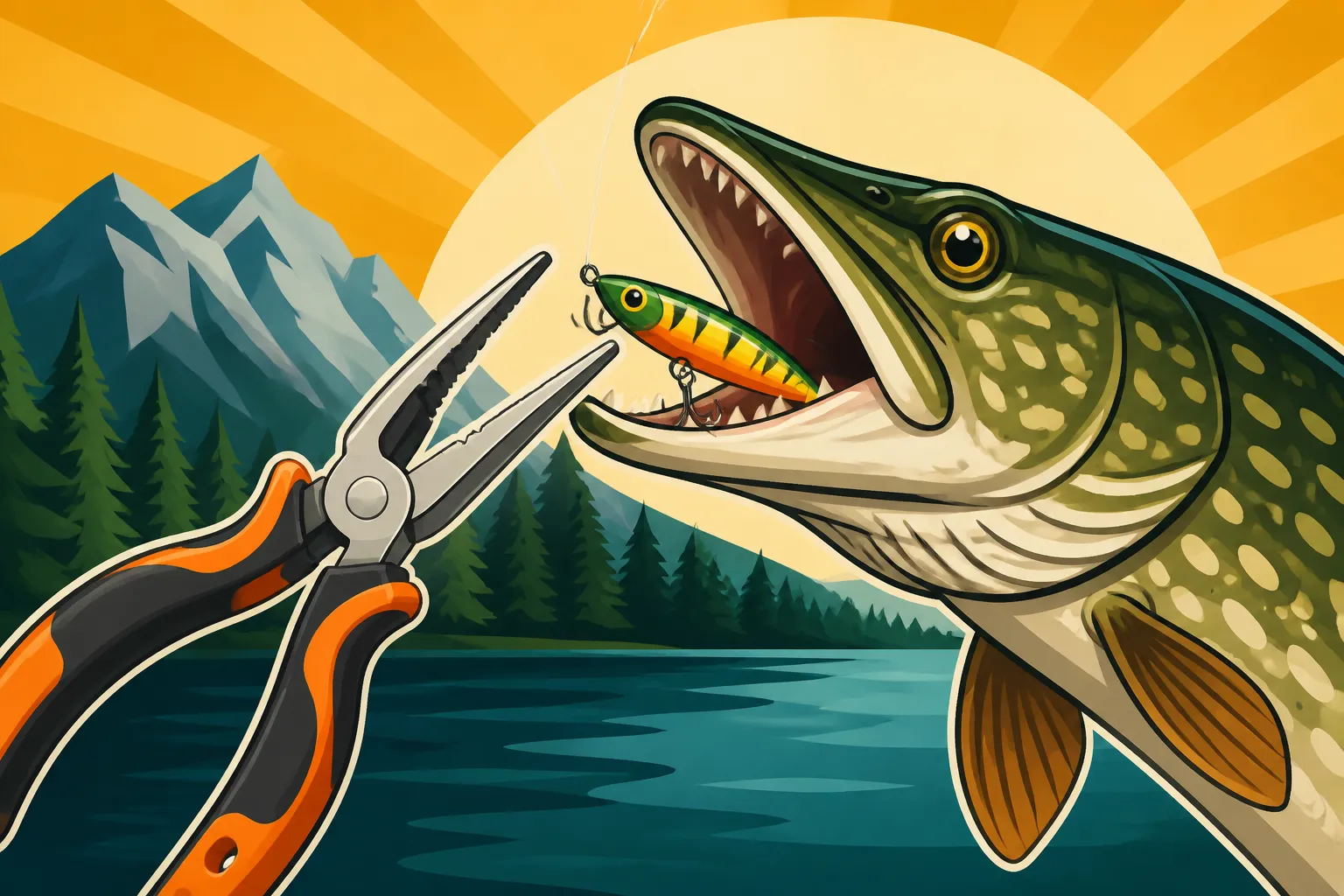
Few things in Alberta fishing are as exhilarating as hooking into a feisty northern pike, but that excitement can quickly turn to anxiety when it's time to unhook them. Those rows of razor-sharp teeth and powerful jaws make quick, safe hook removal a real challenge for anglers, leading to frustration and potential harm to both the fish and your fingers. This guide is all about helping you find the absolute best pliers for unhooking pike, ensuring both your safety and the health of our beloved fish.
Why You Need Specialized Pliers for Pike Unhooking
Let's be honest, we've all been there. You land a beautiful northern pike, admire its striking colours, and then the real work begins: getting that hook out. Trying to use inadequate tools is a recipe for disaster, risking deep punctures to your hand and unnecessary stress on the fish. This isn't just about convenience; it's about responsible angling.
The Pike's Fearsome Jaws and Teeth
Northern pike are apex predators in Alberta's lakes and rivers for a reason. Their mouths are literal minefields of sharp, backward-pointing teeth designed to hold onto struggling prey. We're talking about rows of teeth on their jaws, palate, and even their tongue. It's an impressive evolutionary marvel, but it's also a significant hazard when you're trying to reach a deeply embedded hook. Standard, short pliers just don't offer the necessary protection or reach. Attempting to pry a hook from a pike's mouth with small, flimsy pliers often results in a tense struggle, where the fish thrashes, the hook gets further embedded, and your fingers come dangerously close to those teeth. This struggle not only puts you at risk but can also cause severe injury to the fish, especially if you're planning on releasing it. Understanding Northern Pike Habits in Alberta Lakes will give you a better appreciation for their predatory nature and the need for appropriate handling tools.
Protecting Both Angler and Fish
The primary goal when unhooking any fish, especially a toothy predator like a pike, is to minimize harm to both parties. For the angler, this means avoiding painful, infection-prone bites and punctures. For the fish, it means reducing stress, preventing jaw damage, and ensuring a swift, clean release so it can swim away healthy. A pair of specialized pike pliers acts as an extension of your arm, giving you the leverage and reach needed to confidently grab the hook, twist it out, and release the fish quickly. Think about it: a few extra seconds of struggling can make a huge difference in a fish's survival post-release. When you're dealing with a vibrant fish, every second counts. Proper handling with the right tools contributes significantly to the conservation of our fisheries, allowing these magnificent creatures to grow larger and provide more exciting catches for years to come.
Common Pliers vs. Dedicated Pike Pliers
You might be thinking, "Pliers are pliers, right?" Wrong. The pliers you use for household repairs or even those small multi-tools on your belt are simply not designed for the unique challenges of a pike's mouth. Common pliers are usually too short, made of materials that will corrode quickly in wet environments, and lack the fine-tuned jaw design needed to grip a hook securely. They often have thick, blunt jaws that can actually cause more damage to the fish's mouth as you try to maneuver them. Dedicated pike pliers, on the other hand, are engineered specifically for this task. They feature extended lengths, corrosion-resistant materials like anodized aluminum or stainless steel, and specialized jaw designs that allow for precise hook removal even when the hook is lodged deep. They often come with comfortable, non-slip grips that give you confidence and control, even when your hands are wet or cold, a common occurrence during Ice Fishing in Alberta. Investing in a proper pair is not a luxury; it's an essential piece of Best Pike Gear for Alberta Lakes for any responsible angler targeting these toothy giants.
Key Features to Look for in Pike Unhooking Pliers
When you're outfitting your tackle box with the right tools for Northern Pike Fishing in Alberta, selecting the perfect pair of unhooking pliers means looking beyond just a basic grip. The devil is in the details, and for pike, those details can mean the difference between a smooth release and a stressful, potentially harmful struggle.
Length and Reach
This is arguably the most critical feature when it comes to pike pliers. You want pliers that are long enough to reach deep into a pike's mouth without putting your hand anywhere near those formidable teeth. A length of at least 11 to 14 inches (28 to 36 cm) is a good starting point, though some anglers prefer even longer options, especially for larger pike. This extended reach allows you to manipulate the hook from a safe distance, providing a buffer between your fingers and the fish's jaws. Imagine trying to get a hook out of a 40-inch pike with 6-inch pliers – it's a terrifying thought! The extra length also often provides better leverage, making it easier to twist and dislodge stubborn hooks. It’s all about working smarter, not harder, to protect both yourself and the fish.
Material and Durability
Alberta's fishing environments, whether you're on a boat during summer or battling the elements Ice Fishing in Alberta, are tough on gear. Constant exposure to water, mud, and fluctuating temperatures means your pliers need to be built to last.
- Stainless Steel: This is a popular choice for its strength and moderate corrosion resistance. Look for marine-grade stainless steel for the best performance, as it's specifically designed to stand up to moisture. While it's durable, it can still rust if not properly cared for, so a quick rinse and dry after each use is always a good idea.
- Anodized Aluminum: Often lighter than stainless steel, anodized aluminum pliers offer excellent corrosion resistance and are very comfortable to handle for extended periods. The anodizing process creates a protective layer that helps prevent oxidation, making them ideal for frequent use in wet conditions. Brands like Bass Pro Shops often carry a wide selection of aluminum pliers.
- Carbon Steel: Less common for dedicated pike pliers due to its higher susceptibility to rust, unless coated with a protective finish. If you opt for carbon steel, ensure it has a robust coating and commit to meticulous maintenance.
Regardless of the material, check for sturdy pivot points and rivets that can withstand repeated pressure. Flimsy pliers will bend or break under the strain of a deeply set hook, leaving you in a difficult spot.
Jaw Design and Grip
The business end of your pliers is crucial. You want jaws that can securely grip a hook without slipping or damaging the line.
- Fine, Serrated Tips: These are ideal for getting into tight spaces and securing a firm hold on the hook shank, even with smaller hooks. The serrations prevent the hook from sliding, giving you maximum control.
- Bent or Curved Jaws: Some pliers feature a slight curve or bend in the jaws, which can be incredibly helpful for reaching hooks set at awkward angles or in deeper parts of the mouth. This design can provide a better working angle, reducing strain on your wrist and the fish.
- Split Ring Pliers: While not the primary feature for unhooking, some pike pliers might integrate a split ring function at the base of the jaws. This can be handy for changing out treble hooks on Best Lures for Northern Pike in Alberta quickly, but ensure it doesn't compromise the primary unhooking function.
The goal is to grip the hook firmly and efficiently to minimize the time the fish is out of the water.
Handle Comfort and Ergonomics
You might be wrestling with a large, thrashing fish, often with cold or wet hands. Comfortable, ergonomic handles are essential.
- Non-Slip Grips: Look for handles made of rubber, textured plastic, or wrapped with a non-slip material. These provide a secure grip even when slimy or wet, preventing accidental slips that could be dangerous.
- Spring-Loaded Design: Many quality pliers are spring-loaded, meaning they automatically open when you release your grip. This is a huge convenience, allowing for one-handed operation and quick action, especially when you're trying to hold the fish steady with your other hand.
- Finger Grooves: Contoured handles with finger grooves can significantly improve comfort and reduce hand fatigue, particularly during longer fishing sessions or when dealing with multiple fish. Whether you're buying from Amazon or a local tackle shop, always test the grip to see how it feels in your hand.
Cutter Functionality
While the primary role of these pliers is unhooking, many models also incorporate a line cutter. This can be a useful secondary feature, especially if you need to snip a leader or remove a frayed section of line.
- Carbide or Tungsten Cutters: For cutting heavy braided line or wire leaders often used for pike, look for pliers with robust, replaceable carbide or tungsten cutters. These materials are incredibly sharp and durable, ensuring a clean cut every time. Cheaper cutters can quickly dull or fail, which is frustrating when you're trying to tie a new lure or remove a snag.
- Positioning: Ensure the cutter is placed in a convenient spot that doesn't interfere with the unhooking process but is easy to access when needed. Sometimes, if a hook is really deep or the fish is severely injured, cutting the line and leaving the hook in place for a professional removal is the most humane option.
Types of Pliers for Pike Fishing
Just like there are different ways to catch pike, there are various types of pliers designed to help you handle them once they're on the line. Each type has its strengths and is better suited for certain situations or hook depths.
Long-Nose Pliers
These are the most common and versatile choice for pike unhooking. Characterized by their extended, slender jaws, long-nose pliers offer excellent reach into the mouth of a pike, keeping your hands well away from those formidable teeth. They come in various lengths, typically ranging from 8 to 14 inches or more. The fine, pointed tips are crucial for grasping smaller hooks firmly, even when they're lodged deep or obscured by gills or other structures within the mouth. Many long-nose pliers designed for fishing will also feature a bent or curved tip, which can be incredibly useful for reaching hooks set at awkward angles.
Imagine a situation where a pike has completely swallowed a crankbait, and the rear treble is barely visible. A long, thin pair of pliers allows you to carefully navigate around the lure and into the fish's throat to grab that hook. Without the length and precision of long-nose pliers, such an extraction would be nearly impossible without causing significant harm to the fish. They are a staple in any serious pike angler's kit, whether you're fishing from shore or out in a boat. When you're considering your overall Best Pike Gear for Alberta Lakes, a quality pair of long-nose pliers should be near the top of your list.
Forceps and Hemostats
While often associated with medical or fly-tying applications, oversized fishing forceps (sometimes called hemostats) can be incredibly useful for smaller pike or when dealing with tiny hooks, such as those on small panfish lures that a pike might accidentally strike. These tools are designed for extremely precise grip, often featuring a locking mechanism that allows you to clamp onto a hook and keep a firm hold, freeing up your hands for other tasks.
However, their shorter length makes them less ideal for reaching deeply embedded hooks in larger pike, as they put your fingers too close to the danger zone. They excel when a hook is just barely in the lip or in a visible, easily accessible spot. Some anglers carry both long-nose pliers for general unhooking and forceps for those delicate, precise extractions on smaller fish or when a hook is just barely lipped. For a guide to choosing a variety of unhooking tools, checking out a large outfitter like Bass Pro Shops can be very insightful, as they'll have different options.
Pistol-Grip Pliers
Taking ergonomics and safety to the next level, pistol-grip pliers are designed with an angled handle that mimics the grip of a pistol. This unique design allows for a more natural and powerful hand position, which can be a game-changer when you're trying to extract a stubborn hook from a struggling fish. The pistol grip provides superior leverage and control, reducing strain on your wrist and offering a more confident hold on the tool.
The angled handle often means the jaws extend forward at a more acute angle relative to your hand, allowing you to get a better attack angle on the hook without having to bend your wrist awkwardly. This is especially beneficial for deep-set hooks where you need maximum force and precision. While they might look a bit unconventional, anglers who frequently target large, toothy fish often swear by their ergonomic advantages. If you're tired of hand cramps or feel like you're losing grip with traditional straight-handle pliers during a tough unhooking, exploring pistol-grip options could be a wise move.
Choosing the Right Pliers for Your Fishing Style
Your choice of pike unhooking pliers isn't just about the fish; it's also about how and where you fish. The demands of shore angling are different from boat fishing, and fly fishing presents its own unique set of considerations. Tailoring your gear to your approach makes a huge difference in efficiency and safety.
Shore Angling Considerations
When you're fishing from shore, portability and preparedness are key. You can't just run back to the boat or truck for a different tool. Your unhooking pliers need to be robust enough to handle any situation, yet compact enough to carry comfortably.
- Weight and Size: Opt for pliers that aren't overly bulky or heavy if you're hiking into a spot. Anodized aluminum models are often a good choice here, offering strength without excessive weight. You'll likely be carrying your gear, so every ounce counts.
- Sheath or Lanyard: A good sheath that can attach to your belt or backpack is invaluable. It keeps your pliers secure, prevents them from getting lost, and allows for quick access. A coiled lanyard attached to the pliers can provide an extra layer of security against dropping them into the water.
- Versatility: Since you might only carry one pair, choose long-nose pliers with a good cutter and a comfortable grip. These will be your all-around workhorses for everything from setting up your Best Line Weight for Pike Fishing to dealing with unexpected deep hooks. Remember, you might be kneeling or reaching from an awkward position on the bank, so good leverage is crucial.
Boat Fishing Essentials
On a boat, you generally have more space and can afford to carry a wider range of tools. However, speed and accessibility are paramount, especially when handling a lively pike right beside your vessel.
- Multiple Pairs: Many serious boat anglers carry a couple of different pairs of pliers – perhaps a longer, heavy-duty pair for those really deep hooks and a slightly shorter, more precise pair for quicker, less complicated removals. This redundancy ensures you're always prepared.
- Permanent Storage: Consider mounting a plier holder or having a dedicated spot in your boat's tackle organization system. This keeps them from rolling around, keeps them accessible, and prevents them from getting damaged or lost overboard. Check out options on Amazon or specialized marine stores.
- Corrosion Resistance: Even more so than shore fishing, boat environments mean constant exposure to water. Marine-grade stainless steel or anodized aluminum is a must. Regular rinsing with fresh water and drying is still highly recommended to prolong their life. When you're trying to quickly unhook a pike so you can get back to casting your Best Baitcasting Reels for Pike Fishing, you don't want to be fumbling with rusty tools.
Fly Fishing for Pike
Fly fishing for pike is a unique and exciting pursuit, often involving large flies and specific handling techniques. The pliers you choose should complement this style.
- Long and Slender: Fly rods for pike are typically stout, and the flies themselves can be large, often with multiple hooks. You still need significant length to reach past the fly and into the pike's mouth. Slender jaws are beneficial for navigating around the bulk of a large fly pattern.
- Barbless Hook Compatibility: Many fly anglers crimp their barbs for easier release and less fish trauma. If you're using barbless hooks (which some Alberta waters may even mandate, check the Alberta Fishing Regulations Explained), your pliers will primarily be for twisting the hook out. However, if a hook does get deep, the long reach is still critical.
- Lightweight for Vest/Pack: Fly anglers are often particular about the weight and bulk of their gear, as it's typically carried on a vest or small pack. Lighter aluminum pliers might be preferred, but don't sacrifice necessary length or strength. Ensuring you have a Best Landing Net for Pike that is fly-fishing friendly is also a good idea.
Pliers Comparison Table
To help you visualize the differences and make an informed decision, here's a quick comparison of common plier types and features for pike unhooking:
| Feature | Long-Nose Pliers | Forceps/Hemostats | Pistol-Grip Pliers |
|---|---|---|---|
| Primary Use | General pike unhooking, deep-set hooks | Small hooks, precise removals, lip-hooked fish | Deep-set hooks, maximum leverage, ergonomic comfort |
| Typical Length | 8-14+ inches (20-36+ cm) | 6-9 inches (15-23 cm) | 11-13+ inches (28-33+ cm) |
| Jaw Design | Fine, serrated, often bent tip | Fine, locking, often straight | Robust, serrated, angled for leverage |
| Material | Stainless Steel, Anodized Aluminum | Stainless Steel | Stainless Steel, Anodized Aluminum |
| Pros | Excellent reach, versatile, good leverage | Precision grip, locking mechanism | Superior ergonomics, powerful leverage |
| Cons | Can be bulky, less precise for tiny hooks | Limited reach, not for large hooks | Can be bulkier, sometimes heavier |
| Best For | All-around pike fishing, especially larger fish | Small pike, panfish, delicate extractions | Anglers with hand fatigue, trophy pike |
Ultimately, the best pliers for you will be a tool you trust, that feels comfortable in your hand, and that consistently allows for safe, efficient hook removal. Prioritize safety for yourself and the fish, and you'll enjoy many more memorable days pursuing northern pike in Alberta's waters.
Disclaimer
This article is for general informational purposes only and does not constitute professional advice. Laws, prices and regulations vary by location and change over time. Consult a qualified professional for guidance on your specific situation.