Best multi-tool for fishing trips
There's nothing quite as frustrating as being out on a beautiful Alberta lake or river, fish on the line, only to realize you need to cut your line, remove a stubborn hook, or tighten a loose screw on your reel – and your crucial tool is buried deep in your tackle box, or worse, back in the truck! We've all been there, fumbling around, losing precious time and sometimes even a fish. This comprehensive guide is here to help you navigate the world of fishing multi-tools, ensuring you have the right versatile companion ready for anything your Alberta fishing trip throws at you.
What Makes a Good Fishing Multi-Tool?
When you're out there enjoying the incredible fishing Alberta has to offer, whether it's battling a monster pike on Lesser Slave Lake or delicately presenting a fly on the Bow River, you need gear that can keep up. A fishing multi-tool isn't just a collection of gadgets; it's a carefully designed piece of equipment that consolidates essential functions into one compact, easy-to-access unit. But what truly sets a good fishing multi-tool apart from just any old multi-tool? It comes down to durability, thoughtful design, and how well it stands up to the unique challenges of the angling environment.
Durability and Corrosion Resistance
Alberta's fishing conditions can be tough on gear. From the freezing temperatures of an ice fishing expedition to the humid summer air and the constant exposure to water, your tools are under siege. A good fishing multi-tool must be built to withstand this. We're talking about high-grade stainless steel, often with specialized coatings that resist rust and corrosion. Imagine finally landing that trophy walleye, only to find your pliers are seized up with rust from a previous damp trip. It’s infuriating, right? Investing in a tool made from materials like 420HC stainless steel or even marine-grade stainless steel, often with black oxide or titanium nitride finishes, is paramount. These materials might add a bit to the cost, but they'll save you headaches and replacement costs in the long run. Don't underestimate the power of a quick rinse and dry after each use, even with the best corrosion-resistant materials. This simple habit will dramatically extend the life of your tool, no matter where you purchased it from, be it a local tackle shop or an online giant like Amazon.
Ergonomics and Ease of Use
Picture this: you're fighting a feisty rainbow trout on the Crowsnest River, and it's swallowed the hook deep. You need to get that hook out quickly and cleanly for a safe release, all while trying to keep the fish calm. This is where ergonomics truly shine. A multi-tool might have all the right components, but if it's awkward to hold, difficult to open with one hand, or the tools themselves are stiff and hard to deploy, it's more of a hindrance than a help. Look for features like spring-loaded pliers, which make one-handed operation a breeze, especially when you're managing a lively fish. Textured grips, finger choils, and a weight that feels balanced in your hand all contribute to making the tool intuitive and efficient to use, even when your hands are cold, wet, or covered in slime. No one wants to struggle with their gear when the action is hot.
Compactness and Portability
Let's be real, anglers carry a lot of stuff. From extra spools of line to various lures and a trusty Best Tackle Box Setup for Alberta Anglers, space is at a premium. A fishing multi-tool needs to earn its spot. The beauty of a multi-tool is its ability to condense several individual tools into one compact package. Whether it's clipped to your belt, tucked into a vest pocket, or stowed in your tackle bag, it should be easily accessible without adding unnecessary bulk or weight. For fly anglers wading remote streams, every ounce counts, and a slim, lightweight multi-tool is a godsend. Similarly, if you're out Ice Fishing in Alberta, you want a tool that doesn't take up much room in your sled or bucket, leaving more space for your heater and snacks! Think about how you typically carry your gear and choose a multi-tool that fits seamlessly into your routine.
Key Components to Look for in a Fishing Multi-Tool
Not all multi-tools are created equal, especially when you start looking at the specific tools they offer. For fishing, there are a few core components that you absolutely cannot do without, and then some additional features that can make a huge difference depending on what you're targeting and how you fish.
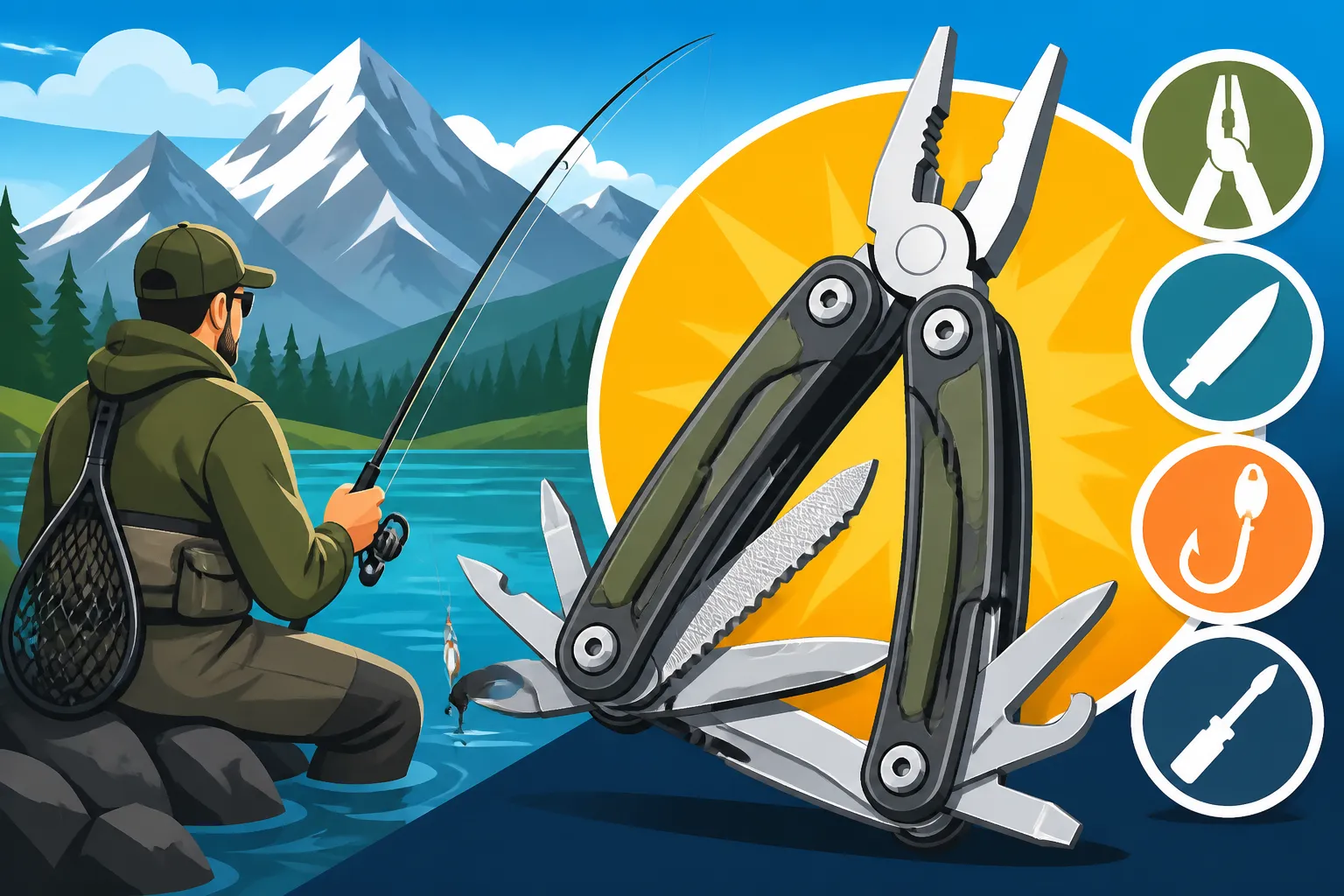
Pliers: Needle Nose vs. Standard
The pliers are often the heart and soul of a fishing multi-tool. They're your go-to for everything from crimping split shot to removing hooks. The choice between needle-nose and standard pliers often depends on the type of fishing you do.
Needle-nose pliers are fantastic for finesse work. They can reach deep-set hooks in a fish's mouth, manipulate small split rings on lures, and perform delicate tasks like tying intricate knots. If you're a trout angler or frequently deal with smaller species, needle-nose will be your best friend. Imagine trying to gently remove a size 16 dry fly from a brook trout's lip with big, clumsy standard pliers – it's a recipe for disaster and potential harm to the fish.
Standard pliers, with their broader jaws, offer more gripping power. They're great for bending heavy wire, un-snagging lines from submerged logs, or dealing with larger, tougher hooks. Many multi-tools will offer a hybrid design, combining the reach of needle-nose with a stronger base for more robust tasks. Regardless of the style, look for serrated jaws that provide a secure grip on slippery hooks and lines. Spring-loaded jaws are a massive bonus, allowing you to operate them quickly with one hand when the other is occupied with a rod or a fish.
Knives: Blade Types and Sharpness
A sharp, reliable knife is another non-negotiable component. You'll use it for cutting bait, trimming fishing line, opening packaging, and general camp tasks. The type of blade matters.
Most multi-tools feature a straight edge blade, which is versatile for most cutting tasks. Look for a blade made from good quality steel that holds an edge well and is easy to sharpen. Some multi-tools also include a serrated blade, which is excellent for cutting through tougher materials like rope or even fish scales if you're cleaning your catch on the spot. While you might carry a dedicated Best Fillet Knife for Cleaning Walleye back at camp, a small, sharp blade on your multi-tool is invaluable for quick tasks. The locking mechanism on the blade is crucial for safety; you don't want it accidentally folding on your fingers. Whether you prefer a plain edge or a combo edge, ensure it's made from a corrosion-resistant steel, as even quick exposure to moisture can lead to rust if not cared for properly.
Scissors: Braid Cutters and Line Snips
For anglers, a good pair of scissors can be even more important than a knife for certain tasks. Cutting fishing line cleanly and efficiently is paramount, especially when dealing with modern super lines.
Dedicated line snips or small, sharp scissors on a multi-tool are perfect for monofilament, fluorocarbon, and even lighter braids. However, if you primarily use braided line, you know the frustration of trying to cut it with dull scissors or a standard knife blade – it frays and slips. This is where specialized braid cutters come in. These scissors often have micro-serrated edges that grip and slice through braid cleanly, preventing fraying and ensuring strong knot ties. Many top-tier fishing multi-tools will incorporate these specifically designed blades. Having a good pair of scissors means no more fraying lines at the knot, which can lead to lost lures and lost fish. Brands like Leatherman or Gerber, often found at Bass Pro Shops or online, are known for integrating excellent cutting tools into their fishing multi-tools.
Other Essential Tools
Beyond the big three, there's a whole host of other handy tools a fishing multi-tool might offer that can simplify your day on the water.
- Screwdrivers: Small flathead and Phillips head screwdrivers are invaluable for tightening loose screws on reels, adjusting boat electronics, or even making minor repairs to other gear. You’d be surprised how often a tiny screw comes loose when you’re out on the water.
- Bottle/Can Openers: After a long day of casting for pike or jigging for burbot, you’ll appreciate having a way to open that celebratory beverage without struggling.
- File: A small file can be useful for sharpening hooks in a pinch or smoothing out rough edges on lures or leaders. While not a substitute for a proper hook sharpener, it can get you by.
- Rulers: Some multi-tools feature a small ruler etched onto the handle, which can be surprisingly useful for quickly measuring fish to ensure they meet slot limits or for identifying a good eating size before consulting Alberta Bag and Possession Limits by Species.
- Spring-loaded Jaw: This feature cannot be overstated for pliers. It allows for quick, one-handed operation, which is incredibly useful when you're trying to hold a fish, retrieve a hook, and keep control of your rod all at once.
Choosing the Right Multi-Tool for Your Fishing Style
Just like you wouldn't use a fly rod to cast heavy spoons for lake trout, your multi-tool choice should align with your specific angling pursuits. The "best" multi-tool for a fly angler on a mountain stream might be very different from what a boat angler needs for Walleye Fishing in Alberta.
| Fishing Style | Key Multi-Tool Features to Prioritize | Example Scenarios |
|---|---|---|
| River & Stream Anglers | Lightweight, compact, fine needle-nose pliers, sharp line snips/scissors, hook remover, small knife. Corrosion resistance is key for wading. | Removing tiny trout flies, pinching barbs, cutting delicate tippet, un-tangling fine line, basic repairs on a Best Fly Rods for the Bow River, opening lure packaging. |
| Lake & Boat Anglers | Robust pliers (needle-nose/standard hybrid), strong braid cutters, sturdy knife, screwdrivers, possibly larger ergonomic handles for leverage, corrosion resistance. | Removing treble hooks from pike or walleye, cutting heavy braided line, tightening reel screws, bending heavy wire leaders, fixing small boat components, opening beverage cans. |
| Ice Fishing & Cold Weather | Ergonomic handles (even with gloves), easy-to-deploy tools, durable corrosion-resistant materials, good knife for cutting bait, small screwdrivers for minor auger or heater adjustments. | Quickly unhooking a fish in freezing temps, cutting bait, clearing ice from line guides, adjusting a small Ice Fishing in Alberta shelter screw, opening packaged snacks, managing cold, wet hands. |
Multi-Tools for River and Stream Anglers
For those who love to wade the clear waters of the Oldman or the Bow River, chasing trout, your multi-tool needs to be light, agile, and precise. You're constantly getting wet, so exceptional corrosion resistance is paramount. A compact multi-tool with slender needle-nose pliers is ideal for carefully removing small hooks from delicate trout mouths, pinching down barbs, or working with fine tippet materials.
Think about a day Fly Fishing for Trout on the Bow River. You might be tying on a tiny dry fly, and your multi-tool needs to be able to snip that tag end cleanly without fraying. Or perhaps you've hooked a beautiful cutthroat trout, and it's essential to release it quickly and safely. Your multi-tool's pliers are critical for gentle hook removal. Features like a built-in lanyard hole are also great for attaching it to a zinger or retractable reel on your vest, keeping it immediately accessible. Brands like Gerber and SOG offer excellent compact options, often found at specialty outdoor retailers or on Amazon, that fit perfectly into a minimalist fly fishing setup, ensuring you don't miss a beat.
Multi-Tools for Lake and Boat Anglers
If your passion involves trolling for lake trout on Cold Lake, casting for Northern Pike Fishing in Alberta on Keho, or jigging for walleye on Lesser Slave Lake, your multi-tool needs a bit more heft and power. You're likely dealing with larger fish, bigger hooks, and heavier lines, including braided varieties.
A multi-tool with robust, possibly spring-loaded, pliers (perhaps a combination of needle-nose and standard) will be indispensable for crushing split shot, bending heavy wire leaders, and safely extracting large treble hooks from toothy predators. Strong, dedicated braid cutters are a must-have, as trying to cut thick braid with inadequate scissors is a nightmare. A good, sturdy knife blade for cutting bait or trimming heavy mono is also essential. Look for models that offer more leverage and perhaps slightly larger handles, which are easier to grip when your hands are wet or you're wearing fishing gloves. When you’re dealing with a thrashing pike in the net, speed and reliability are key. Having a dedicated tool like this, perhaps from a brand you trust at Bass Pro Shops, ensures you're ready for anything.
Multi-Tools for Ice Fishing and Cold Weather
Ice fishing presents its own unique set of challenges. Cold, wet hands, sometimes bulky gloves, and the need for quick actions when a fish bites through the ice means your multi-tool needs to be exceptionally user-friendly in tough conditions.
Ergonomics become even more critical here. Look for multi-tools with larger, textured handles that provide a secure grip, even when your fingers are numb or you're wearing gloves. The ability to open and operate tools with minimal fuss is a game-changer. Corrosion resistance is still vital, as condensation and slush can quickly lead to rust. A sharp knife for cutting bait, especially for burbot or pike, and a robust pair of pliers for removing hooks from stiff, cold fish are primary considerations. Small screwdrivers can also come in handy for tightening screws on your Best Ice Auger for Alberta Lakes or small ice fishing electronics. A multi-tool that can withstand the rigors of an Alberta winter will be a loyal companion on those frigid mornings.
Maintenance and Care for Your Multi-Tool
Even the most durable, corrosion-resistant multi-tool won't last forever without proper care. A little attention goes a long way in ensuring your trusty companion is always ready for your next Alberta fishing adventure. Neglecting your tools can lead to rust, stiffness, and ultimately, failure when you need them most.
Cleaning After Use
This is perhaps the most critical step. After every fishing trip, especially if your multi-tool has been exposed to water (and it almost certainly will be), take a few moments to clean it.
- Rinse: If it's been exposed to fish slime, bait, or particularly muddy water, give it a thorough rinse under clean, fresh water.
- Dry: This is key! Water is the enemy of metal. Use a clean cloth or towel to thoroughly dry every part of your multi-tool. Pay special attention to crevices and hinge points where water can hide. For optimal drying, you might even consider letting it air dry for a bit, fully open, before storing it. A quick blast with compressed air (if you have it) can also help dislodge any hidden moisture. This simple routine will prevent rust spots from forming and keep your tools gleaming and ready.
Lubrication for Smooth Operation
Just like a well-maintained fishing reel, your multi-tool's moving parts benefit from occasional lubrication. Over time, friction and fine debris can make the tools stiff and hard to deploy.
- Light Oil: Use a light machine oil, silicone spray, or even a specialized knife lubricant sparingly on all the pivot points and hinges. Open and close each tool a few times after applying the lubricant to work it into the mechanism.
- Avoid Over-Lubricating: A little goes a long way. Too much oil can attract dust, dirt, and fine grit, which can actually cause more problems than it solves. A light coat is all you need to keep things moving smoothly. Do this every few trips, or whenever you notice a tool becoming stiff. Regular lubrication will ensure your multi-tool operates like new for years to come, making those quick, one-handed operations a breeze.
Storage Tips to Prevent Damage
How you store your multi-tool when not in use is just as important as how you clean and lubricate it. Improper storage can lead to rust, dull blades, or even damage.
- Dry Environment: Always store your multi-tool in a dry environment. Avoid leaving it in your tackle box if the box is often damp or humid. A dedicated sheath, often provided with the multi-tool, is a great place, but ensure the tool itself is dry before putting it away.
- Protect Blades: When storing, make sure all blades and sharp points are safely folded away. This prevents accidental cuts and also protects the edges from becoming dull by rubbing against other items.
- Away from Corrosives: Keep your multi-tool away from harsh chemicals or corrosive materials, which can accelerate rust and damage finishes.
- Accessibility: While storage is important, don't forget the main reason you have a multi-tool: quick access! Choose a storage location (whether it's clipped to your bag or in a specific tackle box compartment) that allows for easy retrieval when you hit the water. This could be a small pocket in your Best Tackle Bag for Bank Fishing or a dedicated spot in your boat's console.
By following these simple cleaning, lubrication, and storage tips, your fishing multi-tool will remain a dependable and invaluable part of your Alberta fishing arsenal for countless seasons.
Disclaimer
This article is for general informational purposes only and does not constitute professional advice. Laws, prices and regulations vary by location and change over time. Consult a qualified professional for guidance on your specific situation.