Best marine battery for a trolling motor
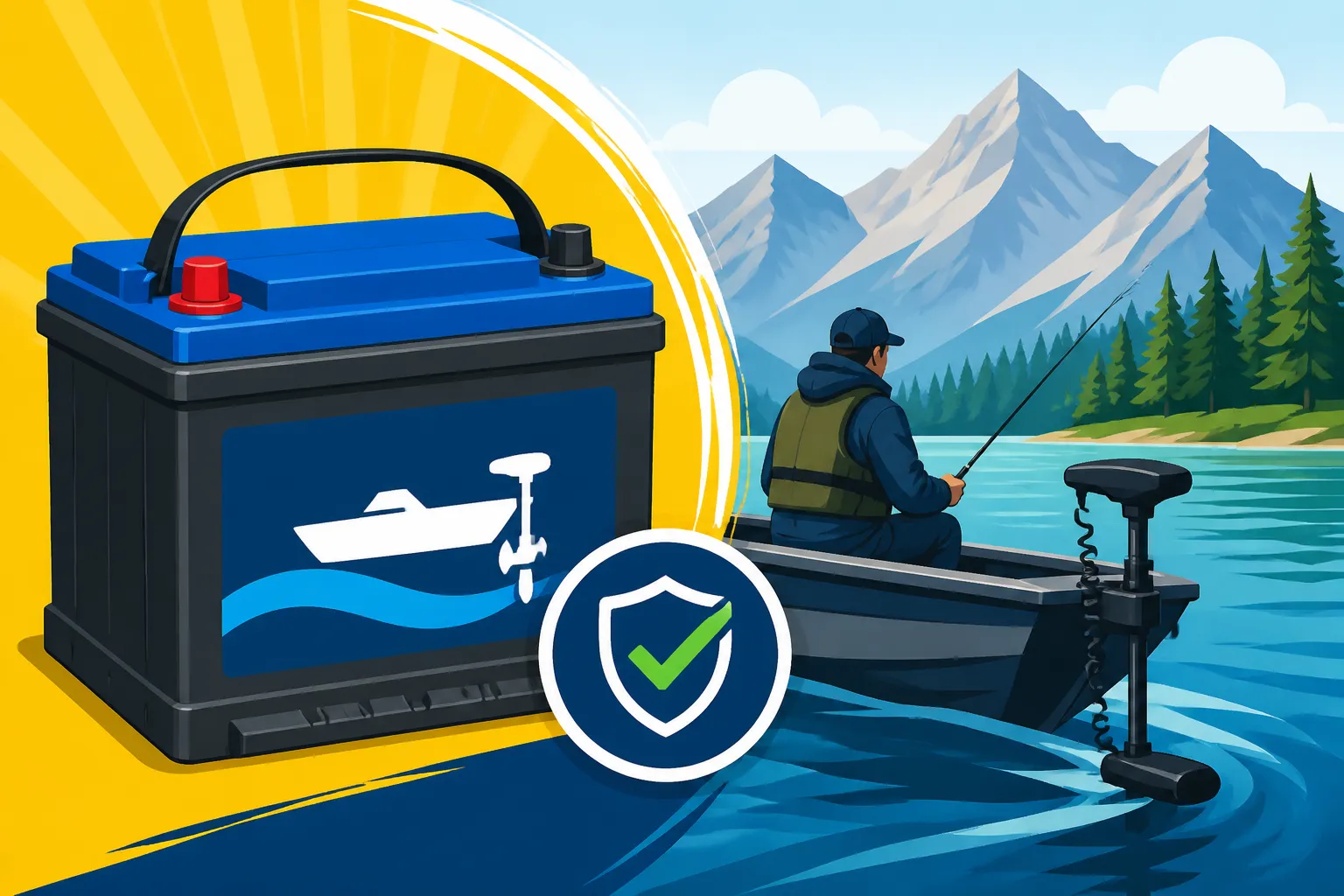
There's nothing quite like the crushing disappointment of being out on a serene Alberta lake, only for your trolling motor to sputter and die, leaving you stranded or paddling when you should be reeling in a beauty. We've all been there, pushing our battery to its limits, often unknowingly, and ruining a perfectly good day on the water. This comprehensive guide is here to untangle the complexities of marine batteries, helping you choose the best power source for your trolling motor so you can spend more time fishing and less time worrying about getting back to shore.
Understanding the Heart of Your Trolling Motor: Battery Types
When you're out on the water, whether it's the vast expanse of Lesser Slave Lake or a quiet back bay on the Bow River, your trolling motor is only as good as the battery powering it. Not all batteries are created equal, and understanding the fundamental differences is the first step to making an informed choice. You're not just buying a box of power; you're investing in reliability and peace of mind.
Deep Cycle vs. Starting Batteries
This is probably the most crucial distinction to grasp. A common mistake many new anglers make is thinking any car battery will do the trick for their trolling motor. Oh, if only it were that simple!
Starting Batteries: The Quick Burst Specialists
Think of your car battery. Its primary job is to deliver a massive, quick burst of power to start your engine, then it's immediately recharged by the alternator. It's designed for short, intense discharges. If you use a starting battery for your trolling motor, constantly draining it down, you'll drastically shorten its lifespan, often ruining it within a season or two. It's like asking a sprinter to run a marathon – they might start strong, but they'll burn out fast and not last the distance.
Deep Cycle Batteries: The Marathon Runners
Deep cycle batteries, on the other hand, are built for endurance. They're designed to provide a steady, lower current over a long period and can be repeatedly discharged to a much lower state (sometimes as much as 80% or more, depending on the type) and then recharged without significant damage. This is precisely what your trolling motor needs: consistent power for hours of slow trolling or subtle positional adjustments. They are the backbone of any serious angler's electrical system, especially when you're spending long days on the water chasing walleye or pike. Best Boats for Alberta Lakes and Rivers will often recommend a dedicated deep cycle setup for optimal performance.
Lead-Acid vs. Lithium-Ion Marine Batteries
Once you know you need a deep cycle battery, the next big decision is the chemistry. For years, lead-acid batteries were the only real option, but lithium-ion has burst onto the scene, offering some compelling advantages.
Traditional Lead-Acid Batteries
This category includes flooded (wet cell), gel, and AGM (Absorbed Glass Mat) batteries. Flooded batteries are the most common and often the most affordable. They contain liquid electrolyte, which requires periodic maintenance (checking water levels). Gel and AGM batteries are "sealed," meaning they don't require water top-offs and can often be mounted in more positions, making them a bit more user-friendly.
The big draw for lead-acid is the initial cost. They're typically much cheaper upfront, making them a popular choice for budget-conscious anglers or those with smaller boats or kayaks where weight isn't a huge factor. However, they are heavy, their usable capacity is usually only about 50% of their rated capacity (meaning a 100 Ah battery effectively gives you 50 Ah before you start damaging it), and they discharge faster in cold weather, which is a significant consideration for Alberta's often chilly fishing seasons. They also tend to have a shorter lifespan compared to lithium, generally lasting 3-5 years with proper care. You might find a good selection of these at local automotive or marine suppliers, or even general outdoor stores like Bass Pro Shops.
Lithium-Ion (LiFePO4) Batteries
Lithium-ion batteries, specifically the LiFePO4 (lithium iron phosphate) variant, are the new kids on the block, and they're changing the game. Their advantages are numerous: they are significantly lighter (often half the weight or less than a comparable lead-acid battery), offer a much higher usable capacity (up to 80-100% of their rated capacity), maintain a consistent voltage throughout their discharge cycle (meaning your trolling motor runs at peak performance longer), and have an incredibly long lifespan (often 10+ years or thousands of cycles). They also perform better in colder temperatures, though charging in freezing conditions still requires a specialized battery with low-temperature protection.
The main drawback is the price. Lithium batteries are a considerable upfront investment. However, when you factor in their longer lifespan, lighter weight, and superior performance, many anglers find the long-term value to be outstanding, especially for boats where weight savings translate to better performance or range. For serious anglers who spend many days on the water, the performance and convenience often outweigh the initial cost. Online retailers like Amazon offer a wide range of lithium-ion options, often with competitive pricing and detailed reviews.
Factors to Consider When Choosing Your Trolling Motor Battery
Now that you understand the different types, let's drill down into the specifics that will help you pick the perfect battery for your Alberta fishing adventures. It's not just about getting "a" battery; it's about getting the right battery for your specific needs.
Amp-Hour (Ah) Rating
This is arguably the most important specification for a trolling motor battery. The Amp-Hour (Ah) rating tells you how much energy the battery can store. A 100 Ah battery, for example, can theoretically deliver 100 amps for one hour, or 1 amp for 100 hours. In reality, it's a bit more complex due to discharge rates and usable capacity (especially with lead-acid), but it's your primary indicator of how long your trolling motor will run.
Matching Ah to Your Motor and Fishing Style
Consider the thrust of your trolling motor (e.g., 55 lb thrust, 80 lb thrust), your voltage (12V, 24V, 36V), and how long you typically run it. A larger motor draws more amps. If you spend all day slowly creeping along shorelines or navigating strong currents on the Bow River, you'll need more Ah than someone who only uses their trolling motor for short bursts to position their boat.
- For 12V motors: A 50-75 Ah lead-acid battery might be enough for light use and shorter trips, but for full-day fishing, especially in wind or current, you're better off with at least 100-120 Ah. If going lithium, a 50-75 Ah LiFePO4 can often replace a 100-120 Ah lead-acid due to higher usable capacity.
- For 24V or 36V motors: These require multiple 12V batteries wired in series (e.g., two 12V for 24V, three 12V for 36V). In this case, each battery needs to meet the Ah requirement. A common setup might be two 100 Ah 12V batteries for a 24V system, providing ample power for extended trips.
Always err on the side of slightly more capacity if your budget and space allow. It’s far better to have too much power than not enough when you're far from the launch. Alberta Boating Laws for Anglers covers general safety, but sufficient battery power is also a crucial safety consideration.
Reserve Capacity (RC)
While Ah tells you the total storage, Reserve Capacity (RC) tells you how long a fully charged battery can continuously run a specific load (usually 25 amps) before its voltage drops below a usable level. This is another excellent indicator of real-world endurance for a trolling motor. A higher RC means more minutes of continuous power.
Why RC Matters for Trolling Motors
Trolling motors, especially when pushing against wind or current, can draw significant amps. Knowing your RC helps you gauge how well a battery will perform under sustained use. If you have a choice between two batteries with similar Ah ratings but one has a significantly higher RC, the one with higher RC is often the better choice for trolling motors. It indicates a more robust design for sustained discharge.
Weight and Size Considerations
This is where the rubber meets the road, especially for smaller craft.
Impact on Performance and Portability
If you're fishing from a kayak or a smaller jon boat, every pound matters. Heavy lead-acid batteries can significantly affect buoyancy, trim, and overall performance. They're also a pain to load and unload. This is where lithium batteries truly shine. Their lighter weight means:
- Easier portaging: If you have to carry your battery from the vehicle to the boat, a lighter lithium makes a huge difference.
- Improved kayak performance: For kayakers, a lighter battery keeps your craft higher in the water, makes paddling easier, and often allows for a faster top speed with the trolling motor. Best Kayaks for Alberta Fishing and Best Trolling Motor for a Fishing Kayak will always stress the importance of managing weight.
- Better boat trim: Even in larger boats, reducing weight can improve fuel efficiency and performance.
Fitting Your Space
Before you buy, measure the battery compartment or the space where your battery will live. Marine batteries come in various group sizes (e.g., Group 24, Group 27, Group 31), which correspond to standard dimensions. Ensure your chosen battery will physically fit. There's nothing worse than getting a new battery home only to realize it's too big for its intended spot!
Cold Weather Performance
Ah, Alberta! Our fishing seasons often extend into the cooler months, and even summer mornings can be crisp. Battery performance in the cold is a major factor.
Lead-Acid in the Cold
Lead-acid batteries lose efficiency in cold temperatures. Their usable capacity can drop significantly (sometimes by 20-50%) when temperatures plummet, and they also take longer to charge. If you plan on Ice Fishing in Alberta or pushing the shoulder seasons, you'll feel the pinch of lead-acid's diminished performance. They also need to be stored fully charged in a cool, dry place to prevent freezing, which can cause permanent damage.
Lithium-Ion in the Cold
Lithium-ion batteries generally perform better in cold discharge conditions, retaining more of their capacity than lead-acid. However, charging them in freezing temperatures can be problematic and lead to damage. Many modern LiFePO4 batteries designed for marine use come with a built-in Battery Management System (BMS) that includes low-temperature charge cut-off protection. This means they won't accept a charge if the internal temperature is too low, preventing damage. If you often fish in cold weather, look for this feature.
Budget
Let's be realistic; money talks. Your budget will inevitably play a role in your decision.
Cost vs. Value
As discussed, lead-acid batteries have a lower upfront cost but typically have a shorter lifespan and require more maintenance. Lithium-ion batteries are a higher initial investment but offer superior performance, lighter weight, and a much longer lifespan, often making them more cost-effective in the long run.
Think of it like this: if you replace a lead-acid battery every 3-4 years, over a 10-year period, you might buy 2-3 of them. A lithium battery, while costing more initially, could last that entire 10 years, potentially saving you money and hassle in the long run. Evaluate your personal use patterns and how long you intend to keep your setup.
Here's a quick comparison of the main battery types for trolling motors:
| Feature | Flooded Lead-Acid | AGM Lead-Acid | Lithium-Ion (LiFePO4) |
|---|---|---|---|
| Initial Cost | Lowest | Moderate | Highest |
| Lifespan | 2-4 years / 100-300 cycles | 3-6 years / 300-600 cycles | 10-15+ years / 2000-5000+ cycles |
| Usable Capacity | ~50% of rated Ah | ~50-60% of rated Ah | ~80-100% of rated Ah |
| Weight | Heaviest | Heavy | Lightest |
| Maintenance | High (water top-offs) | Low (sealed) | None (sealed, BMS managed) |
| Cold Weather Performance | Poor discharge, cannot charge when frozen | Fair discharge, cannot charge when frozen | Good discharge, often has low-temp charge cutoff protection |
| Charging Speed | Slow | Moderate | Fast |
| Voltage Sag | Significant | Moderate | Minimal (consistent power) |
| Ideal For | Budget-conscious, occasional use, larger boats with space/weight capacity | Moderate use, better vibration resistance, no maintenance | Frequent, serious anglers; small boats/kayaks where weight is critical; long-term value |
Maintenance, Charging, and Longevity Tips
Getting the right battery is only half the battle. Proper care and charging are paramount to ensuring your marine battery serves you well for years, especially in Alberta's varied climate.
Proper Charging Techniques
This is where many anglers unknowingly shorten their battery's life.
Use a Marine-Specific Charger
Never use an automotive battery charger on a deep cycle marine battery unless it explicitly has a "deep cycle" or "marine" setting. Automotive chargers are designed to quickly top off a starting battery and aren't optimized for the slower, deeper charge cycles that deep cycle batteries require. A multi-stage marine charger will charge your battery correctly, preventing overcharging and extending its life. Many popular brands offer excellent marine chargers, available at outdoor retailers or online through platforms like Amazon.
Charge After Every Use
Even if you only used your trolling motor for a short time, get into the habit of charging your battery as soon as you get home. Allowing a lead-acid battery to sit in a discharged state for extended periods (even a few days) can lead to sulfation, which permanently reduces its capacity. Lithium batteries are more forgiving, but regular charging is still best practice.
Don't Over-Discharge
For lead-acid batteries, avoid discharging below 50% capacity if possible. Going deeper occasionally is okay, but consistently draining them to 20% or less will drastically shorten their lifespan. Lithium batteries can handle deeper discharges, often down to 10% or less, thanks to their robust internal Battery Management System (BMS) which protects against over-discharge.
Storage and Winterization for Alberta Anglers
Our long winters demand special attention to battery storage.
Winter Storage for Lead-Acid Batteries
- Fully Charge: Before storing for winter, ensure your lead-acid battery is fully charged.
- Disconnect: Disconnect all cables to prevent phantom drains from accessories.
- Temperature: Store in a cool, dry place above freezing. An unheated garage is often fine, but if temperatures drop significantly below zero for extended periods, bring it indoors (like a basement).
- Maintain Charge: Check the charge every 4-6 weeks and top it off if it drops below 80%. A smart maintainer (trickle charger) specifically designed for long-term storage can be invaluable here.
Winter Storage for Lithium-Ion Batteries
- Partial Charge: For long-term storage, many manufacturers recommend storing LiFePO4 batteries at about 50-70% charge, rather than 100%. Check your specific battery's recommendations.
- Disconnect: Always disconnect all cables.
- Temperature: Store in a cool, dry place. While they tolerate cold better, extreme cold can still impact internal components over time.
- No Maintenance Charging: Unlike lead-acid, lithium batteries have a very low self-discharge rate and generally do not need maintenance charging over winter if stored at the recommended charge level. The BMS will manage its health.
Keeping it Clean and Secure
A little TLC goes a long way.
Clean Terminals
Regularly inspect and clean your battery terminals. Corrosion can impede current flow and reduce performance. Use a wire brush and a battery terminal cleaner, then apply a protective spray or grease.
Secure Mounting
Ensure your battery is securely mounted in a battery box or tray. This prevents it from tipping over, which can be dangerous with flooded lead-acid batteries (spilling acid) and can damage any battery due to vibration. A good battery box also provides protection from the elements and accidental shorts. Alberta Boat Registration Rules and Alberta Pleasure Craft Operator Card Requirement touch on general boating safety, and a secure battery is a part of that.
Installation and Safety Considerations
Installing your marine battery and connecting it to your trolling motor requires a bit of care to ensure both performance and safety. Don't skip these steps!
Proper Wiring and Connections
Correct wiring isn't just about getting power; it's about preventing fires and maximizing efficiency.
Use Appropriate Gauge Wire
Your trolling motor will draw significant current, especially if it's a higher thrust model. Using wire that is too thin (too high a gauge number) will cause voltage drop, meaning less power gets to your motor, and the wire itself can overheat, creating a fire hazard. Always follow the trolling motor manufacturer's recommendations for wire gauge. When in doubt, go a size larger (lower gauge number). Retailers like Bass Pro Shops often have wire gauge charts and marine-grade wiring available.
Fuses and Circuit Breakers
Always install an inline fuse or circuit breaker as close to the battery as possible. This is a critical safety device that will trip or blow if there's an electrical short or an overload, protecting your motor, battery, and boat from damage and fire. Again, refer to your trolling motor's manual for the correct amperage rating for your fuse or breaker.
Secure Connections
Ensure all connections are tight and secure. Loose connections can create resistance, generate heat, and lead to power loss. Use marine-grade connectors and crimp them properly.
Battery Boxes and Ventilation
Battery boxes aren't just for neatness; they're for safety.
Protection from the Elements
A sturdy battery box protects your battery from physical damage, water spray, and accidental shorts. It also helps contain any potential spills from flooded lead-acid batteries.
Ventilation for Flooded Lead-Acid
If you're using flooded lead-acid batteries, proper ventilation is crucial. These batteries emit hydrogen gas when charging, which is highly flammable. Never enclose them in an unventilated space. Ensure there's airflow around the battery or a vent system in place to dissipate any gases. This is less of a concern for sealed AGM, Gel, and LiFePO4 batteries, but good airflow is still generally recommended.
Multi-Battery Setups (24V, 36V Systems)
If your trolling motor requires 24V or 36V, you'll be wiring multiple 12V batteries in series.
Series Wiring
To create a 24V system, you connect the positive terminal of one 12V battery to the negative terminal of another 12V battery. The remaining open positive and negative terminals become your 24V output. For 36V, you add a third battery, connecting it in series similarly. Ensure all batteries in a series string are of the same type, age, and Ah rating for optimal performance and longevity. Mismatched batteries can lead to uneven charging and premature failure.
Dedicated Trolling Motor Batteries
If your boat has both a starting battery (for your main engine) and trolling motor batteries, keep them separate. Do not try to run your trolling motor off your starting battery, as this will deplete it and leave you unable to start your main engine. This is a common mistake and one to definitely avoid when you're out on the water, especially in remote Alberta fishing spots.
By following these guidelines, you'll not only choose the best marine battery for your trolling motor but also ensure it's safely and effectively integrated into your fishing setup, ready for countless adventures on Alberta's beautiful waters. With the right power behind your trolling motor, you can focus on the fish, not on paddling.
Disclaimer
This article is for general informational purposes only and does not constitute professional advice. Laws, prices and regulations vary by location and change over time. Consult a qualified professional for guidance on your specific situation.