Best umbrella rig for winter walleye
Winter fishing for walleye in Alberta can feel like a real puzzle, especially when those familiar summer tactics just aren't cutting it. The cold, clear water often makes these savvy fish incredibly finicky, and tempting them into striking can be a major challenge. But what if I told you there's a presentation that can often fool even the most reluctant winter walleye? This guide is all about diving deep into how umbrella rigs, often seen as a big water, open-water tool, can surprisingly become one of your secret weapons for enticing Alberta walleye through the ice or from a boat in chilly conditions.
Understanding the Umbrella Rig Phenomenon
Before we get too far into how this rig can transform your winter walleye game, let's make sure we're all on the same page about what an umbrella rig actually is. You might have seen these things and thought they were only for giant striped bass or offshore tuna, but trust me, they've found their place in freshwater angling, particularly for species that school up or are looking for a substantial meal.
Components of an Umbrella Rig
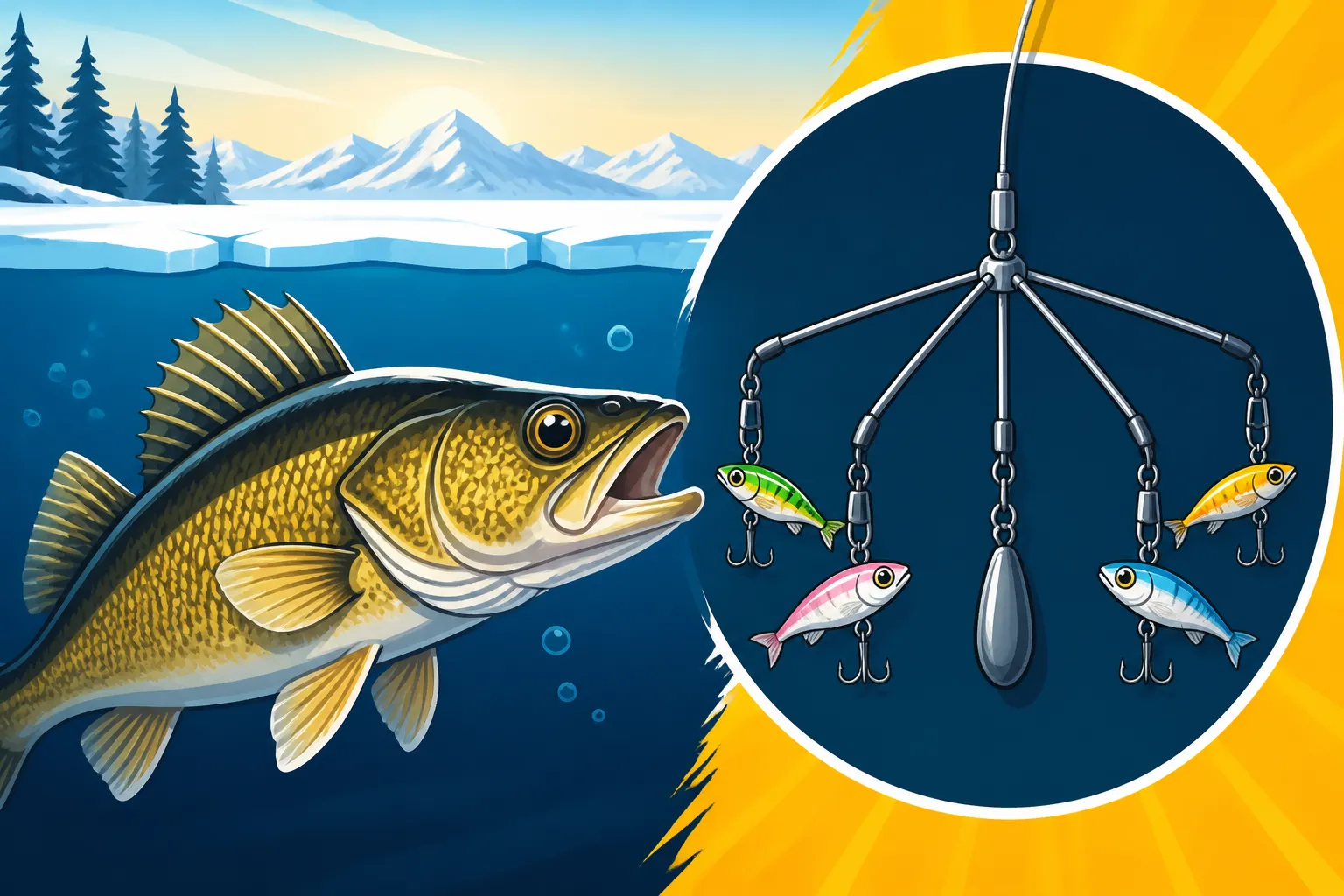
At its heart, an umbrella rig, sometimes called an A-rig or Alabama rig, is a series of wires radiating out from a central point, much like the spokes of an umbrella. Each of these wires typically has a swivel or snap attached at its end, allowing you to clip on individual baits. The most common configuration features five wires: one central wire that runs longer and four shorter wires branching out around it. This design is crucial because it allows you to present multiple baits simultaneously, creating the illusion of a small school of baitfish swimming together. You'll often see these rigs armed with jig heads and soft plastic swimbaits, but really, you can attach almost anything from grubs to small spoons. The central hub might also have a weight to help with casting and depth control.
How Umbrella Rigs Mimic Baitfish Schools
The magic of the umbrella rig lies in its ability to imitate a bait ball. Think about it: in the cold, clear waters of an Alberta lake in winter, walleye can be quite lethargic. They're often conserving energy, and chasing down single prey items might not be worth the effort. However, if they see what looks like a vulnerable school of minnows or young perch, their predatory instincts can kick in big time. The collective movement of multiple baits, wiggling and flashing together, creates a much larger, more enticing profile than a single lure ever could. It's a "feast or famine" scenario for the walleye; they see an opportunity for a significant meal, and that can be enough to overcome their winter sluggishness and trigger a strike. This visual appeal is amplified in clear water conditions often found under the ice or in very cold open water.
Why Umbrella Rigs Are Effective for Winter Walleye
Now, you might be thinking, "Winter walleye? With an umbrella rig? Isn't that overkill?" On the contrary, when used correctly, these rigs can be incredibly potent for cold-water walleye in Alberta. It's all about playing into the unique behaviors of walleye during the colder months.
The Cold Water Advantage
Walleye, like most cold-blooded fish, become less active as water temperatures drop. Their metabolism slows down, and they're not as inclined to chase fast-moving, erratic single lures. This is where the umbrella rig shines. It presents a compact, easy-to-target "school" of baits. A walleye can ambush this school, getting multiple potential meals in one strike, which is a much more energy-efficient strategy. The slow, steady retrieve often associated with umbrella rigs also perfectly matches the reduced activity levels of winter walleye. They don't need to expend much energy to intercept it, making it an irresistible target. This technique can be especially effective in deeper sections of lakes like Lesser Slave Lake where walleye might be concentrated near structure or along deep breaklines.
Triggering Reaction Strikes
Beyond the energy-saving aspect, umbrella rigs are fantastic at triggering reaction strikes. Even if a walleye isn't actively feeding, the sudden appearance of a "school" of baits can provoke an instinctive, aggressive response. It's almost like a reflex. The sheer volume and movement of the baits can overwhelm the fish's hesitation, forcing it to strike. This is particularly true if you incorporate a slight jerk or pause in your retrieve, making the "school" appear to dart or stumble. This unexpected movement can often be the final trigger needed to get a fish to commit, even when they're otherwise tight-lipped. This is a tactic often discussed when anglers want to learn How to Catch Walleye in Alberta during challenging periods.
Choosing the Right Umbrella Rig for Alberta Winter Walleye
Selecting the right umbrella rig isn't about just grabbing the biggest one on the shelf. For Alberta winter walleye, finesse often trumps brute force. You want a rig that's manageable, appropriately sized for the baitfish they're keying on, and built to withstand the cold.
Arm Length and Wire Gauge Considerations
For winter walleye, generally, you'll want to lean towards rigs with shorter arm lengths and lighter wire gauges. A compact rig of about 4-6 inches for the arms is often ideal, as it creates a tighter "school" that's easier for a walleye to engulf. Longer arms might spread your baits too far apart, making it harder for the fish to commit to a single target, or even to the whole presentation. Lighter wire gauges (though still strong enough to handle a feisty walleye) allow for more natural movement of your individual baits. Some anglers even prefer rigs with flexible wire instead of rigid arms for a more lifelike pulsation. You can often find a good selection of these lighter rigs at stores like Bass Pro Shops or through online retailers like Amazon, making it easy to compare different styles and sizes.
Jig Head Weight and Soft Plastic Selection
This is where you can truly dial in your presentation. For winter walleye, lighter jig heads are typically more effective. Think 1/8 oz to 1/4 oz, perhaps slightly heavier if you're battling strong currents or extreme depths. The goal is a slow, controlled sink and a subtle movement. As for soft plastics, small shad imitations, grubs, or slender minnow profiles in the 2-inch to 4-inch range are usually perfect. Colors should mimic local baitfish – shades of white, pearl, smoke, or natural browns and greens are often excellent choices. Don't be afraid to experiment, though! Sometimes a flash of chartreuse or orange can be the ticket to enticing a strike. Remember, you're trying to create a cohesive school, so all your baits should generally be the same size and type, though varying the color slightly can sometimes add an interesting dynamic without breaking the illusion. For a great overview of appropriate gear, check out Best Tackle for Alberta Walleye.
Rigging and Presenting Your Umbrella Rig for Success
Getting the right rig is only half the battle; knowing how to set it up and present it effectively is crucial for success with Alberta's winter walleye. This involves matching your rod and reel, and mastering a few key retrieval techniques.
Selecting the Right Rod and Reel
For a winter walleye umbrella rig, you'll want a rod with enough backbone to handle the weight of the rig and any fish that bites, but with a sensitive tip to detect those subtle cold-water strikes. A medium-heavy power spinning or baitcasting rod, around 7 to 7.5 feet long, with a fast action is often ideal. This length gives you good casting distance and leverage, while the fast action tip helps with sensitivity and quick hook sets. Pair this with a reliable spinning reel in the 3000-4000 series or a baitcasting reel with a moderate gear ratio (around 6.x:1) for controlled retrieves. Line choice is also important: 10-15 lb braided line with a 15-20 lb fluorocarbon leader is a popular choice. The braid offers sensitivity and strength, while the fluorocarbon leader provides invisibility in clear water and some abrasion resistance.
Effective Retrieval Techniques
The key to success with umbrella rigs for winter walleye is a slow, steady, and controlled retrieve. You're not looking to burn these rigs through the water.
- Slow Roll: Cast out and let the rig sink to your desired depth (often just above where you're marking fish or structure). Then, simply reel slowly and steadily, just fast enough to keep the baits swimming naturally. This gives the walleye plenty of time to track the "school" and decide to strike.
- Lift and Drop: This technique involves lifting your rod tip slowly, then letting it drop back, reeling in the slack. This makes the baits appear to rise and fall, mimicking a school of baitfish moving up and down in the water column. It can be particularly effective when fish are somewhat suspended.
- Subtle Twitch: Integrate very gentle twitches or pauses into your slow retrieve. These small, erratic movements can often be the final trigger for a hesitant walleye.
Remember to pay close attention to your electronics. Your fish finder is your best friend in winter, helping you locate schools of walleye or prime structure. Knowing the depth where fish are holding will guide your retrieve. For specific fishing spots, looking into Best Walleye Lakes in Alberta might give you an edge, and don't forget to review Alberta Walleye Limit by Zone before you head out!
Safety and Regulations
Before you even think about deploying an umbrella rig, it's absolutely crucial to double-check the Alberta fishing regulations. These rigs, due to their multiple hooks, can sometimes fall under specific rules regarding hook limits per line or per angler. Always consult the current Alberta Guide to Sportfishing Regulations. Beyond regulations, practice safe handling of these rigs. They have multiple hooks, which can easily get tangled or cause injury if you're not careful. Use appropriate landing nets, like those with rubber mesh, to help prevent hooks from getting snagged in the net and to protect the fish during release. When ice fishing, ensure you have proper ice safety gear and knowledge of How thick ice needs to be to fish safely in Alberta before venturing out.
Tips for Maximizing Your Umbrella Rig's Effectiveness
Using an umbrella rig for winter walleye isn't just about tying it on and casting. There are several nuanced approaches that can significantly boost your success rates, especially in the challenging cold-water environment of Alberta.
Finding Walleye in Winter
Locating walleye in winter is arguably the most critical step, regardless of your chosen presentation. Walleye often congregate in predictable areas during the colder months. Look for deeper main lake basins, especially those with access to shallower flats or points where baitfish might roam. Steep drop-offs, underwater humps, and structural elements like old river channels or rock piles are also prime holding areas. Your fish finder is indispensable here. Spend time idling over promising spots (if open water) or drilling multiple holes (if ice fishing) to identify baitfish schools and walleye congregating near structure. Once you pinpoint them, position yourself strategically to present your umbrella rig directly to them. Understanding What water temperature walleye prefer can also help narrow down ideal locations.
Experimenting with Baits and Colors
While natural baitfish colors are often a good starting point, don't be afraid to experiment with different soft plastic styles and colors. Sometimes, a subtle variation can make all the difference. Try switching from a paddle tail swimbait to a more slender fluke-style bait, or try a grub with more tail action. Different jig head colors can also influence strikes – a red or chartreuse head can sometimes add an extra trigger, especially in slightly stained water. Keep a variety of options on hand, and be willing to change things up if the fish aren't responding. A tackle box stocked with options from Bass Pro Shops or Amazon can be a lifesaver when you need to adapt quickly. This adaptability is key for consistent success. You can also explore different jigging spoons as discussed in Best Jigging Spoon for Winter Lake Trout for inspiration, even if the target species is different.
Other Considerations for Cold-Water Success
Beyond the rig itself, remember that the overall conditions and your approach play a huge role. Dress warmly, stay hydrated, and be patient. Cold-water fishing is often a game of persistence. Consider using scent on your soft plastics, as a little extra appeal can sometimes tip the scales in your favor. Pay attention to how the wind and current (if any) are affecting your presentation, and adjust your jig head weights or retrieval speed accordingly. Using quality line and knots is always important, but especially so when fishing a multi-lure rig where multiple points of failure could exist. And of course, always respect the resource; practice proper catch and release techniques for any fish you don't intend to keep, particularly in cold water where fish can be more fragile. For general winter fishing strategies, consider reading Ice Fishing in Alberta and Best Techniques for Winter Walleye.
| Rig Component | Winter Walleye Recommendation | Why it's Effective |
|---|---|---|
| Arm Length | Shorter (4-6 inches) | Creates a compact, easy-to-target "school" for lethargic walleye |
| Wire Gauge | Lighter gauge | Allows for more natural, subtle movement of baits |
| Jig Head Weight | Lighter (1/8 oz – 1/4 oz) | Enables a slow sink and subtle presentation, matching cold-water activity |
| Soft Plastic Size | Small (2-4 inches) | Mimics common winter baitfish; easier for walleye to inhale |
| Soft Plastic Shape | Shad, minnow, grub imitations | Replicates natural forage; slender profiles often work well |
| Colors | Natural (white, pearl, smoke, green) | Blends in, appears realistic; occasional bright accents for attraction |
| Leader Material | Fluorocarbon (15-20 lb) | Low visibility in clear water; good abrasion resistance |
| Main Line | Braided (10-15 lb) | High sensitivity for subtle bites; strong for hook sets |
| Rod Power | Medium-Heavy | Handles rig weight and fish; good backbone for hook sets |
| Rod Action | Fast | Sensitive tip for detecting light bites; quick hook response |
Ultimately, while umbrella rigs might seem unconventional for winter walleye, their ability to create the illusion of a vulnerable bait school can be incredibly effective in the right conditions. With careful selection of components, proper rigging, and a methodical approach to presentation, you might just find your new favorite way to target those elusive Alberta walleye when the temperatures drop.
Disclaimer
This article is for general informational purposes only and does not constitute professional advice. Laws, prices and regulations vary by location and change over time. Consult a qualified professional for guidance on your specific situation.