Best drop shot weight for lake current
There’s nothing quite as frustrating as trying to fish a drop shot rig only to have your weight drag, skip, or get completely swept away by the current. It’s an all too common scenario on Alberta’s larger lakes or even just on a breezy day, leaving you feeling disconnected from your bait and wondering if you’re even fishing effectively. This guide is here to help you navigate those choppy waters, literally, by breaking down how to choose the best drop shot weight to keep your presentation perfect, even when the lake throws you a curveball.
Understanding Lake Current Dynamics in Alberta
When most people think of "current," they often picture rushing rivers. But trust me, currents are a very real factor in many of Alberta's lakes, and understanding them is crucial for successful drop shot fishing. It's not always a visible flow; sometimes it's an invisible force subtly pulling your line.
Wind-Driven Currents vs. Inlet/Outlet Currents
In Alberta, you'll encounter a couple of primary types of currents in lakes. The most common, especially on our wide-open bodies of water like Lesser Slave Lake or even parts of Cold Lake, are wind-driven currents. A consistent breeze, particularly over a long fetch (the distance the wind travels over water), can create a significant surface current that extends surprisingly deep. This current can make it incredibly difficult to keep your drop shot rig directly beneath your boat or to feel those light bites. You might cast out, and before your weight even settles, it's already being pushed off to the side, causing your line to bow out.
Then you have inlet and outlet currents. While lakes aren't rivers, many have significant inflows from streams or rivers and outflows that can create localized currents, especially near those points. Think about where a larger river, like the North Saskatchewan, widens into a lake-like section, or where a feeder creek enters a smaller lake. Even a culvert under a road can create a surprising amount of flow. These currents are usually more predictable than wind-driven ones, but they can be incredibly strong, often requiring heavier weights to maintain contact with the bottom. Ignoring these currents will lead to your rig being swept away from the fish-holding structure you're trying to target.
Depth and Structure's Role
The impact of current isn't uniform across a lake. Water depth plays a huge role. Generally, surface currents are strongest, and their influence diminishes with depth. However, this isn't a hard and fast rule. In shallower areas, even a light current can have a disproportionate effect on your rig because there's less water column to diffuse the force. Imagine fishing a drop shot in 8 feet of water on a windy day – that weight is going to get pushed around much more readily than if you were in 30 feet of water with the same surface current.
Underwater structure also dramatically alters current flow. A submerged hump, a rock pile, or a weed line can create eddies and current breaks. Your drop shot weight might be perfectly stable on the upstream side of a boulder, but then get sucked into a swirling eddy just behind it. Learning to "read" the water, even on a lake, and anticipating how these features will interact with currents is a skill that comes with experience. Your fish finder can be your best friend here, showing you subtle changes in bottom contour that indicate current breaks. Best Fish Finders for Alberta Lakes can certainly help you understand these features. Sometimes, fishing behind structure in the eddy is exactly where the fish are hiding, out of the main current, waiting to ambush prey.
Factors Influencing Drop Shot Weight Selection
Choosing the right drop shot weight isn't about pulling a random sinker from your tackle box. It's a calculated decision based on several interconnected factors. Getting this wrong can lead to missed bites, tangled lines, and a whole lot of frustration.
Current Strength and Water Depth
This is perhaps the most critical factor. The stronger the current, the heavier your weight needs to be to maintain bottom contact and keep your bait in the strike zone. If you're fishing a deep lake like Cold Lake and there's a strong wind-driven current pushing your boat, a lighter weight simply won't cut it. Your line will bow out significantly, making it almost impossible to feel subtle bites or to know if your bait is even near the bottom.
Think of it like this: your weight is the anchor for your presentation. If the anchor is too light, the boat (your bait) drifts away. In shallow water, even a relatively light current can move a standard drop shot weight around quickly. As you move into deeper water, the current's direct force lessens, but you also have more line out, which can create more drag and make it harder to feel a light weight on the bottom. So, a deeper presentation, even in moderate current, often necessitates a slightly heavier weight to ensure crisp bottom contact. There’s a sweet spot where you have enough weight to stay put, but not so much that you lose the sensitivity you need to detect those faint taps.
Line Diameter and Rod Power
Your fishing line's diameter directly impacts how much water resistance it encounters. Thicker lines (higher test strength) will catch more current, causing them to bow out more and make it harder for your weight to stay put. This is why many experienced drop shot anglers opt for thinner diameter braided lines with a fluorocarbon leader for maximum sensitivity and minimal current resistance. Best fluorocarbon leader for clear water walleye talks about these advantages. If you're using a heavier monofilament or a thicker braid, you'll inherently need a slightly heavier drop shot weight to compensate for the increased drag.
Similarly, your rod's power and action play a role. A lighter power rod (e.g., ultralight or light action) might struggle to properly "load" or cast a really heavy drop shot weight, and it certainly won't provide the backbone needed for a solid hookset with a heavier weight at depth. Conversely, a medium-heavy rod designed for heavier baits might not give you the sensitivity to feel a very light drop shot weight struggling to stay on the bottom in a current. Matching your rod and reel combo to your chosen weight and line class is vital for efficient drop shot fishing. For targeting walleye or pike, you might use different rod setups entirely. Best Fishing Rods for Alberta Rivers can give you an idea of what works for different scenarios.
Bait Size and Presentation
The size and buoyancy of your drop shot bait can also influence your weight choice. A larger, more buoyant plastic or a live minnow will create more drag in the current than a small, slender plastic. While the weight is primarily there to get your rig to the bottom, a bait that's constantly being lifted and swept away by the current will make it harder for your weight to do its job. If your bait is significantly contributing to the current's pull, you'll need to step up your weight to keep everything stable.
Ultimately, the goal of drop shot fishing is a controlled, subtle presentation. You want your weight to be heavy enough to keep your bait stationary (or moving very slowly and predictably) at a specific depth, allowing the bait to gently quiver and entice fish. If your weight is too light, your bait will be all over the place, making it look unnatural and harder for fish to target. Think about those wary walleye in Lesser Slave Lake – they're not going to chase something erratic in a strong current when they can conserve energy. How to Catch Walleye in Alberta goes into more detail on their habits.
Recommended Drop Shot Weights for Alberta Lake Current Scenarios
Let's get down to the brass tacks. While there's no single "magic" weight that works for every situation, we can certainly narrow down the best choices for different current conditions you'll encounter on Alberta's lakes.
Light Current (e.g., calm days, shallower water)
On those glorious calm days, or when fishing in shallower, more protected bays where the wind isn't funneling, a lighter drop shot weight is often your best friend. In these scenarios, you're looking for finesse and maximum sensitivity.
- 1/4 oz to 3/8 oz: This range is excellent for depths up to 15-20 feet with minimal current. It provides enough weight to get your bait down relatively quickly and maintain a good feel for the bottom, but it's light enough that a cautious fish won't feel much resistance when it takes the bait. This is perfect for subtle presentations to wary fish, letting your soft plastic or minnow just barely dance above the bottom. You'll often use these weights when targeting panfish or smaller trout in calmer waters.
Moderate Current (e.g., breezy days, mid-depth)
This is probably the most common scenario you'll face on many of Alberta's larger lakes. A steady breeze, or fishing in waters 20-40 feet deep where currents can still be felt, requires a step up in weight.
- 1/2 oz to 3/4 oz: This is a versatile range that covers a lot of bases. A 1/2 oz weight is a great starting point when you feel some pull on your line, but it's not overwhelming. It allows for good bottom contact while still maintaining decent sensitivity. If the wind picks up, or you move into deeper water (say, 30 feet or more), jumping to a 3/4 oz weight will often make all the difference in keeping your rig stable. This weight class is often ideal for targeting walleye and pike in their typical depth ranges on places like Gull Lake or Pigeon Lake. The extra weight helps keep your rig more vertical, which is key for feeling those light bites.
Strong Current (e.g., windy, deeper, near inlets)
When the wind is howling across the lake, or you're positioned near a significant inlet or outlet where true current is present, you need to go heavy. Don't be shy here; it's better to be slightly overweighted than constantly fighting the current.
- 3/4 oz to 1.5 oz+: If a 3/4 oz isn't enough to keep your line relatively vertical and maintain solid bottom contact, don't hesitate to bump up to 1 oz, or even 1.5 oz or more if needed. This is especially true if you're fishing very deep water (40+ feet) in conjunction with strong wind or a swift current. You might sacrifice a tiny bit of "finesse" with such heavy weights, but the ability to stay in the strike zone and actually feel your bait is paramount. Sometimes, near significant river inlets or outlets on lakes, the current can be so powerful that you might even consider specialized "pencil" or "slinky" style weights over 1.5 oz to cut through the water more efficiently. Don't be afraid to experiment to find what works for those specific conditions. When you're fishing for species like lake trout in deeper areas of Cold Lake, especially if there's a strong chop on the water, these heavier weights become indispensable.
Here's a quick reference table to help visualize these scenarios:
| Current Strength | Water Depth (approx.) | Recommended Weight Range | Common Weight Shapes | Notes for Alberta Anglers |
|---|---|---|---|---|
| Light | 5-20 feet | 1/4 oz – 3/8 oz | Round, Tear-drop | Ideal for calm days, sheltered bays, or subtle presentations for wary fish. Think smaller stocked ponds. |
| Moderate | 20-40 feet | 1/2 oz – 3/4 oz | Tear-drop, Cylindrical | Standard for breezy days or deeper water on most Alberta lakes. Great for walleye on Lesser Slave or Pigeon. |
| Strong | 40+ feet or High Wind | 3/4 oz – 1.5 oz+ | Cylindrical, Pencil | Essential for very windy conditions, deep lake trout fishing, or near river inlets/outlets. Cold Lake lake trout territory. |
Tips for Rigging and Fishing Drop Shot in Current
It's not just about the weight; how you rig it and how you fish it also makes a huge difference when dealing with currents. A few small adjustments can turn a frustrating day into a productive one.
Choosing the Right Weight Shape
Believe it or not, the shape of your drop shot weight matters, especially in current.
- Round Weights: These are common and inexpensive, but in current, they tend to roll and snag more often, especially on rocky bottoms. They offer a good "feel" on soft bottoms but struggle to stay put in flow.
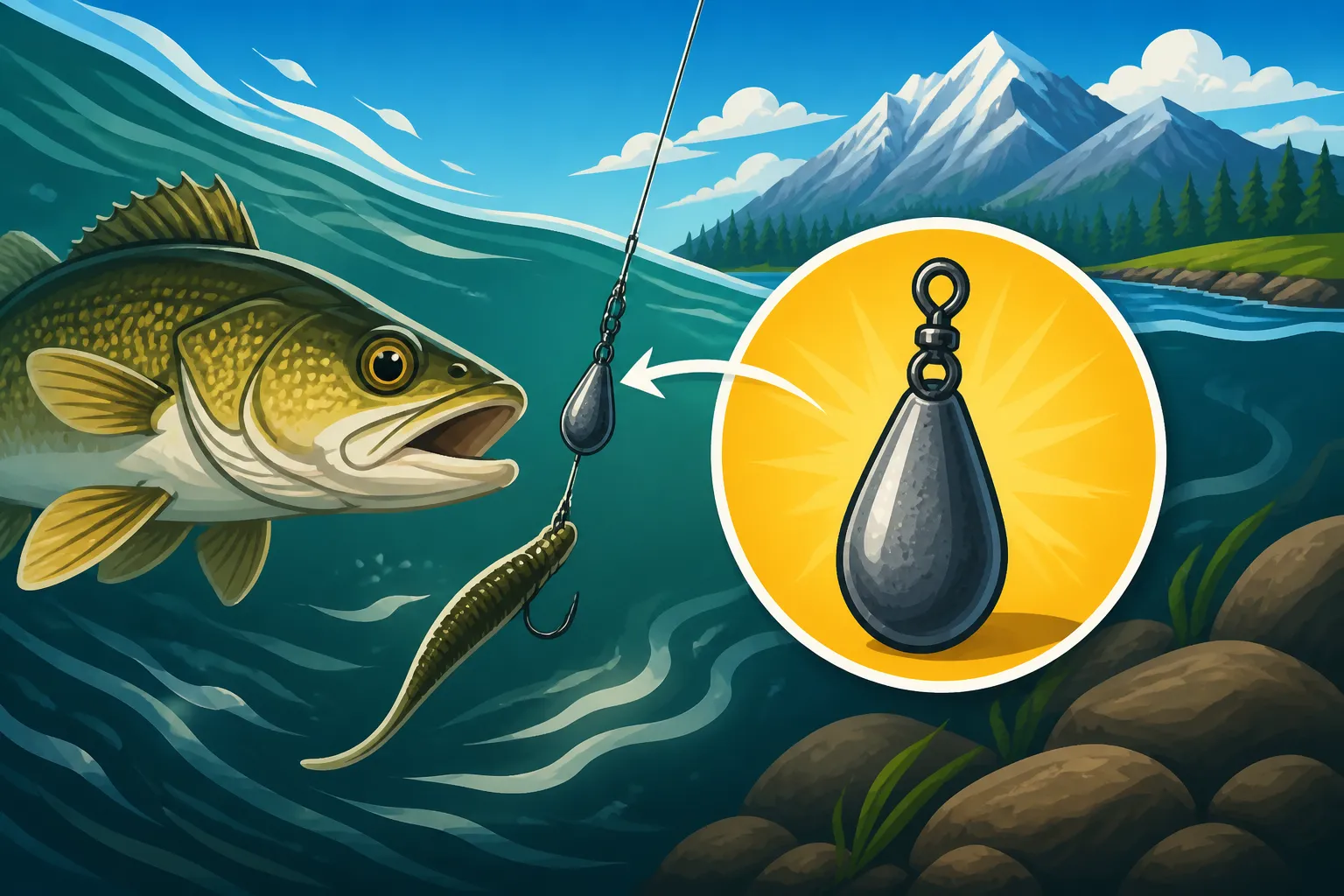
- Tear-Drop Weights: A very popular all-around choice. Their tapered shape helps them sink quickly, and the flat bottom provides some stability against current, making them less likely to roll than round weights. They're a good compromise between sinking speed and snag resistance. Many anglers swear by these for general lake fishing.
- Cylindrical (Pencil) Weights: These are fantastic for current. Their slender profile cuts through the water efficiently, reducing drag. They're also excellent for fishing through weeds or rocky bottoms because their long, thin shape is less prone to snagging in crevices. If you're consistently battling current or fishing snaggy areas, cylindrical weights are often the best choice. You can find a good selection of these at reputable retailers like Bass Pro Shops or online through Amazon.
- Slinky Weights: These are essentially a lead core encased in a paracord or similar material. They are incredibly snag-resistant and conform to the bottom. While perhaps less common for pure drop shot in Alberta, they are brilliant in extremely rocky, current-heavy areas where conventional weights would get hung up constantly.
Always match the weight's attachment point to your line – most drop shot weights have a swivel or a line pinch system, allowing for quick changes without re-tying, which is a huge plus when trying to dial in the right weight for changing conditions.
Line Management and Boat Control
Even with the perfect weight, poor line management or boat control can ruin your drop shot presentation in current.
- Maintain a Vertical Presentation: This is the golden rule of drop shotting in current. You want your line to go as straight down from your rod tip to your weight as possible. Any significant bow in your line means you're losing feel and control.
- Boat Positioning: If you're in a boat, use your trolling motor to constantly adjust your position and fight the current. Spot-Lock or anchor mode features on modern trolling motors are game-changers here. They allow you to hold your boat precisely over a piece of structure or a current break, keeping your line vertical. Without this, you'll be constantly drifting, and your drop shot rig will be dragging along rather than being presented subtly. Think about how crucial boat control is when navigating the currents on the Bow River for trout; the same principle applies, albeit often subtly, on our lakes. Alberta Boating Laws for Anglers is a good resource for understanding how to operate your boat safely.
- Minimize Slack Line: Always try to keep a slight tension on your line. Too much slack, and you won't feel bites or be able to react to the current. However, don't over-tension it to the point where your weight is lifting off the bottom. It's a delicate balance.
- Feel the Bottom: With the right weight and good line management, you should be able to distinctly feel your weight "tick" or "thump" the bottom. If you stop feeling it, your weight might be too light, or you've drifted out of position. Sometimes, it's just a soft "mushy" feeling; that's still contact. Pay attention to every subtle change.
- Utilize Your Rod Tip: Your rod tip is your direct connection to your weight. Watch it for any unusual movements, even if you don't feel a distinct bite. A sudden twitch or a slight bend can indicate a fish. When you feel a bite, don't set the hook like you would with a jig. Instead, simply reel down until you feel the weight of the fish, and then pull up firmly. This allows the fish to fully inhale the bait and often results in a better hookset.
By understanding how currents behave in Alberta's lakes, matching your weight selection to those conditions, and practicing precise rigging and boat control, you'll be well on your way to mastering drop shot fishing, even when the water isn't perfectly still. It's all about making those small, informed adjustments that lead to big results on the water.
Disclaimer
This article is for general informational purposes only and does not constitute professional advice. Laws, prices and regulations vary by location and change over time. Consult a qualified professional for guidance on your specific situation.