Best walking topwater lure for pike at dawn
There’s nothing quite like the heart-stopping explosion of a massive northern pike blowing up on a topwater lure at first light. It’s a moment that can make even the most seasoned angler jump, but getting that perfect strike means choosing the right lure and knowing how to work it. This guide is all about helping you understand the magic of a "walking" topwater lure for Alberta pike and how to master it at dawn.
Why Dawn is Prime Time for Topwater Pike
Fishing at dawn offers a unique set of conditions that make it absolutely perfect for throwing topwater lures, especially when you're targeting those aggressive northern pike in Alberta's lakes and rivers. It’s not just about the peaceful quiet before the day gets busy; there’s some serious science and pike psychology at play here.
Understanding Pike Behavior in Low Light
Pike are ambush predators, and their eyes are specifically adapted for hunting in lower light conditions. Think about it: during the bright, harsh glare of midday, they're often tucked away in deeper, shadier cover, waiting for an easy meal. But as dawn breaks, and the sun is just starting to kiss the horizon, the light levels are ideal for them to actively hunt. The subtle glow enhances their vision while making it harder for their prey to spot them.
The cooler water temperatures at dawn also play a big role. After a long summer day, the surface waters can warm up considerably, pushing pike deeper where it's more comfortable. But with the overnight chill, the surface water cools down, making those shallow weed beds and rocky points much more appealing to hungry pike looking for a morning snack. This combination of optimal light and temperature means pike are often more active and willing to chase a meal near the surface, making them prime targets for a well-presented topwater bait. They're feeling confident, hungry, and ready to attack.
The Thrill of the Topwater Strike
Let's be real, part of the allure of topwater fishing is the sheer visual spectacle. There's something inherently thrilling about seeing your lure dance across the surface, knowing that at any moment, a monster could erupt from below, engulfing your bait in a spray of water. It's an adrenaline rush unlike any other in fishing.
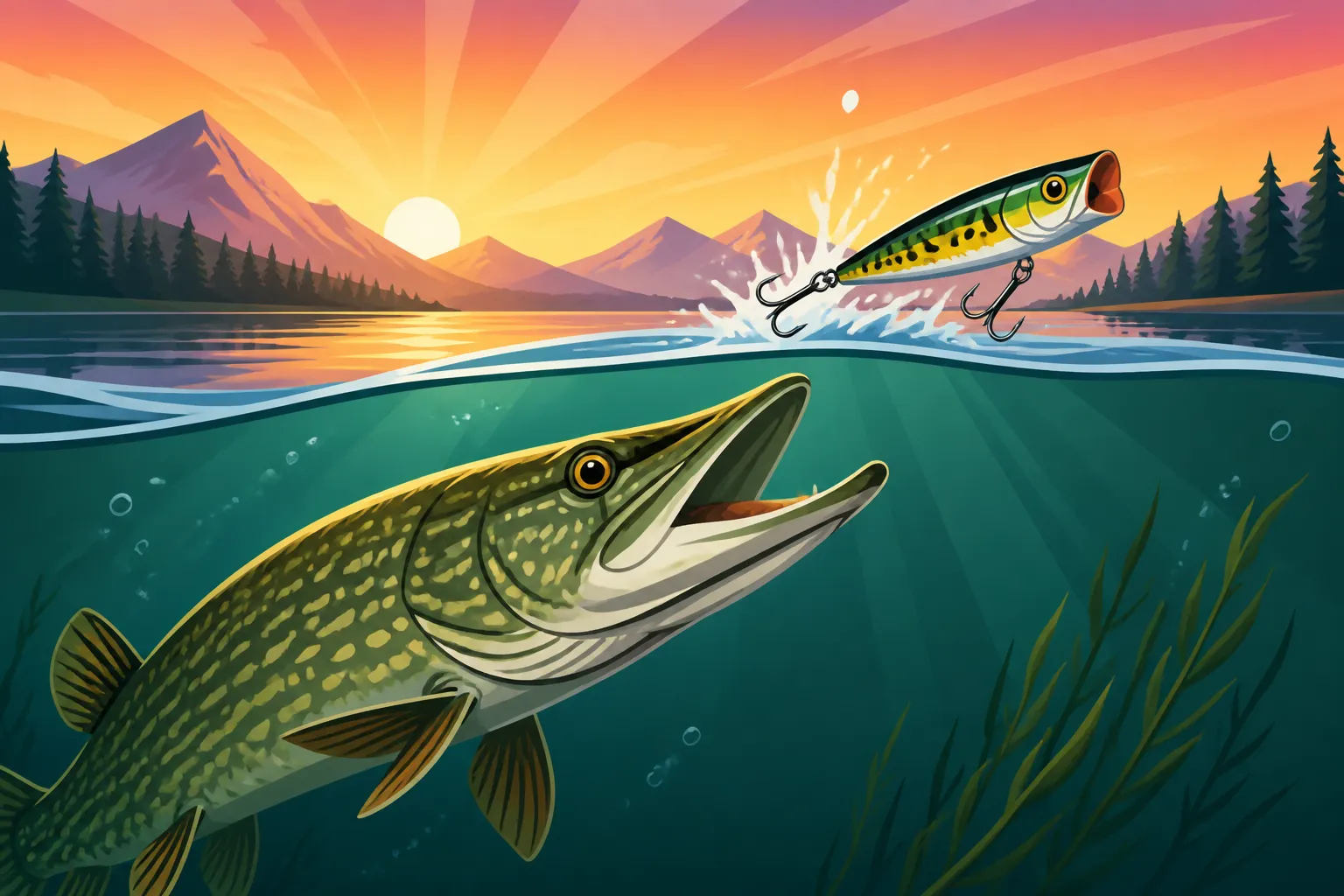
For pike, this visual appeal is amplified. They are incredibly aggressive fish. When they decide to hit a topwater lure, it’s not a gentle sip or a tentative tug. It's a violent, often explosive, attack that can make you jump out of your skin. The silhouette of a topwater lure against the dim morning sky, combined with its distinctive splashing and gurgling, perfectly mimics an injured baitfish or a small mammal struggling on the surface. This triggers a powerful predatory instinct in pike, often resulting in spectacular, unforgettable strikes. It's not just fishing; it's an experience. You’re not just feeling the bite, you’re seeing the chaos unfold right before your eyes, and that’s a huge part of why so many of us are absolutely hooked on this style of fishing.
What Makes a Topwater Lure a "Walker"?
When we talk about "walking" topwater lures, we're referring to a specific type of bait that, when retrieved correctly, creates a unique, side-to-side gliding motion across the water's surface. This isn't just any topwater chugging or splashing; it's an intentional dance that can drive pike absolutely wild.
The Walk-the-Dog Action Explained
The "walk-the-dog" action is a legendary retrieve technique. It involves a rhythmic, sweeping motion of your rod tip combined with reeling in slack line, causing the lure to zig-zag back and forth. Imagine a dog on a leash, walking in a serpentine pattern – that's essentially what you're trying to achieve with your lure.
To perform this, you'll cast your lure out and let it settle. Then, with your rod tip pointed slightly down towards the water (usually around the 8 o'clock or 9 o'clock position), you'll give the rod tip a short, sharp twitch. As the lure darts to one side, you immediately drop your rod tip back towards the water to create slack, then reel up that slack just enough to maintain contact with the lure. Repeat the twitch, drop, and reel, and the lure will dart to the other side. It sounds complicated, but once you get the rhythm down, it becomes second nature. This erratic, injured-prey action is incredibly enticing to pike. It screams "easy meal!" and often draws them out of cover for a brutal strike. The key is finding a smooth, consistent cadence, but don't be afraid to experiment with pauses – those can often be when a pike decides to commit.
Key Features of Effective Walking Topwaters for Pike
Not all walking topwaters are created equal, especially when you're specifically targeting northern pike. These fish are big, aggressive, and have a mouthful of sharp teeth, so your lure needs to be up to the task.
First, size and profile are important. Pike aren't shy about eating a substantial meal, so don't be afraid to throw larger walking baits, often in the 4-inch to 6-inch range. A longer, slender profile mimics common pike forage like minnows, suckers, or even juvenile panfish. The way the lure sits on the water, slightly nose-down or perfectly flat, can also affect its action and appeal.
Next, consider the hooks. Pike have incredibly powerful jaws, and they'll quickly bend out flimsy treble hooks. Look for lures equipped with strong, sharp, saltwater-grade trebles right out of the box, or be prepared to upgrade them yourself. Many anglers targeting pike will swap out the factory hooks for larger, stronger ones to ensure better hook-ups and fewer lost fish.
Rattles are another crucial feature. Many walking topwaters incorporate internal rattles that create noise as the lure moves. This acoustic attraction is a massive advantage in the dim light of dawn or in stained water conditions. The rattling sound mimics feeding baitfish or struggling prey, drawing pike in from a distance and helping them pinpoint the lure.
Finally, color patterns can make a difference. While the silhouette and action are often more critical in low light, having a few different options is smart. Natural baitfish patterns (perch, smelt, shiner) are always a solid bet. However, don't shy away from brighter, more contrasting colors like firetiger or chartreuse, especially if the water is a bit cloudy or you're fishing under very dim conditions. Sometimes, a high-contrast pattern can be just the visual cue a pike needs to commit. You can find a huge selection of these patterns and sizes at retailers like Bass Pro Shops or even through online marketplaces like Amazon.
Top Walking Topwater Lures for Alberta Pike at Dawn
Okay, let's get down to the brass tacks: which specific lures should you be tying on when you're chasing those dawn pike strikes? There are some tried-and-true classics, and then there are some fantastic modern options that have proven themselves time and again in Alberta's waters.
Classic & Proven Walkers
When you talk about walking topwater lures, a few names immediately come to mind for their consistent ability to put fish in the boat, year after year. These are the workhorses that every pike angler should have in their tackle box.
One of the most iconic is the Heddon Super Spook or Zara Spook. These lures have been catching fish for decades, and for good reason. Their simple, cigar-shaped design is incredibly effective at creating that perfect walk-the-dog action. They come in various sizes, but for pike, the larger Super Spook (often around 5 inches) is usually the sweet spot. Their durable plastic construction and good internal rattles make them a fantastic choice for aggressive pike. The original Zara Spook, with its single internal rattle, produces a distinct clack that pike seem to love, especially in the early morning stillness. These are readily available at virtually any tackle shop or through online retailers like Amazon.
Another excellent option is the Lucky Craft Sammy. While often associated with bass fishing, the larger Sammy models (like the Sammy 100 or 115) are absolute pike magnets. They have a slightly more refined finish and often a more erratic, tighter walk than some of the bulkier lures. The Sammy also often features multiple internal rattles, creating a more complex sound profile that can be incredibly effective when pike are being a bit finicky. These lures are known for their casting distance, which can be a huge advantage when you need to cover a lot of water at dawn, or reach those distant weed edges without spooking shallow pike. Many anglers swear by the naturalistic patterns offered by Lucky Craft, which perfectly mimic the baitfish found in many Alberta lakes.
Don't overlook the Rapala Skitter Walk. These lures offer a fantastic balance of size, action, and affordability. They're designed to be easy to walk, making them a great choice for anglers who are still getting the hang of the retrieve. The Skitter Walk often has a slightly wider profile and creates a noticeable "chugging" sound in addition to the walk, which can be an added attractant. Their larger models are sturdy enough to handle toothy pike and come with decent hooks. Whether you're casting to emergent weed beds on Lesser Slave Lake or along rocky shorelines on Cold Lake, these classics have a proven track record. For more general advice on pike, you might want to check out How to Catch Northern Pike in Alberta.
Modern Innovations and Specialized Options
While the classics are great, lure manufacturers are always pushing the boundaries, offering new designs that can give you an edge, especially when conditions are tough or you’re looking for something a bit different.
Take the Livingston Lures Walk N Pop. This lure combines the walk-the-dog action with a subtle cupped mouth, allowing it to "pop" or "spit" a bit of water when twitched. This dual action can be incredibly effective, adding an extra layer of disturbance and noise that can trigger reluctant pike. What's more, Livingston Lures often incorporate EBS (Electronic Baitfish Sound) technology, emitting biological sounds that mimic real baitfish. This is a unique feature that can provide an auditory advantage, especially important in low light when pike are relying heavily on their lateral line to detect prey. It’s an innovative approach that can certainly put more pike in your boat.
Another compelling option comes from companies like Megabass with their Dog-X series or Duel Hardcore with their Pencil baits. These are often higher-end lures, but they are meticulously designed for exceptional balance, casting distance, and a very fluid, natural walk. They might have a sleeker profile and subtle, high-frequency rattles that are designed to appeal to fish that have seen every other lure in the book. While the price point might be a bit higher, the attention to detail in their hydrodynamics often results in a super consistent, effortless walk-the-dog action that can make all the difference on a calm dawn.
Sometimes, a topwater buzzbait can be a good transition lure if the pike aren't fully committing to a pure walking lure, but still want something on the surface. While not strictly a "walker," their unique propellor splash can still be deadly at dawn. However, for a true walk-the-dog, sticking to the aforementioned models will yield the best results. You can browse the latest innovations and specialized designs at large outdoor retailers like Bass Pro Shops or explore options from various brands on Amazon to see what unique features might appeal to you. Remember, having a diverse arsenal means you’re ready for whatever Alberta’s pike throw at you.
Mastering the Walk-the-Dog Retrieve for Pike
Having the right lure is only half the battle. The other half, and arguably the more crucial part, is knowing how to make that lure dance in a way that pike just can’t resist. Mastering the walk-the-dog retrieve takes practice, but once it clicks, you'll be consistently generating those explosive topwater strikes.
Setting Up Your Gear for Topwater Success
Your equipment plays a huge role in how easily and effectively you can execute the walk-the-dog retrieve, and more importantly, how well you can handle a big, angry pike once it strikes.
First, let's talk about the rod. For walking topwaters, a medium-heavy to heavy power casting rod, around 6'6" to 7'6" in length, is ideal. The medium-heavy power provides enough backbone to cast larger lures and to drive hooks into a pike's tough mouth, but still has enough tip action to impart that subtle twitch. A fast action tip is key, as it allows for precise, short snaps that make the lure zig-zag, while the power further down the blank gives you leverage. A rod that's too soft will absorb too much of your twitch, and one that's too stiff will make it hard to get the rhythmic action.
For the reel, a baitcasting reel with a moderate to fast gear ratio (around 6.x:1 to 7.x:1) is generally preferred. The faster retrieve helps you quickly pick up slack line after each twitch, which is critical for maintaining control of the lure and ensuring a consistent walk. While spinning gear can work, baitcasters generally offer better casting accuracy with heavier lures and more control during the retrieve, which is particularly beneficial for this technique.
Now, for line, braided line is almost universally recommended for topwater fishing, and especially for walking lures. Why? Because braid has almost no stretch. This means every subtle twitch of your rod tip is directly transferred to the lure, resulting in a crisper, more responsive walk. A 30 to 50 lb test braided line is a good choice for pike, offering strength and abrasion resistance. Since braid is visible, you'll want to tie on a short leader of 12-24 inches of heavy monofilament or fluorocarbon (20-30 lb test), or even a short wire leader, to prevent toothy pike from biting through your main line. Steel or titanium leaders are especially important for pike, given their dental capabilities. Using a sturdy leader will save you from heartbreaking break-offs and lost lures. You can find robust leaders and a variety of fishing lines at Bass Pro Shops or other dedicated fishing supply stores. If you're wondering about fishing line in general, Best Line Weight for Pike Fishing might be a helpful read.
The Art of the Cadence and Pause
Executing the walk-the-dog retrieve smoothly is a skill that comes with practice, but understanding the nuances of cadence and pauses can elevate your game significantly.
Start by practicing your retrieve near the boat or shore where you can clearly see the lure's action. Cast your lure, let the ripples settle, and then begin with that short, downward twitch of the rod tip, followed immediately by reeling in the slack as you drop the rod tip back. Find a rhythm that makes your lure glide smoothly from side to side. Some days, a fast, aggressive walk will trigger strikes, while other times, a slower, more deliberate cadence is the ticket. Don't be afraid to experiment with the speed of your twitches and the duration of your pauses.
The pause is often the most overlooked, yet critical, element. Pike are ambush predators, and an erratic lure that suddenly stops can mimic a stunned or injured baitfish perfectly. Many strikes happen not when the lure is moving, but during that brief moment of stillness. Try pausing for 1-3 seconds, or even longer, especially after a couple of vigorous "walks." During this pause, the lure might subtly rock or simply sit there, appearing vulnerable. This sudden cessation of movement often gives the pike that split second it needs to decide to strike, and that’s when you’ll see that epic blow-up.
Reading the water is also crucial. If you see a pike follow your lure but not commit, a sudden change in cadence or a longer pause might be all it takes. Similarly, if you’re fishing over dense weed beds, a faster walk might keep your lure from getting fouled. Pay attention to how the pike react (or don't react) and adjust your retrieve accordingly. The more you fish, the more intuitive this process becomes, turning your retrieve into a fluid, adaptive dance that consistently entices those aggressive Alberta pike at dawn.
Here’s a quick overview of some popular walking topwater lures and their general characteristics:
| Lure Name | Typical Length (inches) | Primary Action | Key Features | Best Conditions (Dawn) | Price Range (Shape) |
|---|---|---|---|---|---|
| Heddon Super Spook | 4-5 | Wide walk, surface pop | Durable, internal rattle, easy to cast | General purpose, calm to light chop | Accessible |
| Lucky Craft Sammy | 4-5 | Tight, erratic walk | Refined finish, multiple rattles | Calm to slight chop, clear water | Mid-range to Premium |
| Rapala Skitter Walk | 4-5 | Wide walk, subtle chug | Easy to walk, good casting | General purpose, slightly choppy | Accessible |
| Livingston Walk N Pop | 4-5 | Walk and pop/spit | EBS sound technology, cupped mouth | Versatile, low light, stained water | Mid-range to Premium |
| Megabass Dog-X | 3.5-4.5 | Smooth, subtle walk | Exceptional balance, refined action | Calm, clear water, spooky fish | Premium |
This table provides a general guide, but remember that variations within each brand exist, and personal preference plays a huge role. Always check the specific product details for the most accurate information on sizes, weights, and features.
Disclaimer
This article is for general informational purposes only and does not constitute professional advice. Laws, prices and regulations vary by location and change over time. Consult a qualified professional for guidance on your specific situation.