Best spoon color for winter panfish
It’s a common winter frustration: you’re out on the ice, shivering a little, peering down your ice hole, and those panfish on the sonar just aren't biting. You see them, they see your lure, but they're acting like tiny, finned statues. This guide is all about cutting through that challenge, helping you understand why certain spoon colors entice panfish when the water is cold and getting them to finally commit, so you can enjoy a productive day on Alberta's frozen lakes.
Understanding Panfish Behavior in Winter
Winter fishing for panfish like perch and crappie in Alberta is a unique challenge. Unlike their warm-water counterparts, these fish are often lethargic, their metabolism slowed by the frigid temperatures. This isn't just about them being sluggish; it fundamentally changes how they feed and react to lures.
Metabolism and Activity Levels
When ice covers our beautiful Alberta lakes, the water temperature stabilizes at a near-freezing four degrees Celsius down near the bottom. This chill significantly impacts a panfish's metabolism. They're not expending a lot of energy, so they're not going to chase a lure aggressively across the entire water column. Instead, they often hug the bottom or relate closely to structure, conserving energy. This means your presentation needs to be subtle, often directly in their strike zone, and the visual appeal of your lure becomes even more critical. They're not hunting as much as they are opportunistically feeding, so that flicker of color needs to be just right to trigger a reaction.
They're not going to expend much energy to chase a meal, so your offerings have to be right there, tempting them with minimal effort on their part. This is why small, subtle movements and the right visual cue from your spoon can make all the difference. When you’re spending hours out on the ice, patience is a virtue, but so is having the right tools to maximize those brief moments of activity.
Forage Preferences in Cold Water
In the summer, panfish might chase minnows, insects, and all sorts of aquatic critters. But come winter, their diet often becomes more specialized and their foraging areas more confined. They're often targeting tiny invertebrates, insect larvae, and sometimes even smaller baitfish that are equally sluggish. This shift means your spoon isn't just about attracting attention; it also needs to subtly mimic these common winter food sources in terms of size, action, and yes, color.
Think about the natural colours of the invertebrates that perch and other panfish graze on in the depths – they're often muted, earthy tones, or sometimes have an iridescent quality. When you're trying to fool a finicky fish, making your offering look as natural as possible, or at least familiar, can be a huge advantage. This is where having a diverse range of spoon colors in your tackle box truly pays off. You might want to grab some different options at your local Bass Pro Shops or explore the variety available on Amazon to ensure you're well-equipped.
Habitat and Light Conditions Under Ice
The type of lake you're fishing in Alberta drastically affects the light conditions under the ice. A clear, shallow mountain lake will have far more light penetration than a deep, stained prairie lake or a lake with a thick layer of snow cover. This light, or lack thereof, directly influences how colors are perceived by fish. What looks vibrant in bright conditions might appear dull or even invisible in murky, low-light environments.
Panfish typically congregate around structure like weed lines, rock piles, drop-offs, and submerged wood in winter. These areas offer cover and often hold their preferred forage. However, these structures can also create shadows and further reduce light, making color selection a nuanced art. Understanding Ice Fishing in Alberta regulations and best practices can give you a leg up, but knowing the nuances of light and color is another layer of expertise.
The Science of Color and Light Under Ice
Choosing the right spoon color isn't just about personal preference; it's rooted in the physics of light and the biology of fish vision. When sunlight hits the ice, it undergoes changes, and as it penetrates the water, different wavelengths (colors) are absorbed at varying rates.
Light Penetration and Water Clarity
Imagine looking at a beautiful rainbow. Each color represents a different wavelength of light. When these wavelengths travel through water, some get absorbed much faster than others. Red, for example, is the first color to disappear, often becoming indistinguishable at just a few feet below the surface. Orange follows, then yellow, green, and finally blue. This means that a vibrant red spoon at the surface might look dull grey or black to a fish at 15 feet down.
- Clear Water: In very clear lakes with minimal snow cover, more light penetrates, allowing a wider range of colors to be visible at greater depths. Even here, however, reds and oranges will fade first.
- Stained/Turbid Water: In murkier or stained waters common in many prairie lakes, light penetration is significantly reduced across the board. The dominant color of the water itself (e.g., brown from tannins, green from algae) will filter out other colors even more rapidly. In these conditions, contrast and glow become more important than pure color.
- Snow Cover: A thick blanket of snow on the ice acts like a giant blackout curtain, drastically reducing ambient light. This creates extremely low-light conditions, where even blues and greens might appear muted, and pure phosphorescence (glow) gains paramount importance.
It's a tricky balance, but by understanding how light behaves, we can make more informed choices about our spoon colors. This is why a diverse tackle box, perhaps stocked from a large retailer like Bass Pro Shops, is so useful.
Panfish Vision and Reaction
Fish eyes, particularly those of panfish like perch and crappie, are adapted to their aquatic environment. While they might not see the world exactly as we do, they are certainly sensitive to color and contrast, especially in low-light conditions. Many fish species have excellent low-light vision and are highly attuned to motion and vibrations.
- Color Receptors: Many panfish have color vision, with different species having varying sensitivities to specific wavelengths. For instance, some may be particularly sensitive to green or yellow light, which penetrates deeper into the water.
- Contrast is Key: In low light or murky water, contrast often trumps pure color. A spoon that creates a strong silhouette against the lighter bottom or surface, or one that has contrasting bands of color (e.g., black and white, or bright and dark), can be more easily detected.
- Lateral Line System: Beyond vision, fish rely heavily on their lateral line system to detect vibrations and pressure changes in the water. While color is visual, the action of the spoon (how it flutters, tumbles, or jigs) creates these vibrations, and a good spoon design combines both visual appeal and enticing movement. This is a critical factor when considering Best Techniques for Perch Through the Ice.
The combination of fading colors and fish vision means that what we see as a "red spoon" in our hand might be a "grey flickering object" to a perch twenty feet below a foot of ice and a foot of snow. This perspective shift is vital for success.
Top Spoon Colors for Alberta Panfish in Winter
Now that we understand the science, let's talk about the practical application. What spoon colors tend to perform best for winter panfish in Alberta, and why? The truth is, there's no single magic bullet, but rather a strategic approach based on conditions and fish mood.
Bright and Fluorescent Colors
When the fish are aggressive (even mildly so for winter), or the water has some color/stain to it, bright and fluorescent spoons can be absolute panfish magnets. These colors are designed to stand out, even in challenging conditions.
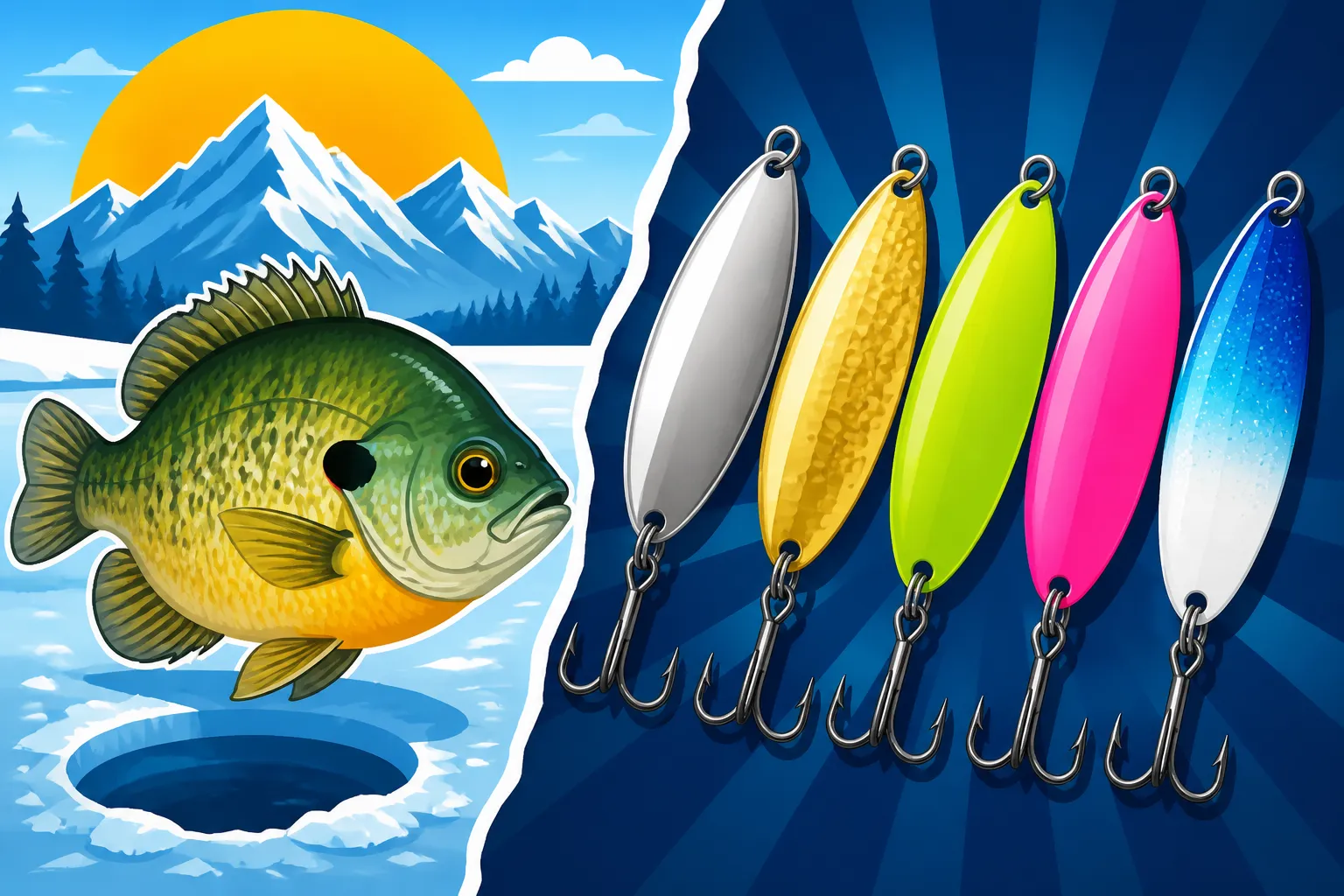
- Chartreuse: This vibrant green-yellow is a perennial favorite for ice fishing, especially for perch and crappie. It's highly visible in a wide range of water clarities and is believed to mimic certain types of plankton or distressed baitfish. It performs exceptionally well in stained or turbid waters where other colors might fade.
- Orange/Fire Tiger: While red fades quickly, a bright, fluorescent orange can still be visible and create a strong contrast. Fire Tiger patterns (a mix of chartreuse, orange, and black stripes) are excellent, as the contrast helps them pop, and the chartreuse component remains visible. These can be particularly effective when panfish are targeting small baitfish or feeling a bit more active.
- Pink: Often overlooked, bright pink can be surprisingly effective for panfish. It's a strong, unnatural color that can trigger a curious or aggressive strike, especially in moderately clear water or when fish are being finicky about more traditional colors. Sometimes, being different is exactly what they want.
These bright options are often your go-to when you're trying to draw fish in from a distance or when the bite is tough and you need to shock them into reacting. They provide a strong visual presence even when light is limited.
Natural and Subtle Hues
When conditions are tough, or the fish are particularly lethargic and pressured, sometimes less is more. Natural and subtle colors can often outperform their flashier counterparts, especially in clear water where fish have a good look at your offering.
- Silver/Chrome: Mimicking small baitfish, silver spoons reflect ambient light beautifully. In clear water, they can appear incredibly realistic, flickering like a fleeing minnow. They are a staple for perch and crappie, especially in lakes where minnows are a primary food source. Silver works well in bright, clear conditions, reflecting any available light.
- Gold/Brass: Similar to silver, gold offers a more subtle, warm flash. It can be particularly effective in slightly stained or tannin-rich waters where it can pick up the yellowish hues of the water and appear more natural than bright silver. Gold can also suggest different types of forage or insect casings.
- White/Pearl: Clean, crisp white or pearl spoons are fantastic imitations of small baitfish or even insect grubs. They offer good contrast against darker bottoms and can be highly visible without being overly flashy. In clear, bright conditions, pearl can have a subtle iridescence that fish find irresistible.
- Black/Dark Green: In extremely low-light conditions or very murky water, contrast becomes paramount. A dark spoon, like black or dark green, creates a strong silhouette against a lighter background (e.g., the ice, if viewed from below), making it easier for panfish to detect. These are often used when other colors fail to draw attention.
These subtle hues are for when you need to be sneaky, presenting a lure that looks as natural and unassuming as possible. They are often key to unlocking bites from wary fish.
Glow-in-the-Dark and UV Spoons
In the darkest conditions, such as deep water, very murky water, or under heavy snow cover, glow-in-the-dark and UV (ultraviolet) reactive spoons are invaluable. They literally bring light to your presentation where natural light cannot.
- Glow-in-the-Dark: These spoons are painted with phosphorescent pigments that absorb light (from a flashlight or camera flash) and then emit it slowly over time. This glowing effect can be a game-changer in extremely low-light conditions, acting as the only visible cue to a passing panfish. Recharge them frequently for maximum effect.
- UV Reactive: UV light penetrates water better than visible light. Many fish species can see in the UV spectrum, meaning a UV-enhanced spoon can be highly visible to them even when it looks dull to the human eye in certain light conditions. Many modern paints and plastics incorporate UV enhancers. You might find some excellent Best panfish jig colors for winter options that also include UV properties, making them doubly effective.
A combination of glow and UV can be incredibly powerful, especially for species like crappie that often feed in lower light or deeper water. Having a few of these specialized spoons, readily available from online retailers like Amazon, can make all the difference on a dark winter day.
Tips for Effective Spoon Presentation and Selection
Even with the perfect color, your spoon won't catch fish if it's not presented correctly. The way you work the lure, its size, and even what you add to it can significantly impact your success.
Jigging Techniques
Panfish in winter are rarely aggressive enough to chase a quickly retrieved lure. Your jigging technique needs to be subtle, patient, and often very close to the bottom where these fish are holding.
- Small Hops and Pauses: The most effective technique is often a series of small, gentle lifts and drops, followed by long pauses. Lift the spoon just an inch or two, let it flutter back down, and then pause for 5-10 seconds, or even longer if the fish are lethargic. Often, the strike comes on the fall or during the pause as the spoon is motionless.
- Shake and Deadstick: Sometimes, an even more subtle approach is required. Just a tiny quiver of the rod tip can make the spoon shimmer in place. Alternatively, a "deadstick" approach, where you hold the spoon completely still for an extended period, can coax a bite from the most finicky fish. This is where a bobber might also come into play to detect those incredibly subtle takes.
- Experiment with Cadence: There's no single perfect cadence. Start with a slow, deliberate approach, and if that doesn't work, try slightly faster lifts or longer pauses. Pay close attention to what the fish on your sonar are doing – are they reacting to the lift, the fall, or the pause? Adjust accordingly. Learning Best Jig weight for perch through the ice can further refine your presentation.
Remember, the goal is to make the spoon look like an easy meal that requires minimal energy expenditure from the fish.
Spoon Size and Profile
The size and shape of your spoon are just as important as its color. A spoon that's too large or has an unnatural profile for the available forage will be ignored, no matter how attractive its color might be.
- Small is Key: For most Alberta panfish in winter, think small. Spoons in the 1/16 oz to 1/8 oz range are typically ideal. Sometimes, even smaller ultralight spoons are needed. Winter panfish have small mouths and are looking for easy, bite-sized meals.
- Thin Profile: Many effective panfish spoons have a thin, slender profile that allows for a slow, enticing flutter on the fall. This mimics small insects or dying minnows. Examples include small "tear drop" or "gill" shaped spoons.
- Hook Size Matters: Ensure the hook on your spoon is appropriately small and sharp. A large, bulky hook can deter bites, especially from crappie which have very delicate mouths. Replacing factory hooks with finer wire, sharper hooks can often increase your hook-up ratio.
Consider the Best Ice Fishing Gear for Alberta in general, but pay special attention to the micro-details of your panfish spoons.
Adding Attractants
Sometimes, even the perfect spoon color and presentation aren't enough, and a little extra sensory appeal is needed. This is where attractants come into play.
- Live Bait Tipping: A small piece of live bait, like a wax worm, maggot, or a tiny minnow head, added to the spoon's hook can be incredibly effective. The natural scent and subtle movement often provide that final trigger for a bite. Just make sure to check local regulations regarding live bait use.
- Scent Gels/Sprays: Commercial scent attractants, often infused with fish pheromones or baitfish oils, can be applied to your spoon. These add a scent trail in the water that can draw in curious panfish and encourage them to hold onto the lure longer, giving you more time to set the hook.
- Soft Plastics: Tipping your spoon with a tiny soft plastic grub, tail, or insect imitation can also add visual and subtle movement appeal. These can be particularly effective when fish are highly visual feeders.
A good spoon is often the starting point, but don't be afraid to experiment with these enhancements to boost your success rate on those cold Alberta winter days. For more general advice, check out Best Techniques for Perch Through the Ice.
Table of Recommended Spoon Colors for Winter Panfish
Here's a quick reference table to help guide your spoon color choices based on typical Alberta winter fishing conditions.
| Water Clarity | Light Conditions | Panfish Mood | Recommended Colors | Notes |
|---|---|---|---|---|
| Clear/High | Bright Sun / Low Snow | Active | Silver, White, Natural Baitfish Patterns, Gold | Mimics natural forage, good reflection. |
| Overcast / Med Snow | Neutral | Silver, Gold, White, Subtle Chartreuse | Still visible, less jarring. | |
| Stained/Med | Bright Sun / Low Snow | Active | Chartreuse, Orange, Fire Tiger, Gold, Pink | Stands out, good contrast. |
| Overcast / Med Snow | Neutral | Chartreuse, Orange, Fire Tiger, Gold | Maintains visibility in stained water. | |
| Murky/Low | Any (Low Light) | Finicky | Glow-in-the-Dark, UV White/Chartreuse, Dark Green/Black | Creates visible light or strong silhouette. Recharge glow often. |
| Any | Night/Deep Water | Finicky/Active | Glow-in-the-Dark (any base color), UV Enhanced | Essential for attracting attention when natural light is absent. |
Remember, this table provides general guidelines. The fish will always have the final say, so don't be afraid to experiment with different colors, sizes, and presentations until you find what they're biting on that particular day. Exploring resources like Yellow Perch in Alberta Lakes can give you insights into the specific species you're targeting.
Final Thoughts on Lure Selection and Adaptability
The world of ice fishing for panfish in Alberta is one of constant adaptation. The best spoon color today might be completely ignored tomorrow. Conditions like changes in snow cover, pressure systems, or even the subtle feeding preferences of a specific school of fish can dramatically alter what works.
Don't be afraid to start with a popular color like chartreuse or silver, but always have a range of options ready to go. If one color isn't producing, give it 15-20 minutes, then switch. Try a bright color, then a natural one. Try one with glow, then one without. Often, it's that subtle change that flips the switch from "looking" to "biting."
Carrying a variety of spoons, perhaps organized in a small tackle box or a compact lure wallet, is key. You never know if that bright pink or a glow-in-the-dark pearl will be the one that turns a slow day into a memorable one on Alberta's frozen waters. Being adaptable and willing to experiment is arguably the most important "technique" you can master for consistent success.
Disclaimer
This article is for general informational purposes only and does not constitute professional advice. Laws, prices and regulations vary by location and change over time. Consult a qualified professional for guidance on your specific situation.