Best chest waders for cold water trout fishing
The biting cold of Alberta’s rivers and lakes can turn a dream fishing trip into a shiver-inducing misery faster than you can cast a line. Battling the frigid water is a real challenge for anglers, but with the right chest waders, you can stay comfortably dry and warm, letting you focus on the fish instead of the freeze. This guide will walk you through everything you need to know to choose the best chest waders for those chilly Alberta trout streams and cold lake shores, ensuring your next outing is a pleasure, not a penance.
Why Cold Water Waders Are Non-Negotiable in Alberta
Let's be honest, fishing in Alberta often means dealing with cold water, even on what seems like a warm day. Those glacier-fed streams and deep northern lakes don't care what the air temperature is doing. A good pair of cold water waders isn't just a nice-to-have; it's an absolute essential for comfort, safety, and ultimately, success.
The Chilling Reality of Alberta's Rivers
Imagine stepping into the Bow River in early spring or late fall, or wading into one of our many mountain streams in Kananaskis Country any time of year. The water can hover just above freezing, sometimes only a few degrees Celsius. Even our prairie rivers, like the Oldman or Red Deer, can be surprisingly cold, especially during the shoulder seasons. Getting wet in these conditions can lead to serious discomfort in minutes and pose a real risk of hypothermia if you’re not adequately protected. Your body expends a tremendous amount of energy trying to stay warm when exposed to cold water, which not only saps your strength but also dulls your senses – not ideal when you're trying to spot a subtle rise or feel a light bite. Best Time of Year to Fish in Alberta will give you a sense of what to expect seasonally, but cold water is often a constant.
Comfort Equals Longer, More Productive Days
There’s a direct correlation between how comfortable you are and how long and effectively you can fish. If you're constantly shivering, stomping your feet, or trying to find a warm rock to stand on, your focus is entirely derailed. You're less likely to notice subtle signs of fish, execute a perfect cast, or even enjoy the serene beauty of your surroundings. With the right waders, you simply forget the cold water is there. You can concentrate on your technique, explore more stretches of the river, and patiently wait for that trophy trout. Being warm means you can stay out longer, which inherently increases your chances of a successful and memorable day on the water.
Understanding Wader Materials for Cold Water Comfort
When it comes to keeping warm and dry, the material your waders are made from is the absolute core consideration. Each type has its pros and cons, especially when facing Alberta’s often unforgiving cold.
Neoprene Waders: The Traditional Warmth Champion
Neoprene waders are, for many anglers, the classic choice for cold water. Think of a wetsuit for fishing, and you're pretty close. Neoprene itself is a synthetic rubber known for its excellent insulating properties, trapping a thin layer of water against your skin (if it leaks, or if you wear it like a wetsuit) or, more relevantly for waders, insulating your body from the cold water outside.
They typically come in different thicknesses, measured in millimeters (mm). For cold water trout fishing in Alberta, you'll commonly find 3.5mm or 5mm neoprene waders. The 5mm variety offers superior warmth, making them fantastic for ice fishing or wading in truly frigid mountain runoff. They're also incredibly durable, often shrugging off scrapes and punctures that might challenge other materials. You can find robust options at places like Bass Pro Shops or even browse a wide selection online via Amazon.
However, neoprene waders do have their downsides. They can be quite bulky and heavy, which might feel cumbersome if you're doing a lot of hiking or active wading. Their biggest drawback for many is their lack of breathability. On warmer days, or if you're walking a fair distance, you can quickly build up sweat inside, leaving you feeling clammy and, ironically, cold once you stop moving. They're definitely best suited for stationary fishing in very cold conditions rather than long, active treks.
Breathable Waders: Layering for Versatility
Breathable waders represent the modern approach to staying dry. Instead of inherent insulation, they focus on keeping water out while allowing perspiration to escape. This is achieved through advanced multi-layer fabrics, often incorporating membranes similar to those found in high-end outdoor apparel. Brands often have their own proprietary breathable fabrics, or you might see common names like Gore-Tex.
The beauty of breathable waders for cold water lies in their versatility. Since they don't provide a lot of inherent warmth, you control the insulation through layering. On a mild day, you might wear thin thermals. On a brutally cold day, you can pile on fleece pants, wool socks, and heavy base layers. This adaptability makes them a fantastic choice for year-round fishing, from early spring trout fishing when the air is crisp, through to warm summer days, and back into the late fall. They are significantly lighter and less bulky than neoprene, offering much greater freedom of movement, which is a huge plus if you're covering a lot of ground in places like the Crowsnest River or other walk-and-wade streams. Best Waders for Alberta Trout Rivers gives more context on this versatility.
The primary cons are usually cost and the need for thoughtful layering. High-quality breathable waders can be a significant investment, and if you don't layer properly, you won't be warm. However, for active anglers who value comfort and mobility, they are often the preferred choice.
Hybrid Options: Blending the Best of Both Worlds
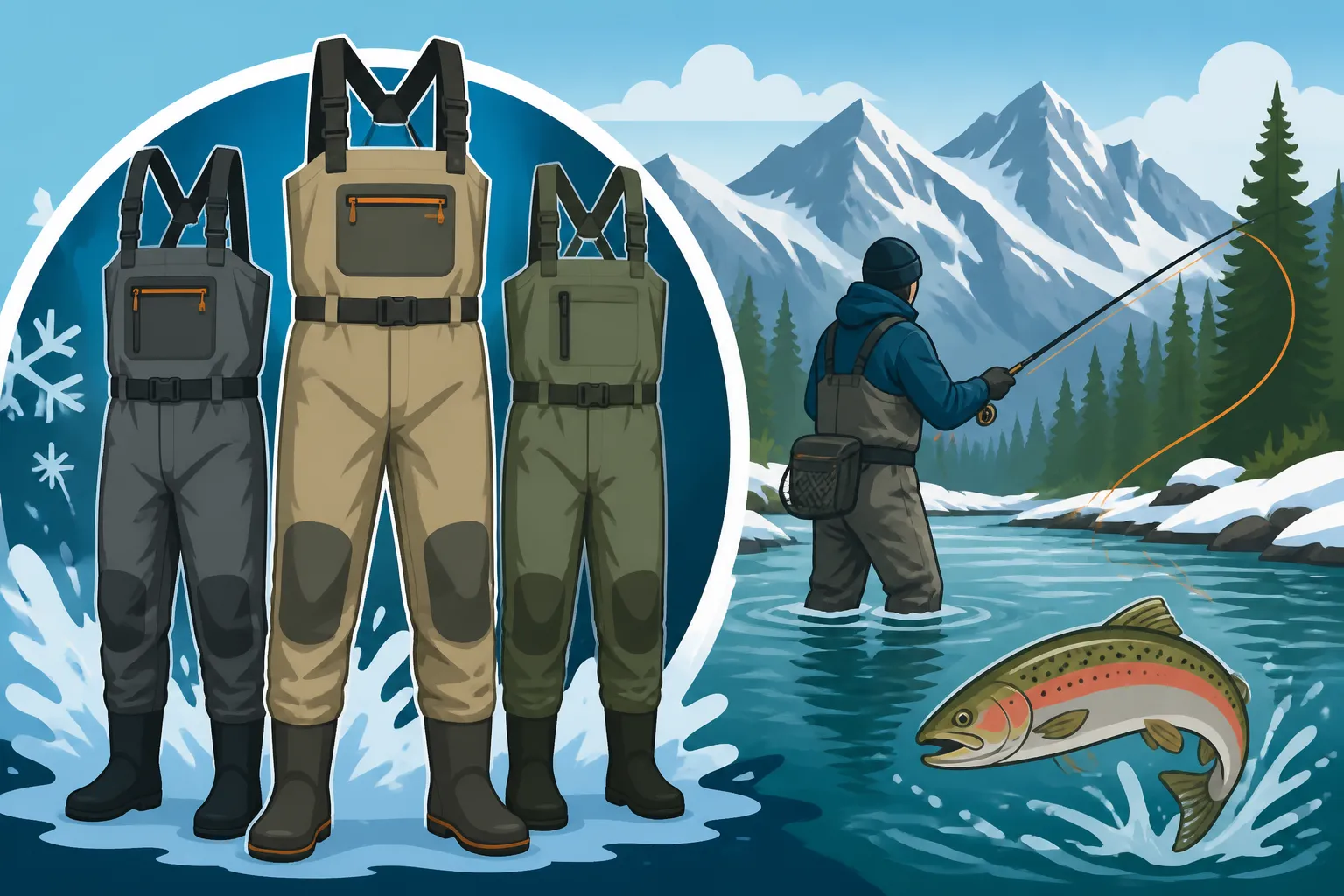
Sometimes, you don't have to choose one or the other. Hybrid waders attempt to combine the strengths of both neoprene and breathable materials. You might find waders with breathable uppers for comfort and mobility, but with reinforced neoprene in key areas like the seat and knees for added warmth and durability where it matters most. Another common hybrid design features breathable uppers paired with extra-thick, insulated neoprene booties to keep your feet warm, which is often the first place the cold seeps in. These can offer a great balance for anglers who want some of the warmth and toughness of neoprene without sacrificing all the mobility and breathability of modern fabrics.
Key Features to Look for in Cold Water Fishing Waders
Beyond the material, a wader's design and features play a huge role in its performance and your comfort during cold water trout fishing in Alberta. Don't overlook these details!
Insulation and Layering Capacity
When you're dealing with cold water, proper insulation is paramount. If you opt for breathable waders, ensure they have enough room to comfortably wear multiple layers underneath, like heavy fleece pants or insulated base layers. This is often described as a "relaxed fit" or "room for layering." The neoprene booties on any wader are also crucial. Look for thick, high-density neoprene booties (usually 3.5mm to 5mm) to protect your feet, as they are often the most exposed to direct cold. Some waders even feature fleece-lined handwarmer pockets, which, while not directly insulating your legs, are an absolute blessing when your fingers are numb from handling fish or changing flies.
Remember, the goal is to trap warm air. So, having those thicker socks and thermal layers under your breathable waders is what truly keeps you toasty. It's a system, not just a single piece of gear.
Durability and Construction
Alberta's rivers can be rough. Rocky riverbeds, thorny bushes, and slippery banks are all common hazards that can quickly put a hole in flimsy waders. Look for strong, multi-layer fabrics in breathable waders, often described by their denier (a measure of fabric thickness and strength – higher is usually better). Reinforced knees and seat areas, often with extra layers of material or tougher fabrics like Cordura, are a massive plus for longevity. These are the areas most prone to wear and tear from kneeling, sitting, or scrambling over obstacles.
The quality of seam sealing is equally important. Waders are essentially a collection of fabric panels joined together, and if those seams aren't watertight, you'll be wet. Look for waders with double-taped, glued, and stitched seams. Some higher-end waders may even boast sonic-welded seams, which offer incredible durability and leak resistance. Brands like Simms, Orvis, and Redington are often found in reputable stores like Bass Pro Shops and are known for their robust construction.
Fit, Comfort, and Mobility
A poorly fitting wader is a miserable wader, no matter how good the material. It can chafe, restrict movement, and lead to premature wear. The best chest waders for cold water trout fishing in Alberta will offer a range of sizes, paying attention to inseam length, chest circumference, and bootie size. Your wader booties should fit snugly to prevent rubbing, but still allow room for thick wool socks. Many anglers size up slightly in the bootie if they plan on wearing very heavy socks.
Adjustable suspenders are critical for customizing the fit over your shoulders and allowing for layering. A secure wading belt, usually included, is not just for comfort; it's a vital safety feature. In the event of a fall into deep water, the wading belt helps prevent water from rushing into the waders, reducing the risk of being dragged down by the water weight. Look for an ergonomic cut that allows for natural bending, kneeling, and walking without feeling constricted, especially when navigating rocky terrain or making a tricky cast on the Bow River Fishing Guide.
| Feature | Neoprene Waders (Cold Water) | Breathable Waders (Cold Water) |
|---|---|---|
| Primary Warmth | Inherent insulation from material (3.5mm-5mm) | Achieved through layering beneath the wader |
| Weight/Bulk | Heavier and bulkier, less agile | Lighter and more flexible, better for active wading |
| Breathability | Very low; can cause sweat build-up | High; allows perspiration to escape |
| Durability | Very tough against punctures/abrasions | Varies by material quality, often reinforced in key areas |
| Movement | More restrictive due to material thickness | Excellent freedom of movement |
| Best Use | Stationary fishing in extreme cold, ice fishing | Active wading, varied conditions with proper layering |
| Cost | Generally lower for basic models | Often higher for quality, multi-layer fabrics |
Practical Add-ons and Storage
While the core function is keeping you dry and warm, modern waders come with a host of useful features that enhance the fishing experience. Fleece-lined handwarmer pockets are a godsend on cold days, allowing you to quickly warm up numb fingers without having to take off your gloves. Water-resistant or waterproof chest pockets are perfect for storing small, essential items like a fishing license, car keys, or a small fly box. D-rings or attachment loops provide convenient spots to clip on tools like nippers, forceps, or a net.
Some waders even come with internal organization pockets or small repair kits for quick fixes in the field. A decent wader will also have gravel guards built into the booties, which hook onto your wading boots to prevent sand and gravel from entering, protecting your socks and waders from abrasion.
Caring for Your Cold Water Waders for Longevity
You've invested in a quality pair of waders, likely from a trusted retailer like Bass Pro Shops or through a convenient online purchase on Amazon. Now, to make sure they last season after season of Alberta trout fishing, proper care is essential. Ignoring these steps can lead to premature leaks and a shortened lifespan for your gear.
Proper Drying Techniques
This is arguably the most crucial step for maintaining any wader. After each use, especially when fishing in cold water, your waders will likely have some moisture inside, even if you haven't leaked. This is often condensation from your body.
First, wipe down the outside to remove any mud, algae, or debris. Then, turn your waders inside out. Hang them in a well-ventilated area, away from direct sunlight or artificial heat sources like heaters or campfires. Direct heat can degrade the waterproof membranes and glues over time, leading to cracking or delamination. Let them dry completely inside out, which might take a full day or two depending on humidity. Once the inside is bone-dry, turn them right side out and hang them to dry the exterior thoroughly. A large fan can help speed up the process, but gentle air circulation is key. Never stuff wet waders into a bag or leave them crumpled; this is a surefire way to promote mildew and accelerate material breakdown.
Storage and Maintenance
Once your waders are completely dry, store them properly. The best method is to hang them from the suspenders in a cool, dry place, like a closet or garage. This prevents creases and folds that can weaken the fabric and seams over time. Avoid folding them into a tight ball. If hanging isn't an option, roll them loosely rather than sharply folding them.
Periodically, inspect your waders for any small nicks, punctures, or signs of wear. Even the toughest materials can eventually get a tiny hole. It's much easier to patch a small leak at home than to discover it when you're thigh-deep in the Crowsnest River Trout Fishing. Most waders come with a small repair kit, or you can purchase one separately. Addressing minor issues promptly will extend the life of your waders significantly. Alberta Fishing Regulations Explained also covers some of the gear requirements, so keeping your waders in good shape is part of responsible angling. Taking care of your waders is an investment in your comfort and your future fishing adventures.
Disclaimer
This article is for general informational purposes only and does not constitute professional advice. Laws, prices and regulations vary by location and change over time. Consult a qualified professional for guidance on your specific situation.