Best wading boots with felt vs rubber soles
One of the most common dilemmas facing any angler hitting the water, especially here in Alberta where our rivers and lakes can present a wild mix of terrain, is deciding what's going to keep you upright and safe. Trying to navigate slick, moss-covered rocks or muddy banks with the wrong footwear isn't just frustrating; it's genuinely dangerous. This guide will walk you through the age-old debate of felt versus rubber soles on wading boots, helping you understand their pros and cons so you can choose the best option for your specific fishing adventures across our beautiful province.
The Age-Old Debate: Felt Soles vs. Rubber Soles
For generations, anglers have argued passionately about the best sole material for wading boots. It’s not just about comfort; it's about safety, performance, and increasingly, environmental responsibility. There's no single "best" answer, as both felt and rubber soles have distinct advantages and disadvantages that make them more or less suitable for different conditions and preferences. Understanding these nuances is key to making an informed decision that enhances your time on the water, rather than cutting it short with a painful slip.
Diving Deep into Felt Soles
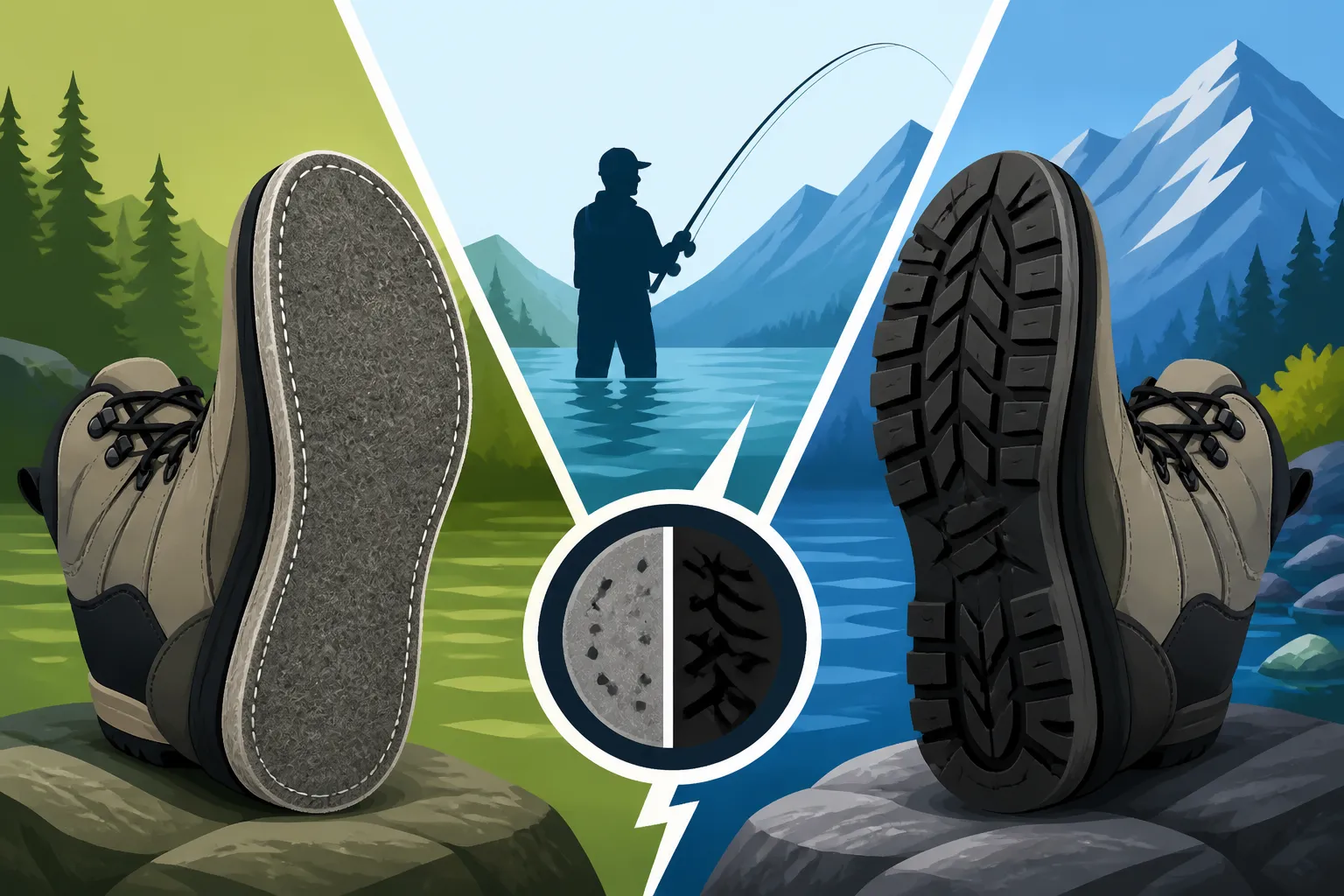
Felt soles, with their distinctive fibrous texture, have been the traditional choice for serious river anglers for a very long time. They offer a unique kind of grip that rubber often struggles to match in specific, challenging conditions. Many veteran anglers wouldn't consider anything else for their favourite trout streams, especially those with notoriously slick riverbeds.
The primary advantage of felt soles lies in their exceptional grip on wet, slimy, and moss-covered rocks. Imagine standing in the middle of the Bow River, where the rocks are often covered in that slick green algae – felt seems to adhere to these surfaces almost like a suction cup, giving you a stable footing that rubber soles might lose. This superior traction can be a game-changer when you're trying to carefully pick your way across a swift current or maintain your balance while casting. For those who prioritize maximum grip on challenging river bottom structures, felt has historically been the undisputed champion.
However, felt soles come with their own set of significant drawbacks. One of the biggest concerns, which has led to bans in some jurisdictions, is their propensity to pick up and transport invasive species, like whirling disease spores or microscopic plant fragments. The porous nature of felt acts like a sponge, holding onto these unwanted hitchhikers and potentially spreading them from one water body to another. This is a serious environmental consideration that every angler must be aware of, even if there isn't a province-wide ban in Alberta. Additionally, felt tends to wear down faster than rubber, especially if you do a lot of walking on dry land to get to your fishing spot. They also offer very poor traction on snow, ice, or muddy banks, becoming extremely slippery. If you’re hiking a long trail before reaching the river, felt can be cumbersome and even dangerous on the approach.
Exploring the World of Rubber Soles
Rubber soles for wading boots have come a long, long way in recent years. While they once lagged significantly behind felt in terms of wet rock grip, advancements in rubber compounds and tread patterns have made them a highly competitive and often preferable option for many anglers, particularly those fishing diverse environments. They've earned their place as a modern, versatile choice.
The main draw of rubber soles is their versatility and environmental friendliness. Unlike felt, rubber doesn't absorb water or cling to microscopic organisms, making them much less likely to spread invasive species. This is a huge plus for conservation-minded anglers and those who frequent multiple water bodies. Rubber soles also perform much better on dry land, muddy trails, and even snow or ice, making them ideal for anglers who have to hike a bit to reach their favourite spots or those who enjoy winter fishing. Furthermore, they are generally more durable and last longer than felt, standing up to the wear and tear of varied terrain. Many modern rubber soles also feature aggressive lug patterns designed to shed mud and provide multi-directional traction.
Despite their advantages, rubber soles still generally don't offer the same "sticky" grip on truly slimy, moss-covered rocks as traditional felt. While modern compounds are excellent, there's a subtle difference in how they interact with that slick, organic film that often coats riverbeds. You might find yourself a little less secure when navigating certain stretches of river bottom compared to a felt-soled boot. However, this deficit can often be mitigated with the addition of studs or cleats, which we’ll discuss shortly. Without these enhancements, pure rubber can feel a bit more "slidey" on particular types of rock, especially those found in fast-flowing, algae-rich rivers like the Bow.
When to Choose Which Sole: Situational Superiority
Making the right choice between felt and rubber soles often boils down to understanding the specific conditions you'll encounter most frequently on your fishing trips. Alberta's diverse landscapes mean you could be wading across pristine mountain streams one day and navigating muddy prairie lake shores the next. Each scenario presents its own challenges, and choosing a sole that's optimized for those challenges can make all the difference in your comfort, safety, and overall fishing experience.
Rocky Rivers and Slick Conditions
If your heart truly belongs to chasing trout in the province's iconic rivers, like the Bow River near Calgary or the Crowsnest River in the foothills, where slick, algae-covered rocks are the norm, felt soles might still be your preferred choice. The unparalleled grip felt provides on these types of surfaces can instill a level of confidence that rubber, even with advanced tread, might not quite match. This confidence translates directly into safer wading and better fishing, as you're less focused on your footing and more on your cast. Imagine carefully wading a deep run on the Bow, trying to present a fly to a picky brown trout; felt soles can give you that extra bit of stability to hold your position without fearing a slip into the swift current.
However, it's crucial to remember the environmental considerations. If you choose felt for these conditions, you absolutely must meticulously clean and dry your boots between uses, especially if you're moving from one river system to another. This means scrubbing them thoroughly, perhaps with a dilute bleach solution, and allowing them to dry completely for several days. This is a non-negotiable step to prevent the spread of invasive species. For many anglers, the superior grip in these specific, high-risk river environments still makes felt a compelling option, despite the extra effort required for responsible use. For a deeper dive into regulations, check out Alberta Fishing Regulations Explained.
Lake Shores and Diverse Terrain
For those who spend more time fishing Alberta's many lakes, whether it's battling walleye on Lesser Slave Lake or targeting pike in countless smaller ponds, or even if you frequently trek through varied terrain to reach your river access points, rubber soles become the clear winner. Lakeshores often involve a mix of mud, sand, gravel, and submerged vegetation, rather than uniformly slick river rocks. Rubber soles excel in these varied conditions, providing good traction on soft ground and dry paths without picking up and transporting sediment like felt. If your approach to the water involves walking across fields, navigating muddy trails, or traversing paved boat launches, rubber's durability and better performance on dry surfaces will be a huge advantage.
Think about launching your kayak into a lake or walking a long shoreline: felt would pick up every bit of mud and weed, making for a messy and potentially slippery experience once you're out of the water. Rubber soles, on the other hand, shed debris much more easily and provide a stable grip on trails. This versatility means you can confidently move from your vehicle to the water, fish different types of banks, and pack up without worrying about dragging half the ecosystem home with you. Many anglers find their rubber-soled wading boots perform perfectly well in most lake and even moderately rocky river conditions, especially when enhanced with studs. You can find a great selection of these versatile boots at retailers like Bass Pro Shops or online at Amazon.
Backcountry Hikes and River Crossings
When your fishing adventures involve serious hiking, scrambling over rough terrain, or making multiple crossings of small streams on the way to a remote lake or river, the considerations shift even further towards durability, ankle support, and overall comfort over long distances. In these scenarios, the sole is just one piece of the puzzle, but a critical one. Rubber soles are almost universally preferred for their superior performance on dry ground and their ability to shed mud and debris without holding onto it. Carrying felt soles for a multi-day backcountry trip would be a real burden due to their poor traction on trails.
For intense backcountry fishing, look for rubber-soled boots with robust ankle support, a stiff sole for stability on uneven ground, and durable uppers that can withstand scrapes and impacts. The ability to add screw-in studs or permanent cleats to these rubber soles is invaluable when you transition from hiking to wading. This hybrid approach allows you to benefit from the trail performance of rubber while adding the necessary grip for slick river crossings when you encounter them. Remember, a sprained ankle miles from the nearest road is no fun at all, so prioritizing boots that can handle both the trek and the wade is paramount for remote angling. Considering a good pair of sturdy boots will also help immensely when navigating Kananaskis Country Fishing Guide or Banff National Park Fishing Guide areas.
Maintenance, Durability, and Environmental Concerns
Beyond the immediate performance on the water, there are long-term considerations for both felt and rubber wading boots that impact their lifespan, your wallet, and our precious aquatic ecosystems. Understanding how to properly care for your boots and the environmental implications of your choice is an essential part of being a responsible angler in Alberta.
Cleaning and Care for Longevity
Proper maintenance is crucial for extending the life of any wading boot, regardless of sole type. For both felt and rubber soles, a thorough rinse after every use is recommended to remove dirt, sand, and any organic material. Using a stiff brush can help dislodge stubborn debris. Pay particular attention to the laces, eyelets, and any seams where grit can accumulate and cause premature wear.
When it comes to felt soles, cleaning takes on an elevated importance due to the risk of invasive species. After rinsing, a complete disinfection and drying protocol is vital. Many anglers will soak felt soles in a diluted bleach solution (following manufacturer or provincial guidelines, if available) or a specialized aquatic invasive species disinfectant. After this, they must be allowed to dry completely, ideally in sunlight, for several days before being used in another water body. Failure to do so not only risks spreading disease but also encourages mildew and rot, significantly shortening the boot's lifespan. Rubber soles are much easier to clean; a simple rinse and brush is usually sufficient, and they dry quickly, preventing mildew. This ease of cleaning and drying makes rubber a more practical choice for many busy anglers.
The Environmental Angle: Preventing Aquatic Hitchhikers
The environmental impact of wading boot soles is a serious and growing concern, particularly with the spread of aquatic invasive species. Felt soles, with their fibrous, absorbent nature, are highly effective at trapping and transporting microscopic organisms, plant fragments, and disease spores from one water body to another. This is why some regions have outright banned felt soles. While Alberta currently doesn't have a province-wide ban, the risk remains, and responsible angling dictates that we do everything possible to prevent such spread. The devastating impact of species like whirling disease on trout populations is a stark reminder of our responsibility.
Rubber soles, being non-porous, are significantly less likely to harbor and transport these invasive hitchhikers. This makes them the environmentally preferred choice for many conservation organizations and anglers. If you frequently fish different rivers and lakes, especially those where invasive species are a known concern or a species like the bull trout (which has a Alberta Bull Trout Zero Possession Rule) is present, opting for rubber soles is a proactive step towards protecting Alberta's delicate aquatic ecosystems. If you do use felt, you bear a greater responsibility to implement rigorous "Check, Clean, Dry" protocols after every single outing. It’s not just about compliance; it’s about protecting the places we love to fish for future generations.
Making Your Final Decision
Ultimately, the best wading boot sole for you comes down to a careful balance of your primary fishing locations, your personal priorities for grip versus versatility, and your commitment to environmental stewardship. There’s no perfect one-size-fits-all answer, but by considering these factors, you can make a choice that will serve you well on Alberta's waters.
Considering Your Primary Fishing Grounds in Alberta
Take a moment to truly assess where you spend the majority of your fishing time. Are you exclusively a river angler, focused on the slippery, technical wading of streams like the Bow or Crowsnest? If so, and you're diligent about cleaning and drying, the superior grip of felt might still be a priority. However, if you're a multi-faceted angler who moves between rivers and lakes, hikes to remote spots, or frequently navigates muddy banks, then modern rubber soles, possibly with added traction devices, will likely be a more practical and responsible choice.
Remember that river conditions can vary greatly even within Alberta. The rocky, fast-flowing mountain rivers are different from the softer bottoms of some prairie streams or the mixed terrain around lakes. For example, if you often find yourself fishing in provincial park waters or Crown land lakes, where the access might involve muddy trails or soft bottoms, rubber soles will be far more comfortable and effective. Consider your overall fishing "footprint" and choose a sole that aligns best with those dominant conditions. Many of us find that one pair of boots simply isn't enough, and having both felt and rubber options allows for maximum versatility.
Accessories and Enhancements for Both Soles
One of the great things about modern wading boot technology is the ability to enhance the performance of both felt and rubber soles. For rubber soles, this often means adding studs or cleats. These screw-in or strap-on traction devices provide phenomenal grip on slick rocks, almost replicating the performance of felt while retaining the environmental benefits and durability of rubber. Brands like Korkers offer interchangeable sole systems that let you switch between felt, rubber, and studded rubber, offering the best of all worlds. You can find various stud and cleat options, along with the boots themselves, at outdoor retailers like Bass Pro Shops or on Amazon. Adding studs to your rubber boots can be a game-changer for How to Fish the Crowsnest River for Trout.
For felt soles, enhancements are less about increasing grip and more about durability and protection. Some felt soles are reinforced with harder materials or incorporate small studs directly into the felt to prolong their life and slightly improve grip on ice (though they're still not ideal for it). However, the primary enhancement for felt is simply diligent care and replacement when they become too worn.
Ultimately, your wading boots are an investment in your safety and enjoyment on the water. By weighing the unique characteristics of felt and rubber soles against your typical fishing scenarios and your commitment to conservation, you can confidently choose the best pair to keep you steady on your feet as you explore the incredible fishing opportunities Alberta has to offer. Whether you're carefully placing your foot on a slippery rock in a fast current or trekking a long path to a secluded lake, the right sole makes all the difference.
| Feature | Felt Soles | Rubber Soles |
|---|---|---|
| Primary Grip | Excellent on slick, algae-covered river rocks | Good on varied terrain (mud, gravel, dry land) |
| Slick Rock Grip | Superior adhesion | Good, but can be improved with studs/cleats |
| Dry Land Traction | Poor (very slippery on mud, snow, ice) | Excellent |
| Environmental Risk | High (can spread aquatic invasive species) | Low (non-porous, sheds debris easily) |
| Durability | Moderate (wears faster on dry land) | High (more resistant to abrasion) |
| Cleaning Ease | Difficult (requires thorough disinfection) | Easy (simple rinse, quick drying) |
| Weight (typical) | Generally lighter | Can be slightly heavier, depending on construction |
| Versatility | Low (best for specific river conditions) | High (suitable for most conditions with studs) |
Disclaimer
This article is for general informational purposes only and does not constitute professional advice. Laws, prices and regulations vary by location and change over time. Consult a qualified professional for guidance on your specific situation.