Where the biggest lake trout live in Alberta
Oh, the thrill of the chase for a truly monumental fish! For many Alberta anglers, the dream isn't just about catching a lake trout, it's about landing one of those legendary giants that lurk in our deepest, coldest waters. But let's be real, finding where those colossal lake trout live in Alberta can feel like searching for a needle in a very vast, very cold haystack. This guide is here to cut through the speculation and dive deep into the specific lakes and strategies that put you in the best position to hook into a true Alberta leviathan.
The Quest for Alberta's Giant Lake Trout: Why It's a Challenge
Chasing trophy lake trout isn't like casting for rainbows in a stocked pond. These fish are often old, wise, and prefer environments that are challenging for anglers to access and fish effectively. They've grown to their impressive sizes by being incredibly efficient predators in often unforgiving conditions, which means you need to be just as savvy to find them. The sheer size of some of Alberta's northern lakes can be overwhelming, making the task of locating these elusive giants feel daunting before you even launch the boat.
Understanding Lake Trout Habitat
Lake trout are true denizens of the deep. They thrive in large, cold, oxygen-rich lakes, especially those with plenty of rocky structure, steep drop-offs, and deep basins. These features provide them with ample cover, ambush points for unsuspecting prey, and crucially, consistent cold water temperatures throughout the year. They are highly sensitive to warm water, which means as surface temperatures rise in the summer, these fish retreat to the thermocline – that invisible boundary where warm surface water meets colder deep water. Understanding this behavior is key to pinpointing their whereabouts, especially when you're targeting the biggest individuals who often favor the most stable and food-rich parts of these deep zones.
It's not just about depth, though. The availability of high-quality forage fish is absolutely critical. Cisco (also known as lake herring) and whitefish are often the primary food sources that allow lake trout to grow to truly gargantuan sizes. Lakes with thriving populations of these baitfish are inherently more likely to hold larger, fatter lake trout. Without a robust food web supporting them, even a deep, cold lake won't produce the trophy-class fish we dream about.
The Elusive Nature of Trophy Fish
Why are the biggest ones so hard to find? Well, they've survived for a long time, often decades, dodging predators (including humans) and becoming incredibly efficient at feeding. They're not going to be where the average, smaller fish are schooling up or where the casual angler is dropping a line. Trophy lake trout often hold to specific, isolated pieces of structure – a lone rock pile in a vast expanse, a deep ledge on a steep underwater cliff, or the deepest trench in the lake. They might patrol specific feeding lanes, but they're not going to announce their presence. You need patience, advanced sonar interpretation, and often specialized gear and techniques to even get a sniff. This is where investing in a good fish finder and understanding how to read it truly pays off.
Moreover, many of the lakes known for producing truly massive lake trout are large, remote, and can be notoriously fickle. Weather conditions can change in an instant, making navigation and even simply staying on your chosen fishing spot a challenge. The biggest fish often require significant travel, time on the water, and a commitment to fishing through tough conditions, which is why many anglers opt for guided trips on these waters, especially on places like Lake Athabasca.
Cold Lake: Alberta's Crown Jewel for Record-Breakers
When serious anglers talk about where the biggest lake trout live in Alberta, Cold Lake almost invariably comes up first. This massive, deep lake straddling the Alberta-Saskatchewan border is legendary for its impressive population of lake trout, including true giants that regularly tip the scales into the trophy class. It's one of Alberta's deepest lakes, reaching depths of over 200 meters (650 feet), providing the perfect cold, dark habitat for these majestic fish to grow old and enormous.
Deep Waters and Abundant Forage
Cold Lake's immense depth is its secret weapon. It maintains consistently cold water temperatures even during the warmest summer months, allowing lake trout to remain active and feed throughout the year. But cold water alone isn't enough; it's the incredible abundance of forage fish, particularly cisco and lake whitefish, that fuels the growth of these behemoths. These baitfish form dense schools in the mid-water column and along deeper structures, providing a rich, year-round buffet for predatory lake trout. This robust food chain means that lake trout in Cold Lake have all the resources they need to reach truly staggering sizes. Lake Trout Average Size in Alberta Lakes will give you a sense of what's considered a good fish here.
Anglers targeting trophy lake trout on Cold Lake will often focus on the steepest drop-offs, underwater islands, and vast suspended schools of cisco in the open water. These fish don't just hang out at the bottom; they'll often suspend at various depths, chasing their prey. Having a quality sonar unit is almost non-negotiable here, as it allows you to identify these bait balls and the larger arcs of predatory fish lurking beneath or within them. You'll often find that the biggest fish aren't necessarily directly on the bottom but rather suspended a few dozen feet above it, or even higher in the water column if baitfish are present.
Fishing Strategies for Cold Lake Giants
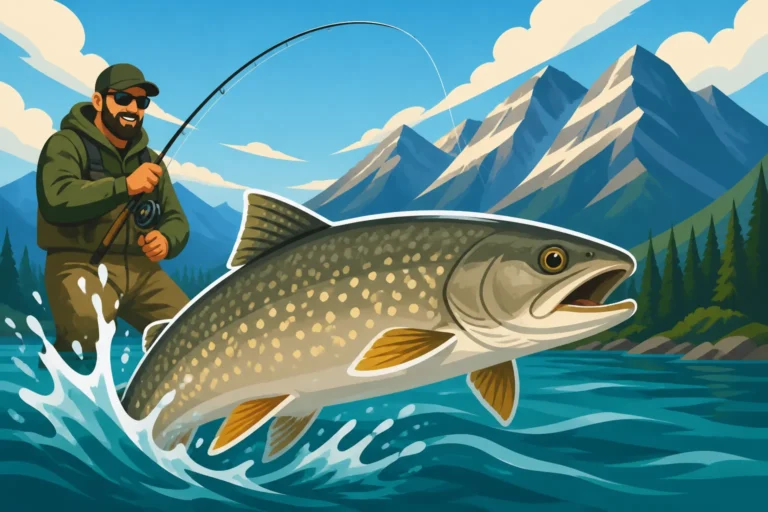
Trolling is undeniably one of the most effective methods for covering Cold Lake's vast expanses and locating active fish. Using downriggers is common practice to present large spoons, plugs, or even dodger-and-fly combinations at precise depths where lake trout are feeding. Trolling Techniques for Alberta Lake Trout provides an excellent overview of how to do this effectively. The goal is to imitate the cisco and whitefish that these giants are gorging on. Speed control is paramount, as is presenting your lures in a natural, enticing way. Many anglers will experiment with different depths and speeds until they find the pattern that's working on a given day.
Vertical jigging with heavy spoons, tube jigs, or large swimbaits is another highly effective strategy, particularly when you've identified fish holding to specific structures or suspended over deep water. This technique often involves using your fish finder to mark fish and then dropping your lure directly to them. It can be a more active and engaging way to fish, often leading to aggressive strikes from larger, more territorial lake trout. Even through the ice, jigging for burbot through the ice can be effective on Cold Lake, as burbot also thrive in these deep, cold environments, and trout will often be found near similar structures.
Essential Gear for Cold Lake Lake Trout
To tackle the giants of Cold Lake, you're going to need serious gear. Forget your lightweight trout rods; we're talking about heavy-action trolling rods or stout jigging rods capable of handling powerful runs and considerable weight. Line choice is also critical; many anglers opt for braided main lines with fluorocarbon leaders for sensitivity and abrasion resistance. Look for specialized trolling rods on platforms like Amazon that can withstand the strain of pulling large lures and fighting heavy fish in deep water.
Your tackle box should be stocked with a variety of large spoons (like Northern King, Gibbs-Delta, or Apex Trout Killers), deep-diving crankbaits, and heavy tube jigs or swimbaits. Colors often mimic natural baitfish – silver, blue, white, or various shades of green and pearl are popular. A good selection of dodgers or flashers to attract fish to your lures is also a smart addition. For safety and comfort, especially on a lake of Cold Lake's size, appropriate boat safety equipment, heavy-duty electronics like a reliable GPS and fish finder (many great options are available on Amazon), and foul-weather gear are absolutely essential. Don't forget a large, sturdy landing net designed for big fish; trying to net a 20+ pound lake trout with a small trout net is an exercise in futility.
Lake Athabasca: The Remote Northern Frontier
While Cold Lake might be more accessible, Lake Athabasca offers a wilderness experience and the potential for truly enormous, untouched lake trout. This immense body of water, shared with Saskatchewan, is the eighth-largest lake in Canada and offers a vast, remote, and often challenging environment where some of Alberta's most legendary lake trout stories are made. It's a journey to get there, but for the serious trophy hunter, the rewards can be unparalleled. Lake Athabasca Fishing Guide provides a fantastic overview of this unique destination.
Untouched Wilderness and Massive Potential
Lake Athabasca is a place of raw, untamed beauty, and its fishing potential reflects that. Its sheer size and remote location mean that many areas receive minimal fishing pressure, allowing lake trout to grow to incredible sizes, largely undisturbed. The lake is vast, with countless bays, islands, and deep-water structures, much of which remains unexplored by all but the most dedicated anglers and outfitters. This untouched quality is what makes it so appealing to those seeking truly world-class lake trout. The fish here aren't as accustomed to seeing lures as in more heavily fished waters, and their aggressive nature can lead to spectacular battles.
The water of Lake Athabasca is often stained by glacial silt, which can affect visibility, but the lake trout here are perfectly adapted to their environment. Like Cold Lake, Athabasca is incredibly deep in places, providing the essential cold-water habitat and an abundant forage base of whitefish and cisco. The challenge lies in effectively locating these prime areas within such a massive and complex ecosystem. Many anglers who frequent this lake rely on detailed maps, GPS units, and a deep understanding of lake trout behavior to pinpoint productive spots amidst the vastness.
Navigating the Vastness of Lake Athabasca
Fishing Lake Athabasca is not for the faint of heart or the unprepared. Its enormous size means that weather can change drastically and quickly, creating dangerous conditions with heavy winds and large waves. A sturdy, reliable boat is an absolute must, often a larger vessel capable of handling rough water. Best Fishing Boats for Alberta Lakes and Rivers highlights options suitable for such expansive waters. Navigation skills are also paramount, as features can look similar across miles of shoreline, and GPS with detailed mapping is non-negotiable.
Anglers often focus on areas around islands, prominent points, and deep-water reefs that rise from the depths. Trolling large spoons and plugs at varying depths, similar to Cold Lake, is a primary strategy. However, given the stained water in some areas, brighter colors or lures with strong vibration might be more effective. Jigging over structure, especially during ice fishing season when access is simplified to certain areas, can also be very productive. Remember to always consult Alberta Fishing Regulations Explained before heading out, as regulations can vary by zone, especially on border lakes like Athabasca.
Planning Your Athabasca Trophy Hunt
Due to its remote nature, planning a trip to Lake Athabasca requires significant logistical effort. Most anglers will either fly in or drive a considerable distance to reach launch points, often coordinating with local outfitters who have the experience and equipment to navigate these waters safely and effectively. These outfitters often have specialized knowledge of where the biggest lake trout live and what techniques are currently most productive. If you're planning a DIY trip, ensure your boat is fully equipped with redundant safety systems, ample fuel, and a comprehensive emergency kit.
Beyond the boat, consider your personal gear. Warm, waterproof clothing is essential, even in summer, as northern Alberta weather can be unpredictable. A good quality cooler to preserve your catch (within legal limits, of course, as per Alberta Bag and Possession Limits by Species) is also vital. You might even find specialized gear like robust depth finders and long-range communication devices on Amazon, which can be invaluable in such remote areas. Preparing thoroughly for your adventure will not only increase your chances of landing a trophy but also ensure a safer and more enjoyable experience in this incredible wilderness.
Other Notable Lakes for Respectable Lake Trout
While Cold Lake and Lake Athabasca are the undisputed kings for gargantuan lake trout, Alberta boasts other incredible fisheries that consistently produce impressive lake trout, sometimes even trophy-class fish, for those willing to explore. These lakes might not hold the provincial record, but they offer fantastic opportunities and can sometimes be more accessible.
Lesser-Known Deep Water Haunts
Lakes like Lac la Biche, particularly its deeper sections, are known to hold substantial lake trout. While not as deep as Cold Lake, it still provides ample cold-water habitat and a good forage base. Anglers here often target the main lake basin's deeper sections or specific structural elements that attract baitfish. Peerless Lake in northern Alberta is another strong contender, offering a more remote experience with the potential for respectable lake trout, alongside healthy populations of northern pike. Exploring these types of lakes often requires a bit more research and local knowledge, but they can be incredibly rewarding.
Then there are numerous smaller, deeper lakes tucked away in the mountain parks or more remote areas. These often require hiking or specialized access, but they can yield beautiful, strong lake trout that might not reach the true "monster" size but offer an unforgettable angling experience in stunning surroundings. Always check specific regulations for these smaller, sometimes more sensitive, fisheries, as they might have special restrictions or even be catch-and-release only. Alberta Catch and Release Only Waters is a good resource to review before planning such a trip.
Conservation and Sustainable Fishing Practices
No matter where you choose to pursue Alberta's biggest lake trout, responsible angling is paramount. Trophy lake trout are often very old fish, sometimes decades old, and their contribution to the fishery through spawning is invaluable. Practicing ethical catch-and-release, especially for the largest individuals, helps ensure these magnificent fish continue to thrive for future generations. This means minimizing their time out of water, handling them gently with wet hands, and ensuring a strong revival before release.
Understanding and adhering to Alberta Fishing Regulations Explained is not just a legal requirement but a commitment to conservation. Bag limits, possession limits, and season dates are all designed to protect the resource. Many anglers choose to release all large lake trout, only keeping smaller, younger fish for the table if allowed by regulations. This approach helps maintain the health and genetic diversity of the lake trout population, ensuring that Alberta continues to be a world-class destination for these incredible fish. Getting your Alberta WIN Card, Explained and buying your license is the first step in supporting these conservation efforts.
| Lake Name | Primary Target Species | Max Depth (approx.) | Known for Trophy Fish | Accessibility |
|---|---|---|---|---|
| Cold Lake | Lake Trout, Walleye, Pike | 200m+ | Very High | Good |
| Lake Athabasca | Lake Trout, Pike, Walleye | 124m | Very High | Remote |
| Lac la Biche | Lake Trout, Walleye, Pike | 28m | Moderate | Good |
| Peerless Lake | Lake Trout, Pike | 38m | Moderate | Moderate |
| Lake Minnewanka | Lake Trout, Brown Trout | 142m | Moderate | Easy (NP) |
This article is for general informational purposes only and does not constitute professional advice. Laws, prices and regulations vary by location and change over time. Consult a qualified professional for guidance on your specific situation.