How fast northern pike grow in Alberta waters
It's an age-old question that burns in the mind of almost every angler casting lines in Alberta's diverse waters: "Just how big can this pike get, and how fast is it growing?" We've all reeled in that feisty hammer handle and wondered if it's got the potential to become a true monster. Understanding how fast northern pike grow isn't just a matter of curiosity; it helps us appreciate the health of our fisheries, manage our expectations, and even encourages more sustainable fishing practices. This comprehensive guide is here to shed some light on the growth trajectory of these incredible predators in Alberta's unique aquatic environments, giving you a better idea of what to expect and what goes into creating those legendary catches.
Understanding Northern Pike Growth Factors in Alberta
Northern pike are fascinating fish, and their growth rate isn't a simple, fixed number. It's a complex interplay of environmental conditions, food availability, and the specific characteristics of the water body they call home. Think of it like comparing an athlete's development – some thrive in certain conditions, others in different ones. Alberta offers a huge range of aquatic environments, from cold, clear mountain lakes to warmer, nutrient-rich prairie potholes, and each plays a significant role in how big and how fast a pike will grow.
Habitat and Water Quality's Role
Just like us, pike need a healthy home to truly thrive. Water quality is paramount. This includes factors like oxygen levels, water clarity, and the presence of essential nutrients. In systems with good oxygenation and moderate clarity, pike can hunt effectively and remain healthy. Conversely, waters with low oxygen or excessive turbidity can stress fish, slowing their growth or even leading to mortalities.
Beyond water chemistry, the physical habitat matters immensely. Pike are ambush predators, meaning they rely on cover to hide from prey. Dense weed beds, submerged timber, rocky points, and drop-offs provide crucial ambush points. Lakes and rivers with abundant, diverse cover tend to support healthier pike populations with a better chance of reaching larger sizes. These areas offer both protection from predators when young and prime hunting grounds as they mature. You'll often find that some of the most productive pike waters, known for bigger fish, are those with excellent structure. You can learn more about specific regulations concerning these areas in Reading the Alberta Guide to Sportfishing Regulations.
Food Availability and Diet
Perhaps the most critical factor influencing a pike's growth rate is its diet and the sheer abundance of food. Pike are voracious eaters, and from the moment they hatch, they're looking for their next meal. Their diet changes as they grow; tiny fry will eat zooplankton, but they quickly transition to insects, then smaller fish like minnows, sticklebacks, and increasingly larger prey as they mature.
A lake with a rich forage base – plenty of baitfish like perch, cisco, or even smaller walleye or whitefish – will naturally produce faster-growing pike. The more easily available high-protein meals a pike can find, the less energy it expends hunting, and the more energy it can dedicate to growth. Conversely, in waters where food is scarce, pike might become stunted, reaching maturity at smaller sizes, or engaging in cannibalism due to lack of other prey. This is a common phenomenon in some smaller, overpopulated ponds where pike don't have enough to eat. Understanding What Northern Pike Eat in Alberta lakes can give you a better idea of what to expect in different systems.
Water Temperature and Seasonality
Alberta's climate, with its distinct seasons, has a profound impact on pike growth. While northern pike are considered cold-water fish, they do their most significant growing during the warmer months. Their metabolism speeds up as water temperatures rise, increasing their appetite and digestive efficiency. This means spring, summer, and early fall are prime growth periods.
During the long, cold Alberta winters, a pike's metabolism slows significantly. They still feed, especially through the ice, but their growth effectively pauses or dramatically slows down. This seasonal rhythm of feast and famine, intense growth followed by a dormant period, means that an Alberta pike will take longer to reach a certain size compared to pike in regions with longer warm seasons or year-round milder temperatures. This also means that every additional warm-weather feeding opportunity counts!
The Typical Growth Trajectory of Alberta Northern Pike
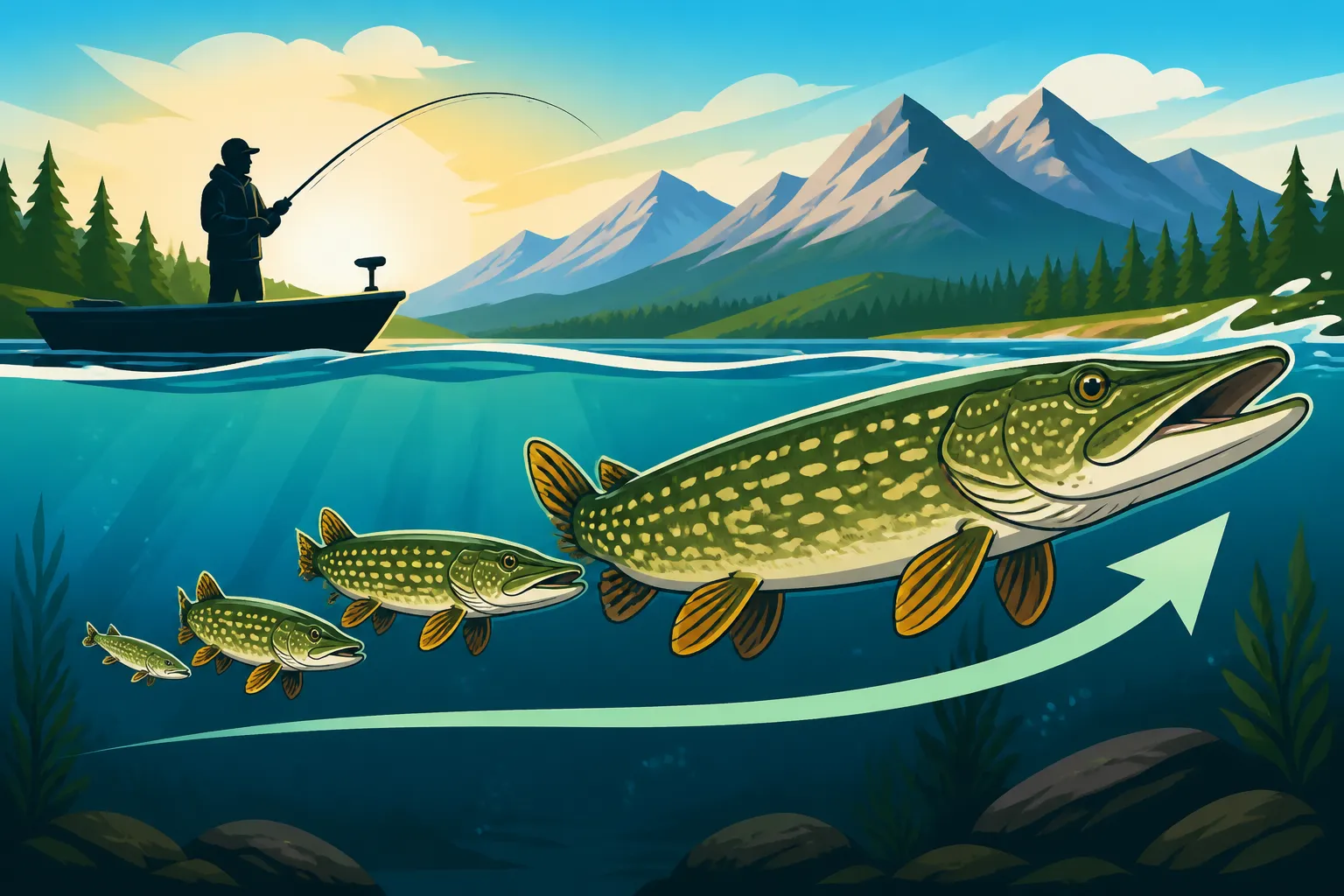
So, what does this all mean for the fish you're hoping to catch? While there's no single universal growth chart for northern pike across all of Alberta, we can outline a general trajectory based on typical conditions. Keep in mind that these are averages, and individual fish can always surprise you!
From Fry to Fingerling
The journey begins with tiny pike fry hatching in the spring, often in shallow, vegetated areas. Their initial growth is incredibly rapid, provided there's a good supply of small invertebrates and eventually, tiny baitfish. Within their first few months, these fry can grow several inches, transforming into fingerlings. This early stage is critical; strong initial growth sets the foundation for future size.
By the end of their first year, an Alberta pike might range anywhere from 6 to 12 inches, depending heavily on the richness of their environment. In a highly fertile, food-rich prairie lake, they might hit the upper end of that range, whereas in a colder, less productive northern lake, they might be on the lower end. This rapid early growth is vital for them to avoid predation from larger fish and birds.
Juvenile to Adult Stage
As pike move into their second and third years, their growth continues at a strong pace. They transition fully into piscivores, meaning fish become the primary component of their diet. During this period, they're adding significant length and girth, often growing several inches and a pound or two per year under good conditions.
- Year 2: Expect pike in the 12 to 20-inch range, weighing perhaps 1 to 3 pounds. They're becoming strong fighters and more prominent hunters.
- Year 3-4: These fish are often 20 to 28 inches long, weighing 3 to 6 pounds. This is a common size for many recreational catches across Alberta. They are sexually mature and contribute to the next generation.
- Year 5-7: Pike can reach 28 to 36 inches, with weights between 6 and 12 pounds. These are becoming significant fish, and catching one in this size range is often a memorable experience.
It's important to note that these are general guidelines. Factors such as disease, injury, or particularly harsh winters can slow individual growth. Finding quality fishing gear, perhaps through retailers like Amazon, can help you land and safely release these growing fish, ensuring they continue their journey.
Reaching Trophy Size
Ah, the "trophy pike"—the dream of many Alberta anglers. What constitutes a trophy? Generally, we're talking about pike exceeding 38-40 inches in length and weighing over 15 pounds, with some truly massive fish pushing 20, 25, or even 30 pounds. These fish are not just big; they are old.
Reaching trophy size in Alberta often requires a pike to live for 8 to 15 years, and sometimes even longer, upwards of 20 years in very stable, productive, and low-pressure environments. These fish have survived countless challenges, from predators in their youth to harsh winters and persistent anglers. Their growth might slow in terms of length after a certain point, but they continue to add girth and weight, becoming thick, powerful specimens. The pursuit of these giants is why many anglers are so dedicated to Northern Pike Fishing in Alberta. Best Lakes for Trophy Pike in Alberta can give you an idea of where these impressive fish are most likely to be found.
Environmental Influences and Regional Variations
Alberta's diverse geography means that a pike in a northern boreal lake might have a very different life story than one in a shallow prairie reservoir. These regional differences are crucial when discussing growth rates.
Prairie Lakes vs. Mountain/Northern Lakes
- Prairie Lakes: Many lakes and reservoirs in Alberta's prairie and parkland regions are warmer, shallower, and more nutrient-rich. This often translates to an abundance of food sources like perch and minnows. Pike in these systems can experience faster growth rates in their early and juvenile stages due to the extended warm-water feeding periods. However, these lakes can also experience more extreme conditions like winterkill (low oxygen under ice) or summer stress, which can impact the overall longevity and maximum size of pike.
- Mountain and Northern Lakes: In the colder, deeper, and often clearer waters of the mountains and northern boreal forests, pike growth tends to be slower. The cooler water means a slower metabolism and shorter periods of intense growth. However, these environments often provide more stable conditions, less fishing pressure in remote areas, and a consistent food supply of long-lived forage fish like cisco (lake herring) and whitefish. This can lead to pike that, while growing slower, live much longer and eventually reach truly massive sizes, though it takes many more years. These are the waters where those legendary, ancient pike often roam.
Fishing Pressure and Management Practices
Human activity, specifically fishing pressure, also plays a significant role in the average growth and size structure of pike populations.
- High Pressure: In easily accessible lakes with heavy fishing pressure, especially where harvest is common, the average size and age of pike can be significantly reduced. Anglers remove fish before they have a chance to reach their full growth potential. This can lead to populations dominated by smaller, younger fish.
- Low Pressure/Catch & Release: In remote areas, or in waters where catch and release is strictly practiced or encouraged, pike have a better chance to age and grow larger. Regulations, such as Alberta Northern Pike Limit and length restrictions (e.g., "slot limits" where only certain size ranges can be kept), are designed to protect larger, breeding-sized fish, allowing them to contribute to the fishery and reach trophy status. Many anglers choose to release all large pike to ensure the health of the population and the potential for others to catch a giant. You can find more information on responsible angling in How to Catch Bull Trout and Release Them Safely, which applies to all large fish.
What Anglers Can Expect and How to Identify Growth
So, you're out on an Alberta lake, and you hook into a solid pike. How can you gauge its age or growth? While you won't be doing scientific analysis on the water, there are some visual cues and practical considerations.
Estimating a Pike's Age in the Field
Without specialized tools like otoliths (ear bones) or scales for microscopic analysis, accurately aging a fish in the field is impossible. However, you can make some educated guesses about its stage of life:
- Small, Slender Pike (under 20 inches): These are typically younger fish, likely in their first to third year. They often have a more torpedo-shaped body.
- Mid-Sized Pike (20-35 inches): These are often sexually mature adults, likely in the 3 to 7-year range. Their body shape starts to fill out, and they gain more girth relative to their length.
- Large, Girthy Pike (over 35 inches): These are the older, trophy-class fish, likely 8+ years old. Their heads often appear proportionally smaller compared to their thick, powerful bodies. They’ve packed on significant weight and muscle.
When you're out fishing, having a measuring tape is invaluable, not just for compliance with Alberta Bag and Possession Limits by Species, but also for personal records. Many anglers carry a small, collapsible ruler or a tape measure easily found on platforms like Amazon.
Importance of Sustainable Practices for Future Growth
Given the time it takes for northern pike to reach impressive sizes in Alberta, especially the trophy fish, practicing sustainable angling is incredibly important.
- Catch and Release: For larger pike, especially those over the slot limit or those you intend to release, proper catch and release techniques are crucial. Use appropriate gear that can handle the fish quickly (to reduce fight time), and consider a rubberized landing net to minimize damage to fins and slime coat. Pliers or a specialized tool like a hook remover, readily available on Amazon, can help you unhook pike safely and efficiently.
- Handle with Care: Support the fish horizontally, especially large ones, never vertically by the jaw alone. Keep its time out of the water to a minimum. Gently revive it if necessary before releasing.
- Respect Regulations: Always adhere to current Alberta fishing regulations, including specific zone rules, bag limits, and size restrictions. These rules are put in place by fisheries biologists to help manage populations and ensure healthy growth trajectories for pike and other species. Check the Alberta Fishing Regulations Explained for the most current information.
By understanding the growth patterns and respecting the fish, we contribute to healthy, thriving pike populations for future generations of anglers to enjoy. After all, the thrill of catching a truly massive pike is unmatched, and knowing the journey it took to get there only adds to the experience.
Here's a general overview of how northern pike growth can vary by water body type in Alberta:
| Characteristic | Fertile Prairie Lake | Cold Northern/Mountain Lake |
|---|---|---|
| Water Temperature | Warmer, longer warm season | Colder, shorter warm season |
| Forage Base | Often abundant perch, minnows, suckers | Cisco, whitefish, perch, some trout |
| Early Growth (Year 1) | Faster (e.g., 8-12 inches) | Slower (e.g., 6-10 inches) |
| Juvenile Growth (Years 2-5) | Good, consistent growth (2-4 lbs/year) | Moderate, steady growth (1-3 lbs/year) |
| Trophy Potential | Can produce large fish, but often younger | Slower to reach size, but can be very old/large |
| Average Max Size | 15-20 lbs (often shorter lived) | 20-30+ lbs (longer lived) |
| Longevity | ~8-12 years | ~15-20+ years |
Disclaimer
This article is for general informational purposes only and does not constitute professional advice. Laws, prices and regulations vary by location and change over time. Consult a qualified professional for guidance on your specific situation.