Best hair jig technique for winter walleye
Winter walleye fishing can feel like trying to solve a cryptic puzzle on a frozen lake. Those toothy critters become incredibly finicky under the ice, often requiring a touch that's almost imperceptible. This guide is dedicated to breaking down the best hair jig techniques for enticing those elusive winter walleye, helping you convert those subtle taps into solid hooksets on Alberta's icy waters.
Why Hair Jigs Are a Winter Walleye Secret Weapon
Many anglers reach for flashy spoons or noisy rattle baits when the ice forms, and those certainly have their place. But when walleye get sluggish and unwilling to chase, a hair jig becomes an absolute game-changer. There's a subtle magic to them that's hard to replicate with other lures, especially in the clear, cold water often found under Alberta's ice.
The Subtle Appeal
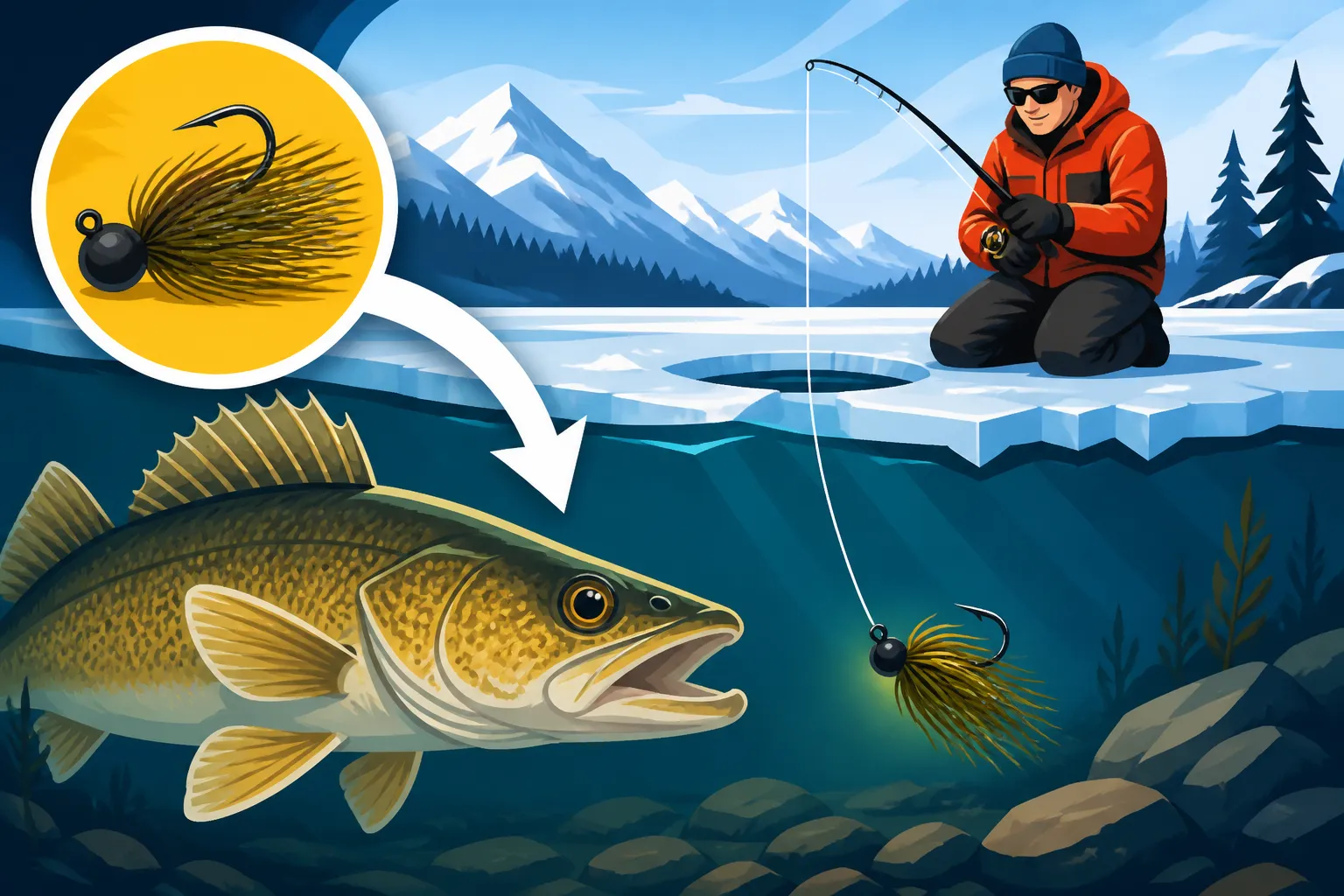
Imagine peering through the ice into the dim, cold water. The fish are often suspended or hugging the bottom, moving slowly, conserving energy. A loud, flashy lure might spook them or simply get ignored. This is where the hair jig shines. Its natural materials, usually bucktail or marabou, breathe and pulsate with the slightest movement, mimicking a struggling baitfish or an insect without being overly aggressive. It’s a quiet invitation, a delicate dance that piques a walleye’s interest without alarming them. This subtle action is crucial when you're targeting pressured fish or during those notoriously slow mid-winter days. It's about triggering an instinctual bite, not necessarily a chase.
Mimicking Natural Prey
In many Alberta lakes, walleye feed on smaller baitfish like minnows, juvenile perch, or even shiners, especially in deeper, clear water. A well-chosen hair jig perfectly imitates these natural food sources. The soft, flowing hairs suggest gills flaring, fins twitching, and the general vulnerability of a small creature. Unlike a solid plastic or metal lure, hair jigs have a very natural descent rate and movement in the water. This realism is paramount when the fish are in a negative or neutral mood. If you're ice fishing on lakes like Lesser Slave Lake or Pigeon Lake, where walleye are abundant but can be tricky, matching the hatch with a natural-looking hair jig can make all the difference. Think about what's naturally available to them at that depth and temperature; a hair jig can often be dressed to match.
Choosing the Right Hair Jig for Icy Waters
Picking the right hair jig isn't just about grabbing the first one you see. It's a nuanced decision based on water depth, clarity, current (if any), and the mood of the fish. Getting this part right sets the stage for success.
Size and Weight Considerations
When winter walleye are acting shy, smaller is often better. Most successful hair jig anglers for winter walleye in Alberta stick to jigs in the 1/8 to 1/4 ounce range. Sometimes, even lighter, like 1/16 oz, can be deadly in shallower water or when fish are extremely finicky. The goal is a slow, natural fall. Too heavy, and it drops like a rock, which can be unnatural and turn off hesitant fish. Too light, and it might not get down to the fish in deeper water quickly enough, or you might struggle with line control. For example, if you're targeting walleye in 20-30 feet of water, a 1/8 oz jig might take a little longer to get down, but its subtle flutter on the way will often draw more attention than a heavier jig that plummets too fast. On the other hand, if you're punching through thick current on a river, you might need to bump up to a 3/8 oz to maintain contact with the bottom. When browsing for these specific weights, many anglers find a great selection of brands and styles on Amazon.
Color Choices for Alberta Waters
Color can be surprisingly critical. In clear water, natural tones tend to excel. Think muted greens, browns, blacks, and whites. These colors mimic baitfish, leeches, or nymphs. If the water is stained or murky, or during low-light conditions like dawn, dusk, or heavily overcast days, brighter "attractor" colors can come into play. Chartreuse, orange, and hot pink can sometimes trigger a reaction bite. However, generally, for winter walleye, subtlety wins. Many seasoned anglers will start with a natural color like black, brown, or olive. If that's not producing, they might switch to a white or pearl. Only then, if the bite is still slow, would they experiment with a brighter pattern. It's all about matching the conditions you're fishing in and what the walleye are keying on. For more insights on this, check out What walleye eat in Alberta lakes.
Material Matters: Bucktail vs. Marabou
The two primary materials for hair jigs are bucktail and marabou, each with its unique characteristics.
- Bucktail: This is deer hair, and it's quite stiff. When jigged, bucktail flares out and then collapses more abruptly than marabou. This "pulsing" action can be very effective, especially when you want a distinct, yet subtle, jigging motion. Bucktail is also more durable, holding up better to repeated fish attacks. It's excellent for imitating minnows or small baitfish with a more defined profile. Many standard walleye jigs are tied with bucktail, offering a classic presentation that has consistently caught fish for decades.
- Marabou: Made from the soft, fluffy feathers of a turkey, marabou is incredibly fluid in the water. It has an almost alive quality, undulating and breathing with minimal movement, even when dead-sticked. This makes it exceptional for extremely finicky fish or when a super-slow, natural presentation is required. The downside is that marabou is less durable than bucktail and can tangle or get "slimed" more easily by fish. However, for sheer seductive movement, marabou is hard to beat. Choosing between them often comes down to the activity level of the fish and the desired action.
Mastering the Hair Jig Presentation for Walleye
Once you've chosen your hair jig, the real art begins: presenting it effectively. Unlike aggressively ripping spoons, hair jigging for winter walleye is generally about finesse and controlled movements.
The Dead Stick and Shake
This is arguably the most effective technique for lethargic winter walleye. It requires immense patience and feel. Here's how it works:
- Drop to the Bottom: Lower your hair jig until it hits the bottom. Give it a couple of small jigs to stir up a puff of silt, mimicking a feeding minnow.
- Lift and Hold: Lift the jig just 2-6 inches off the bottom. This is the crucial zone where walleye often feed.
- Dead Stick: Now, do nothing. Seriously. Just hold it perfectly still. This is where a quality, sensitive rod is key. Walleye will often just mouth the jig, or you'll feel a slight pressure change rather than a violent strike. This is where many bites occur. Keep your eyes glued to your line for the slightest twitch.
- Subtle Shake: After 15-30 seconds of dead-sticking, give your rod tip a tiny, almost imperceptible shake. This makes the marabou or bucktail fibers pulsate and dance, often triggering a follow-up bite from a curious walleye. It's like a small twitch of an injured minnow. Then, go back to dead-sticking. Repeat this cycle. Sometimes, the fish will hit it immediately after the shake, sometimes while it's dead still. This technique is often combined with a second line (where legal), with one rod in a holder acting as a true "dead stick" while you actively jig with the other.
Subtle Lift and Drop
This technique offers a bit more action than the dead stick but still maintains a very natural profile. It's excellent when walleye are a touch more active but still prefer a slower presentation.
- Bottom Contact: Start with the jig on the bottom, perhaps a light tap to kick up some sediment.
- Slow Lift: Slowly, almost agonizingly slowly, lift your rod tip about 6-12 inches. Think of it like a struggling minnow trying to swim up. Maintain continuous contact with the jig, feeling its weight.
- Controlled Drop: Allow the jig to fall back down, but control the fall. Don't let it freefall. The resistance of the water on the hair material makes it flutter and spiral on the descent, which is often when walleye will strike. They might hit it on the way down, or just as it settles on the bottom. The key is to keep your line taut enough to feel those subtle takes. This method allows you to cover a small vertical column of water with a very natural action.
Aggressive Jigging for Reaction Bites
While finesse is generally the name of the game, there are times when a more aggressive approach with a hair jig can provoke a reaction strike. This often happens during periods of higher fish activity, such as early morning or late afternoon, or when a school of walleye moves through.
- Sharp Snaps: Instead of gentle lifts, try a sharper snap of the rod tip, lifting the jig 1-2 feet off the bottom. This creates a more pronounced flutter and rise.
- Freefall: Allow the jig to freefall quickly back to the bottom. The sudden drop can sometimes trigger an aggressive predatory instinct, especially from more active fish.
- Pauses: Even with aggressive jigging, pauses are still crucial. After a series of snaps and drops, let the jig sit motionless for a few seconds. This mimics an injured or stunned baitfish, making it an easy target. This aggressive technique can also be useful for calling in fish from a wider area, as the quicker movement and larger displacement of water can be detected from further away. Always be ready for a strike on the fall or during the pause, as these are prime times for a walleye to commit.
Finding Winter Walleye: Location is Everything
You can have the best hair jig and the most perfect technique, but if you're not fishing where the walleye are, you won't catch anything. Winter walleye habitat is predictable once you understand their patterns. For more on general walleye habits, take a look at How to Catch Walleye in Alberta.
Key Winter Structures
Under the ice, walleye often relate to very specific structures. They're looking for areas that offer both food and protection.
- Breaks and Drop-offs: These are classic walleye holding areas. Look for sudden changes in depth, especially where a flat transitions into a deeper channel or hole. Walleye will often cruise these edges, moving up to feed on the flats during prime times and retreating to the deeper water during slower periods.
- Humps and Submerged Islands: These underwater structures act like magnets for baitfish, and where the baitfish go, the walleye follow. Target the edges and tops of humps, especially those with access to deeper water nearby.
- Weed Edges: Even under the ice, some weeds persist and provide oxygen and cover for small baitfish. Finding the green weed lines, particularly in lakes with clearer water, can be a goldmine. Walleye will patrol these edges, ambushing unsuspecting prey.
- Basins and Deep Holes: In some lakes, particularly those that are relatively featureless, walleye might simply congregate in the deepest basins, often suspended or hugging the bottom, especially in mid-winter. This is where electronics become absolutely essential.
Depth and Walleye Behaviour
Winter walleye tend to be found in deeper water than in summer, but they will move shallower to feed. In larger Alberta lakes, you might find them anywhere from 15 to 40 feet, depending on the forage and light conditions. Often, they'll be suspended a few feet off the bottom, or even much higher in the water column if they're chasing baitfish. It's not uncommon to mark walleye 10 feet off the bottom in 30 feet of water. Don't be afraid to experiment with different depths. Start near the bottom, but if you're marking fish higher up, present your hair jig at their level. Always be aware of your surroundings; if you see other anglers catching fish at a specific depth, try to replicate that.
Electronics: Your Winter Eyes
A good flasher or sonar unit is nearly indispensable for winter walleye fishing, especially with hair jigs. It allows you to:
- Identify Structure: Pinpoint those subtle humps, drop-offs, and weed lines that might not be obvious from the surface.
- Locate Fish: See fish arches or lines on your screen, indicating exactly where the walleye are holding in the water column. This saves valuable time drilling unproductive holes.
- Observe Reaction: Watch how fish react to your jig. Are they approaching it? Shying away? Are they hitting it but you're not feeling the bite? This feedback is crucial for fine-tuning your presentation. If a fish is coming in but not biting, try a smaller shake, a longer pause, or even a different color. A good flasher, like those offered by Humminbird or Vexilar, provides real-time information that can instantly improve your success rate. For assistance with your setup, you can find a lot of accessories and manuals on Amazon. Using your electronics effectively is covered in depth in Best Fish Finders for Alberta Lakes and Best sonar settings for finding structure on Cold Lake.
Complementary Gear and Important Tips
While the hair jig itself is the star, having the right supporting cast of gear and keeping a few key tips in mind can significantly boost your success for winter walleye.
Rod, Reel, and Line Setup
Your rod, reel, and line need to be sensitive enough to detect those incredibly light winter walleye bites.
- Rod: A medium-light to medium power, fast action ice fishing rod around 28-36 inches long is ideal. The fast action tip allows for precise jigging movements and excellent bite detection, while the backbone provides enough power to handle a good-sized walleye. Look for rods with sensitive graphite blanks. Brands like Fenwick or St. Croix are popular choices among serious ice anglers.
- Reel: A small spinning reel (1000 or 2000 size) with a smooth drag is perfect. You won't be making long casts, so line capacity isn't as critical as smooth operation and reliability in cold weather.
- Line: This is often overlooked but incredibly important. Many anglers prefer a low-stretch monofilament or fluorocarbon line in the 4-8 pound test range. Fluorocarbon is nearly invisible underwater and has less stretch than mono, providing better feel. Some anglers will use a braided main line with a fluorocarbon leader (3-5 feet long) for ultimate sensitivity and strength, especially when targeting larger walleye. The braid offers zero stretch, telegraphing every subtle bump. Best Fishing Rods for Alberta Rivers provides good general rod insights, some of which cross over to ice fishing.
A Quick Look at Hair Jig Choices
Here's a simple table to help you think about your hair jig selection:
| Factor | Recommended Approach for Winter Walleye |
|---|---|
| Weight | 1/8 oz to 1/4 oz (sometimes 1/16 oz for shallow/finicky, 3/8 oz for current) |
| Color (Clear) | Natural: Black, brown, olive, white, pearl, grey |
| Color (Stained) | Attractor: Chartreuse, orange, hot pink (experiment if natural fails) |
| Material | Marabou: More subtle, fluid action, great for finicky fish. Bucktail: More defined pulse, durable. |
| Action | Focus on slow, subtle movements, controlled drops, and plenty of pauses. |
Comfort and Safety on the Ice
Spending hours on the ice in Alberta means dealing with real winter conditions. Being comfortable and safe is paramount.
- Warmth: Layering is key. Wear a good quality insulated suit, thermal base layers, and warm, waterproof boots. You'll be sitting still for long periods, so overdoing it on warmth is better than underdoing it. A portable ice hut (shack) can make a huge difference in comfort, especially on windy days. Check out Best Ice Hut for Alberta Lakes for options.
- Safety Gear: Always carry safety picks, a spud bar to check ice thickness, and tell someone where you're going and when you expect to be back. Never fish alone, and always adhere to local ice safety guidelines.
- Tools: Don't forget an ice auger (powered is best for drilling many holes, see Best Ice Auger for Alberta Lakes), a scoop to keep your holes clear, and a pair of long-nosed pliers or a fish gripper for safely handling walleye, especially those with sharp teeth! A good quality headlamp is also crucial for early morning or late evening fishing, and most can be found on Amazon.
Hair jigging for winter walleye is a highly rewarding technique. It teaches you patience, subtlety, and how to truly "feel" for bites. While it might take a bit of practice to get the hang of the delicate presentation, the results – those beautiful, golden walleye pulled from under the ice – are absolutely worth the effort. Tight lines out there, and stay warm! Don't forget to double-check Alberta walleye daily limit before you head out!
Disclaimer
This article is for general informational purposes only and does not constitute professional advice. Laws, prices and regulations vary by location and change over time. Consult a qualified professional for guidance on your specific situation.