How barometric pressure affects Alberta walleye fishing
It’s a scenario every Alberta angler knows all too well: one day the walleye are practically jumping into your boat, and the next, they’ve vanished, or they're just not biting, despite you doing everything exactly the same. It’s enough to make you pull your hair out! You check your bait, you check your line, you move spots, and still, nothing. Often, the hidden culprit behind these sudden shifts in fish activity isn't something you can see on the surface, but rather something you can feel in the air: barometric pressure. Understanding how this invisible force impacts walleye behavior can be the game-changer you need to crack the code on those frustratingly slow days. This guide will walk you through the science, the strategies, and the subtle signs that will help you predict and adapt to barometric pressure changes, giving you a serious edge on the water.
What is Barometric Pressure and Why Does It Matter for Walleye?
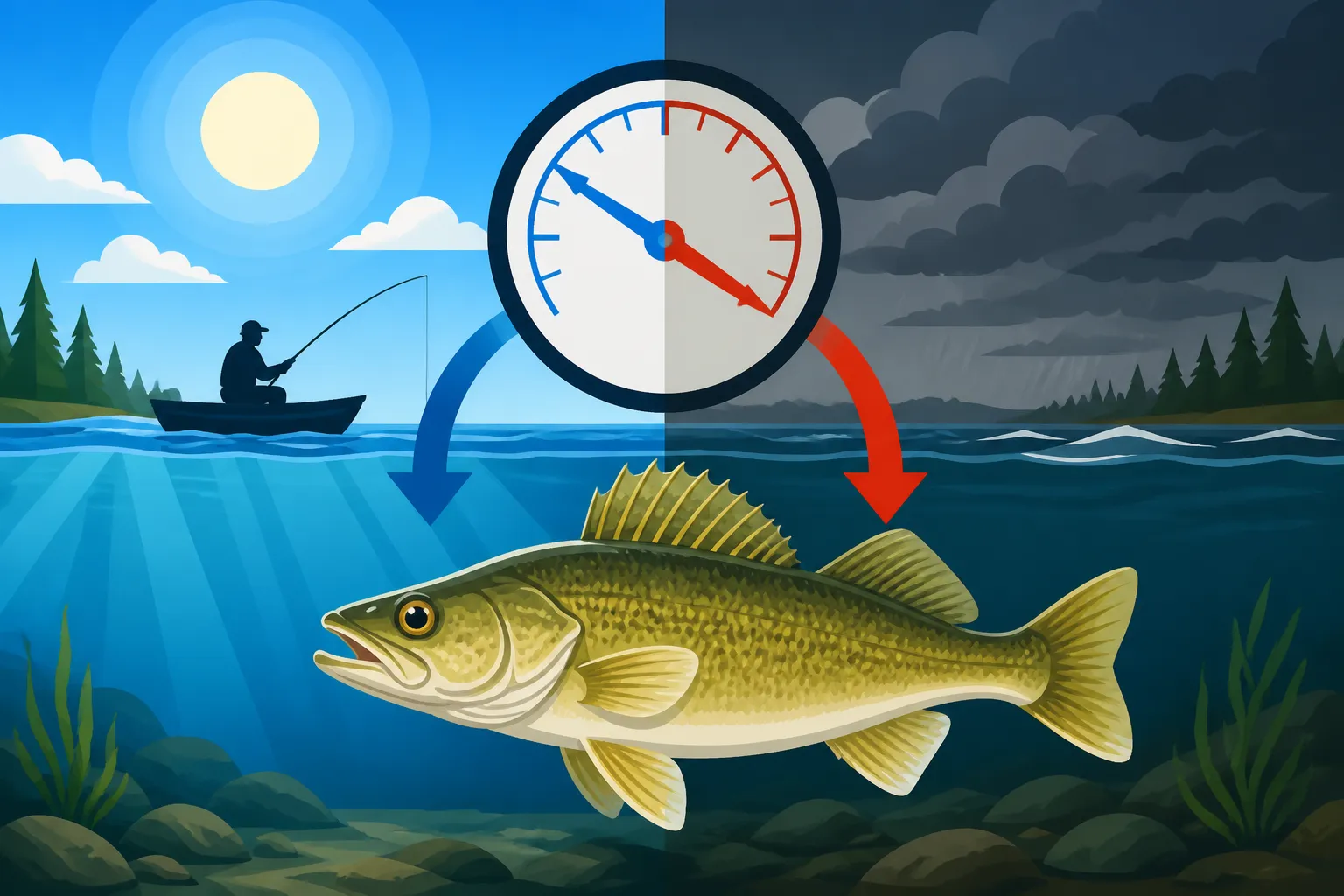
Before we dive into how to catch 'em, let's get a little scientific. Don't worry, I'll keep it simple and directly relevant to putting more walleye in your net. Barometric pressure is essentially the weight of the air above us. Think of it like a giant, invisible blanket of atmosphere pressing down on everything, including our beautiful Alberta lakes and rivers. This pressure isn't constant; it's always fluctuating, rising and falling with different weather systems. When a high-pressure system moves in, the air is heavier, pressing down more firmly. When a low-pressure system arrives, the air is lighter, and the pressure decreases.
These changes, even small ones, have a profound effect on fish, especially those like walleye. They live in a watery world where every slight shift in pressure is magnified, and their bodies are finely tuned to detect these subtle environmental cues. Ignoring this critical factor is like trying to drive a car without checking the fuel gauge—you might get somewhere, but you're probably going to get stranded eventually.
The Science Behind Barometric Pressure
The earth's atmosphere is a column of gases that extends miles above us, and it has weight. When you hear a weather report say "high pressure" or "low pressure," they're talking about the density and weight of that air column. A high-pressure system typically brings clear skies, calm winds, and stable weather, because the heavy air essentially pushes down on clouds and prevents them from forming. Conversely, a low-pressure system is often associated with stormy weather, clouds, wind, and precipitation, as the lighter air allows moisture to rise and condense.
These systems are always moving, and it's the change in pressure, more than the absolute reading, that truly affects fishing. A steady, stable pressure, whether high or low, is generally easier for fish to adapt to than rapid fluctuations. It's the swift rise or fall that really throws them off their game. Having a good weather app that shows barometric trends or even a simple portable barometer, which you can find readily on sites like Amazon, can provide invaluable information about what's happening above the water, and therefore, what might be happening below.
Walleye Physiology and Pressure Sensitivity
So, why are walleye, in particular, so sensitive to these atmospheric shifts? It all comes down to their swim bladder. Like many fish, walleye use a gas-filled swim bladder to maintain neutral buoyancy in the water column. This allows them to hover effortlessly without expending much energy. Walleye have what's called a "physoclistous" swim bladder, meaning it's a closed sac, not connected to their gut. This means they can't rapidly release or absorb gas to adjust to sudden changes in external pressure.
When barometric pressure increases, it pushes down harder on the water, which in turn compresses the walleye's swim bladder. This can cause discomfort as their bodies try to equalize. Similarly, when pressure drops, their swim bladder expands, which can also be uncomfortable. Imagine being in an airplane and feeling your ears pop—it's a similar, albeit more intense, sensation for a fish whose entire body is designed to be perfectly buoyant. This discomfort directly influences their activity levels and feeding behavior. Understanding this physiological link is key to knowing when to hit the water and, more importantly, how to fish once you're there.
How Different Pressure Systems Impact Walleye Behavior
The trick isn't just knowing what barometric pressure is, but how different trends—high, low, falling, and rising—specifically affect walleye. Each scenario paints a different picture of their mood and location, and if you can recognize these patterns, you’re already halfway to a successful day on the lake. We often talk about general walleye habits, but pressure can override those tendencies, making them act completely out of character.
High (Stable) Pressure: The Clear Sky Challenge
Ah, the beautiful, sunny, clear-sky days in Alberta. Perfect for a picnic, but often a real challenge for walleye fishing. High-pressure systems bring stable, heavy air, leading to calm winds and bright sun. While this sounds pleasant to us, it often means tough fishing for walleye. The increased pressure compresses their swim bladders, making them feel lethargic and less inclined to move around. The clear skies also mean more light penetration into the water, which walleye, being light-sensitive creatures, tend to shy away from.
During these periods, walleye will often retreat to deeper, darker water or hug tight to structure like sunken logs, rock piles, or weed lines where they can find shade and ambush prey from cover. Their metabolism slows, and they become much more passive. They’ll still eat, but they’re not actively hunting; they're waiting for an easy meal to come by. This is when finesse tactics and slower presentations truly shine, and patience becomes your best friend. Don't expect aggressive strikes; think subtle taps.
Falling Pressure: The Pre-Front Feast
This is often the golden window every walleye angler dreams of! When a low-pressure system is moving in, and the barometer is steadily falling, walleye sense the impending change. This falling pressure, surprisingly, can initially make them feel more comfortable, as their swim bladders can expand slightly, allowing for easier movement. More importantly, fish seem to have an innate ability to "know" when a weather front is approaching. They anticipate the storm and the difficult fishing conditions that usually follow, triggering a strong feeding response.
During this pre-front phase, walleye often become incredibly active and aggressive. They move into shallower feeding areas, sometimes even venturing out into open water to hunt baitfish. This is the time to throw those reaction baits like crankbaits or aggressively jig for them. Strikes can be powerful and committed. If you see the barometer dropping and storm clouds gathering in the distance, drop everything and hit the water – you could be in for an epic bite. This is when you'll often see them actively chasing bait, rather than just waiting for it to come to them. Many anglers swear by fishing right before a rainstorm for this very reason.
Low Pressure: The Post-Front Lull
And then there's the inevitable crash after the high. Once a major front has passed, and a low-pressure system has settled in, fishing can become incredibly difficult. The air is light, often bringing unstable weather, wind, and continued precipitation. For walleye, this is generally the worst-case scenario. Their swim bladders are expanded, making them uncomfortable and sluggish. Their entire system is thrown off by the abrupt change and lingering instability.
During these post-front low-pressure periods, walleye often scatter, become inactive, and retreat to the deepest, most inaccessible cover they can find. They may suspend aimlessly or bury themselves in thick weeds. Their feeding urge is significantly reduced, and coaxing a strike out of them requires extreme patience and the most subtle, tempting presentations. This is the kind of day where you might only get one or two bites, and they'll likely be very light. Don't take it personally; the fish are simply not in a feeding mood. Knowing how to fish during a cold front in Alberta often involves slowing way down.
Rising Pressure: The Slow Recovery
After a challenging low-pressure system, there's always hope for a recovery. As the weather clears and a new high-pressure system begins to build, the barometer starts to rise. This rising pressure indicates a gradual return to stable conditions, and walleye will slowly start to respond. This isn't usually an immediate flip of a switch; it's a gradual process. Initially, they might still be lethargic from the previous low-pressure period, but as the pressure continues to rise and stabilize, their comfort levels improve, and their activity will slowly pick up.
During this recovery phase, walleye might move from their deep sanctuaries to the edges of structure or along breaklines, testing the waters, so to speak. They're not yet in full feeding mode, but they're starting to look for easy meals. You'll want to employ a mix of slower, tempting presentations, perhaps slowly working jigs or dragging live bait, gradually increasing your retrieve speed or lure size as the day progresses and the pressure stabilizes. It’s a transition period, and adapting your tactics accordingly is key to catching fish that are slowly coming out of their funk.
Reading the Weather and Your Walleye Tactics
Now that you understand the "why," let's get into the "how." It's one thing to know that barometric pressure matters, and another to actually use that knowledge to catch more walleye. Being able to read the signs, both through technology and keen observation, is a skill that will dramatically improve your success on Alberta's waters. This isn't just about glancing at the forecast; it's about interpreting subtle cues that tell you what the fish are feeling.
Tools to Monitor Barometric Pressure
In today's connected world, you have several excellent options for monitoring barometric pressure trends. The most common and accessible tool is your smartphone. Many modern weather apps, like AccuWeather or The Weather Network, include detailed forecasts that show barometric pressure trends over time. Look for graphs that illustrate rising, falling, or stable pressure rather than just the current reading. Remember, it's the trend that's most important.
For a more dedicated approach, you can invest in a portable barometer. These compact devices give you real-time readings and often display a history of pressure changes, allowing you to see the trend at a glance. You can find a wide range of these devices, from basic models to more advanced ones that also track temperature and altitude, on online marketplaces like Amazon. Some smartwatches even integrate barometric sensors, providing another convenient way to keep an eye on things while you're on the water. Whatever tool you choose, make it a habit to check it before and during your fishing trip, especially if you're targeting specific walleye species in Alberta lakes.
Observing Natural Indicators
Even without a fancy gadget, nature itself provides plenty of clues about barometric pressure changes. Learning to read these natural indicators is an ancient skill that still holds immense value for anglers.
- Cloud Formations: Low, heavy, dark clouds often precede falling pressure and storms. Clear, blue skies with wispy high clouds usually indicate stable or rising high pressure. Watch how quickly clouds move and change.
- Wind: Shifting wind directions or a sudden calm before a storm can signal a pressure change. Generally, a sustained, steady wind is a good thing for walleye fishing, but a sudden cessation or violent gusts usually mean a front is moving through.
- Other Wildlife: Pay attention to birds and other animals. Birds flying low or taking shelter can indicate a coming storm (falling pressure). Insects, too, can behave differently. For instance, sometimes a sudden flurry of insect activity can occur before a storm as they try to feed before the weather turns bad.
- Water Clarity: While not directly related to pressure, heavy rains associated with low pressure can muddy waters, further impacting walleye behavior by reducing visibility.
These observations, combined with your pressure readings, give you a holistic view of the conditions and help you anticipate how the walleye might react. Always look at the bigger picture, not just one isolated sign.
Adjusting Your Fishing Strategy for Barometric Pressure
Knowing the pressure trends is only half the battle. The real magic happens when you adapt your fishing strategy to match what the walleye are experiencing. This means making intelligent adjustments to where you fish, what lures you use, and how you present them. This flexibility is what separates the consistently successful anglers from those who are always scratching their heads.
Location Adjustments
Where walleye position themselves in the water column and around structure is heavily influenced by barometric pressure.
- High (Stable) Pressure: When the pressure is high and stable, walleye tend to move deeper, seeking comfort zones where the pressure on their swim bladder is less intense, or where light penetration is reduced. Look for them tightly associated with deep structure, like rock humps, ledges, or the deepest edges of weed lines. Sometimes they'll even suspend in open water, just above the thermocline. Don't be afraid to fish your baits right on the bottom or target deeper channels. Learning how to fish deep structure for summer walleye will pay off here.
- Falling Pressure: During falling pressure, walleye often become more active and move shallower, sometimes even into very skinny water to feed aggressively. They'll be on flats, submerged points, and along the shallower edges of weed beds. They might be patrolling open water areas more aggressively too. This is the time to cover water and search for active fish.
- Low Pressure: This is when walleye can be anywhere and nowhere at the same time. They'll often scatter, becoming disoriented and incredibly inactive. Some might bury themselves deep in thick cover; others might suspend listlessly in the deepest parts of the lake. It's truly a hunt-and-peck situation, requiring you to painstakingly explore different depths and covers. Focus on known sanctuary areas for walleye.
- Rising Pressure: As pressure slowly rises, walleye will gradually start to move from their deepest hiding spots to transitional areas. Think breaklines, secondary points, and the edges of deeper structure. They won't be as aggressive as during falling pressure, but they'll be more willing to move and feed than during a full low-pressure slump.
Presentation Changes
Just as crucial as location is how you present your bait. Walleye mood dictates lure choice, size, and retrieve speed.
- High (Stable) Pressure: Think subtle and slow. This is prime time for live bait presentations, like a juicy minnow or nightcrawler on a slip-bobber or a simple jig. Small jigs tipped with soft plastics, slowly dragged or lightly hopped along the bottom, can also be very effective. Finesse techniques, minimal movement, and smaller profile lures are the key. Consider how you might rig a live minnow for walleye in these conditions, focusing on natural movement.
- Falling Pressure: This is when you can get aggressive! Walleye are in feeding mode, so faster retrieves, larger profile baits, and reaction strikes work wonders. Crankbaits, spinnerbaits, ripping jigs, and faster trolling speeds can trigger those powerful strikes. Experiment with different colors and sizes of lures like those used for walleye on Lesser Slave Lake in summer, as they're actively chasing. Don't be afraid to experiment with your retrieve speed; often, a fast retrieve is exactly what they want.
- Low Pressure: You need to tempt them. This means excruciatingly slow presentations. Dead-sticking a live minnow, barely moving a small jig, or using heavily scented baits can sometimes elicit a response. Go for smaller lures, natural colors, and minimal action. Your goal isn't to trigger an aggressive strike, but to make it so easy and enticing that the fish can't resist a slow, hesitant bite. Think about the opposite of the best trolling speed for walleye here; you want almost no movement.
- Rising Pressure: Start slow and gradually increase. Begin with similar tactics to low pressure, but as the day progresses and you feel the bite improving, gradually increase your retrieve speed, try a slightly larger bait, or add more action to your presentation. A subtle jigging motion or a slow retrieve on a crankbait might be the ticket. Experiment to see what the fish are telling you.
Timing Your Bites
Even on the toughest days, there are usually short windows of opportunity. Barometric pressure influences these peak times.
- High (Stable) Pressure: Your best bets are usually during low light conditions – dawn, dusk, or even into the night. These are times when the walleye's light sensitivity is less of an issue, and they might feel more comfortable venturing out of their deepest cover. This aligns perfectly with the general advice on the Best Time of Day to Catch Walleye, where low light is often preferred.
- Falling Pressure: The bite can be consistent throughout the day, often peaking just as the front is about to hit. Don't neglect midday fishing in these conditions, especially if there's good cloud cover.
- Low Pressure: This is a grind. You might only get a few bites all day, often during very brief windows where something else changes—a slight shift in wind, a momentary break in the clouds, or perhaps a sudden increase in baitfish activity. You need to be persistently fishing, ready for that one precious opportunity.
- Rising Pressure: The bite will gradually improve, but you might still find stronger activity during those low light periods. As the pressure stabilizes, you might see more consistent action throughout the day.
By meticulously tracking the barometric pressure and making these corresponding adjustments, you're not just casting randomly; you're fishing intelligently, giving yourself the best possible chance to find and catch walleye, regardless of what the atmosphere is doing. Understanding the bigger picture of Walleye Fishing in Alberta means factoring in all these subtle variables.
Here’s a quick summary to help you visualize the tactics:
| Pressure Trend | Walleye Behavior | Best Location | Best Presentation | Key Tactic |
|---|---|---|---|---|
| High (Stable) | Lethargic, deep, light-sensitive, seeking cover. | Deeper water, tight to structure (rocks, deep weeds) | Slow, subtle; live bait, small jigs, finesse soft plastics. | Patience is crucial; focus on natural presentation right on their nose. |
| Falling (Pre-Front) | Aggressive, active, moving shallow to feed. | Shallower feeding flats, points, open water. | Fast, aggressive; crankbaits, spinnerbaits, ripping jigs. | Cover water quickly, target reaction strikes. This is your "go-time." |
| Low (Post-Front) | Inactive, scattered, disoriented, deep cover. | Deepest holes, thick cover, sometimes suspended. | Extremely slow; dead-sticking live bait, tiny jigs, scent. | Minimalist approach, try to tempt a hesitant bite. Expect very few, light strikes. |
| Rising (Recovery) | Gradually becoming active, moving to edges. | Breaklines, secondary points, edge of deep cover. | Gradually increasing speed; slow jigs, live bait, then testing crankbaits/plastics. | Start slow and gradually experiment with more aggressive tactics as fish respond. Look for transition zones. |
Disclaimer
This article is for general informational purposes only and does not constitute professional advice. Laws, prices and regulations vary by location and change over time. Consult a qualified professional for guidance on your specific situation.