Alberta fishing license residency requirements
Trying to figure out if you qualify for an Alberta resident fishing license can feel like navigating a maze, especially if you've recently moved, are a student, or work out of province. The regulations can be a bit opaque, leaving many anglers scratching their heads and worried about buying the wrong license. This comprehensive guide will clear up all the confusion around Alberta fishing license residency requirements, helping you understand exactly where you stand and what you need to do to get on the water legally and without stress.
Understanding Alberta's Definition of a Resident Angler
The foundation of Alberta's fishing license system hinges on whether you're considered a "resident" or a "non-resident." This distinction isn't just a technicality; it directly impacts the type of license you need and, let's be honest, the Alberta resident fishing license cost is often significantly less. Many people assume if they live and work in Alberta, they're automatically residents, but the government has a very specific definition that covers various living situations. It’s crucial to understand this definition to avoid any complications down the line, such as penalties for fishing without a license in Alberta: Penalties.
Who Qualifies as an Alberta Resident for Fishing Purposes?
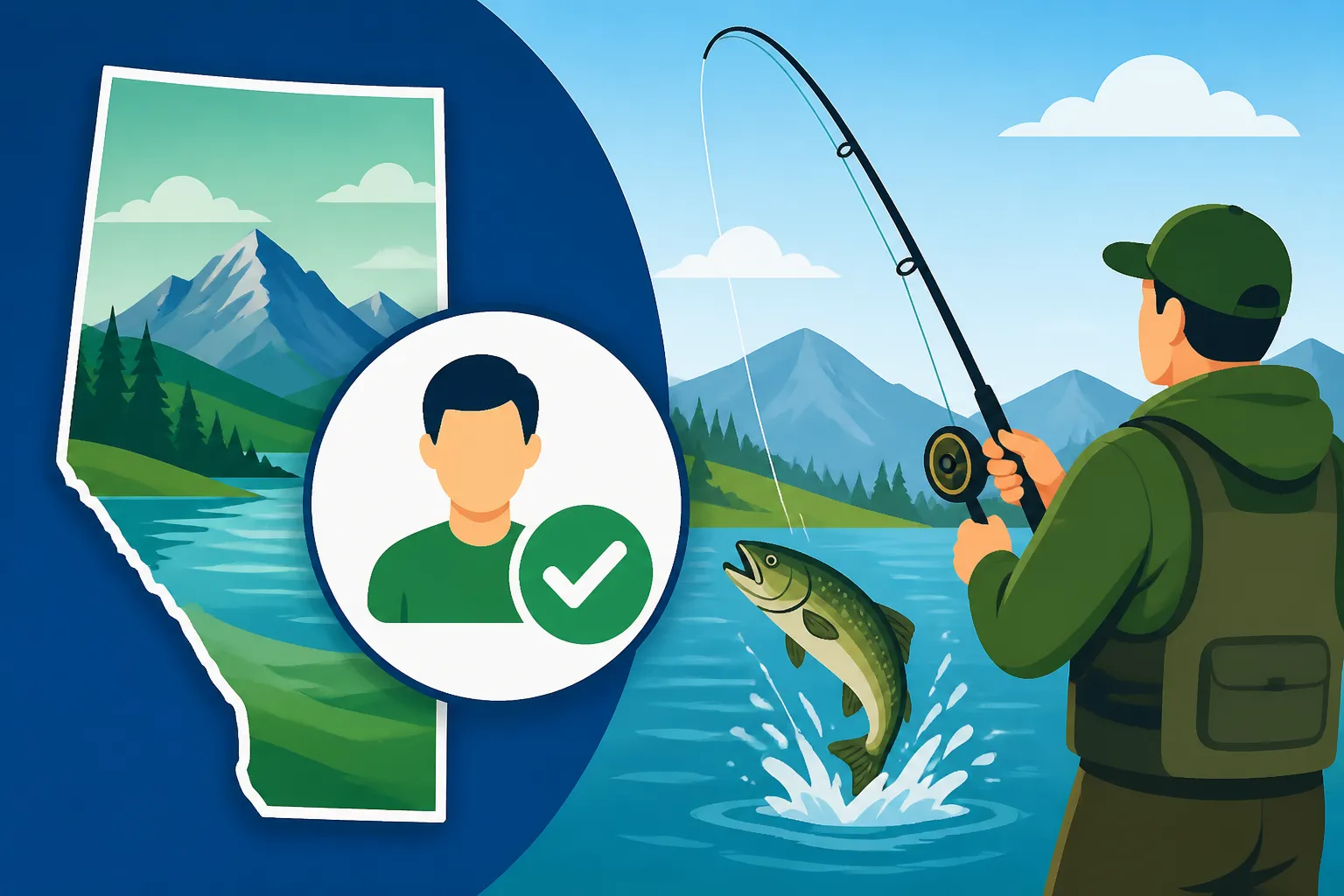
At its core, an Alberta resident for fishing license purposes is someone who has lived in Alberta for the immediately preceding 12 consecutive months. This isn't just about having an address; it's about establishing your primary home here. Think of it as demonstrating a continuous, genuine connection to the province. For instance, if you moved to Calgary last October, you wouldn't qualify as a resident until the following October. This continuous 12-month period is key, and it helps ensure that those who are truly part of the provincial community benefit from resident pricing and access.
Beyond the standard 12-month rule, there are a few other categories that also qualify:
- Serving in the Canadian Armed Forces: If you are a member of the Canadian Armed Forces and were an Alberta resident immediately prior to being stationed outside the province, you still count as an Alberta resident. This is a common situation for military families who might be temporarily relocated but still consider Alberta their home base.
- Students Abroad: Similar to military personnel, if you are temporarily residing outside Alberta for the purpose of attending a post-secondary educational institution and were an Alberta resident immediately before leaving, you maintain your resident status. This is a huge relief for students who go out-of-province for school but return home for breaks and want to fish on their home waters. Understanding Alberta out-of-province college student fishing license rules is essential in these cases.
- Minors: For youth under 18, their residency is generally tied to their parent or legal guardian's residency status. If their parent or guardian is an Alberta resident, so are they. It's important to note that specific age requirements apply, and while generally those under 16 don't need a license, knowing the Alberta fishing license age requirements is crucial.
It's not just about what you say; it's about what you can prove. You'll need to demonstrate your residency with official documentation, which we’ll dive into shortly. This careful definition helps maintain the integrity of the licensing system and ensures that the benefits intended for residents genuinely go to them.
Distinguishing Resident from Non-Resident Categories
If you don't meet the criteria for an Alberta resident, you fall into one of the non-resident categories. This primarily includes two groups: non-resident Canadians and non-resident non-Canadians. The key difference here, once again, comes down to cost and often the duration of the license you can purchase. Someone visiting from British Columbia, for example, would be a non-resident Canadian, while an angler from the United States would be a non-resident non-Canadian. Each category has its own specific license types and fees.
The distinction isn't arbitrary; it reflects the investment and contribution of permanent residents to the province's fisheries management. Think about the conservation efforts, stocking programs, and habitat protection initiatives funded by provincial taxes and license sales. The resident license fees contribute to these ongoing efforts, and the higher non-resident fees reflect a visitor's use of these resources without the same long-term provincial investment. This is why knowing the difference is so critical when looking up how much an Alberta fishing license costs.
Providing Proof of Alberta Residency
Once you understand the definition, the next step is proving it. Alberta Environment and Protected Areas (AEPA) takes residency seriously, and when you purchase your license, especially if you do so through the MyWildAlberta portal, you’ll be attesting to your residency status. It's not enough to simply declare you're a resident; you need to be able to back it up with official documentation if ever asked by a Fish and Wildlife Officer. This isn't about distrust; it's about maintaining fairness and enforcing regulations consistently across the board.
Acceptable Documents for Proof of Residency
When purchasing your Alberta fishing license or if you're ever checked in the field, you need to have acceptable forms of identification that clearly demonstrate your residency. The general rule is to have government-issued identification that shows your current Alberta address and has been valid for the required 12-month period. Here’s what typically works:
- Alberta Driver's License or ID Card: This is usually the easiest and most universally accepted form of ID. It clearly states your Alberta address and, with the issue date, can often confirm your 12 months of continuous residency.
- Utility Bills: Recent utility bills (electricity, gas, internet) in your name, showing an Alberta address, can also serve as supporting documentation, especially if you’re a new resident trying to prove the 12-month mark. Just make sure they are consistent and cover the required period.
- Lease Agreement or Property Title: If you're renting, a lease agreement showing your start date can be good evidence. For homeowners, a property title or municipal tax bill works well.
- Vehicle Registration: An Alberta vehicle registration in your name also points to your residency.
- Government Correspondence: Official mail from federal or provincial government bodies, like tax documents or health care statements, can also support your claim, provided they show your Alberta address.
It’s always a good idea to carry at least two forms of identification, one with a photo, when you're out fishing. While you might not be asked for detailed residency proof every time you buy a license, particularly after your initial purchase and WIN card activation, being prepared is key. Remember, an Alberta WIN Card, Explained, is tied to your identity and residency, making its accuracy paramount.
The Role of the WIN Card in Residency Verification
The Wildlife Identification Number (WIN) card is an essential part of fishing and hunting in Alberta. It's your unique identifier within the provincial system, and your residency status is directly linked to your WIN profile. When you purchase or renew your WIN card, you will declare your residency. This information then informs the types of licenses available to you.
If you change your address or your residency status, it’s critical to update your WIN card profile promptly. You can usually do this online through the MyWildAlberta portal. Not only does this keep you compliant, but it also ensures that you receive any important notifications or updates regarding regulations or draws, like the Alberta Walleye Special Harvest Licence Program. Think of your WIN card as your master key to Alberta's outdoors; keeping its information current is just good practice.
Here’s a quick overview of acceptable proof:
| Document Type | Primary Use | Notes |
|---|---|---|
| Alberta Driver's License | Proof of address & photo ID | Most common, shows issue date for 12-month verification |
| Alberta ID Card | Proof of address & photo ID for non-drivers | Similar to driver's license, excellent for non-drivers |
| Utility Bills | Proof of address & continuous residency | Requires multiple bills over 12 months for full proof |
| Lease Agreement / Title | Proof of address & occupancy start date | Important for establishing new residency, confirms address |
| Vehicle Registration | Supplementary proof of Alberta connection | Helps corroborate other documents, not usually primary proof |
| Government Mail | Supplementary proof of Alberta connection | Must be recent and show clear Alberta address in your name |
Always be ready to present these documents if requested. While most license purchases are straightforward, an encounter with Fish and Wildlife officers in the field may require you to verify your status. For example, if you're out enjoying a day on the Bow River and an officer approaches, being able to quickly show your license and relevant ID will make for a smooth interaction.
Specific Residency Scenarios and Exemptions
Life isn't always straightforward, and neither are residency rules. There are several common situations where people might be unsure about their status or where special considerations apply. Alberta's regulations try to cover these, but it's important to understand the nuances. For example, some individuals might wonder if they still qualify as a resident if they work out of province for extended periods.
New Residents and the 12-Month Rule
The 12-month continuous residency rule is where many new Albertans get tripped up. If you just moved to Alberta from, say, Ontario, last month, you won't be considered an Alberta resident for fishing license purposes until you've hit that one-year mark. During that interim period, you'll need to purchase a non-resident Canadian fishing license. This can be a bit frustrating, especially if you're eager to explore the Best Fishing Lakes in Alberta, but it's a hard and fast rule.
Let's say Sarah just moved from Vancouver to Edmonton for a new job in July. She loves to fish and wants to hit Lesser Slave Lake that August. Even though she now lives and works in Alberta, she hasn't met the 12-month residency requirement. So, Sarah would need to purchase an Alberta non-resident Canadian fishing license cost 2026. After a full 12 months of living in Edmonton, in the following July, she would then qualify for the resident license. This transition period is something many new arrivals overlook, often leading to confusion at the point of purchase.
Alberta Youth and Senior Exemptions
Age plays a significant role in license requirements in Alberta. We touched on this briefly, but it's worth elaborating.
- Youth Under 16: Generally, children under 16 years of age do not need an Alberta fishing license. This is fantastic for encouraging young anglers and getting families out on the water. However, any fish they keep count towards the bag limits of the licensed adult they are fishing with. This means if you have a 14-year-old fishing alongside you, and they catch a walleye, that fish counts against your Alberta walleye daily limit. It's a common point of confusion, so always check the specific rules in the Alberta Guide to Sportfishing Regulations.
- Seniors 65 and Over: Alberta residents who are 65 years of age or older also do not require a fishing license. This is a wonderful benefit for seniors who have contributed to the province over their lifetime. However, like youth, they still need to adhere to all other Alberta fishing regulations explained, including bag limits and season dates. They may also need to carry proof of age (e.g., an Alberta driver's license or ID card) to confirm their eligibility for this exemption. This makes enjoying a quiet day fishing on the North Saskatchewan River or any other spot much more accessible.
These exemptions are designed to make fishing more accessible for these demographic groups, but they still operate within the broader framework of residency. A 15-year-old visiting from Saskatchewan would still be considered a non-resident youth, and while they might not need a license, the rules regarding an accompanying adult's license and bag limits would apply.
Canadian Armed Forces and Post-Secondary Students
As mentioned, special provisions exist for Canadian Armed Forces members and students temporarily living outside Alberta. The crucial element here is that they must have been an Alberta resident immediately before leaving the province for service or schooling. This prevents someone who has never resided in Alberta from claiming residency through these exemptions.
For example, a student from Calgary who goes to the University of British Columbia for four years but plans to return to Alberta after graduation would still be considered an Alberta resident. They would simply need to maintain their Alberta identification (like an Alberta driver's license) and potentially provide proof of their previous Alberta residency and current student status if ever asked to verify. This ensures that their ties to Alberta, even if temporarily strained by external commitments, are recognized for fishing license purposes. The same applies to active military personnel; their service doesn't negate their Alberta roots. Knowing about the Alberta active military fishing license discount can also be beneficial.
Consequences of Misrepresenting Residency
It might seem like a small thing, but misrepresenting your residency status to obtain an Alberta fishing license is a serious offense. It's not just a minor clerical error; it's a violation of provincial law that can lead to significant penalties. Fish and Wildlife Officers are trained to enforce these regulations, and they have the authority to verify your claims.
Penalties for False Declarations
If you are caught having misrepresented your residency to acquire a resident fishing license when you should have purchased a non-resident one, you could face hefty fines. These fines can range from hundreds to thousands of dollars, depending on the severity of the offense and any previous infractions. Beyond the financial hit, you might also face:
- Seizure of Equipment: Your fishing gear, and even your boat, could be seized. Imagine losing your favourite rod and reel, or worse, your boat that you invested so much in, just because you tried to save a few dollars on a license.
- License Suspension: Your fishing privileges could be suspended for a period, meaning you wouldn't be able to fish in Alberta, even with a valid license, for a specified time. This can be particularly devastating for avid anglers.
- Criminal Record: In more serious or repeat cases, you could even face a criminal record, which can have long-lasting implications for employment, travel, and other aspects of your life.
These consequences aren't meant to be punitive for the sake of it. They are in place to protect Alberta's fisheries and ensure fair play among all anglers. The funds from license sales directly support conservation and management efforts, and when people circumvent the system, it undermines these crucial programs. This is why understanding the Alberta Fishing Regulations Explained is so vital, and why officers take it so seriously.
Importance of Accuracy and Compliance
The easiest way to avoid any of these unpleasant scenarios is simply to be honest and accurate when declaring your residency. If you're unsure, it's always better to err on the side of caution and purchase the non-resident license, or to contact Alberta Environment and Protected Areas directly for clarification. Their contact information is usually available on the MyWildAlberta website.
Moreover, if your residency status changes during the year – for example, if you move out of Alberta – you should update your WIN card profile. While your current resident license might remain valid for the remainder of its term, any subsequent purchases would need to reflect your new non-resident status. It's about being proactive and maintaining compliance, rather than waiting for an officer to ask questions. You can find detailed steps on how to buy an Alberta fishing license online, and it’s always better to follow those instructions carefully, ensuring all your information is correct.
Consider someone who bought an Alberta resident license in January, but then got a job transfer to Saskatchewan in March. While their license is still technically "active," if they were to try and buy another resident license next year, they'd be knowingly misrepresenting their status. It's always best to understand the rules from sources like the Alberta Fishing License Guide for 2026 to ensure you're squared away for your fishing adventures.
Remember, Fish and Wildlife Officers patrol all waters, from the popular Bow River Trout Fishing Near Calgary spots to remote lakes up north. They're not just looking for flagrant violations; they're also doing routine checks to ensure everyone is compliant with their licenses and other regulations, such as the Alberta Bull Trout Zero Possession Rule. Being prepared with your license (whether printing or carrying a digital fishing license in Alberta) and appropriate ID will make your fishing experience smooth and enjoyable.
Where to Get Your Alberta Fishing License and WIN Card
Now that you're clear on residency, the next logical step is knowing where to get your license and WIN card. The process is designed to be relatively straightforward, with both online and in-person options available, ensuring accessibility for all anglers.
Online Purchase through MyWildAlberta
For most modern anglers, the most convenient way to acquire your Alberta fishing license and WIN card is online through the official MyWildAlberta portal. This platform is designed to be user-friendly, allowing you to manage your profile, purchase licenses, and even apply for special draws from the comfort of your home.
The steps are generally simple:
- Create or Log In to Your WIN Account: If you don't have a WIN card, you'll first create a profile and get your Wildlife Identification Number. This involves providing personal details and declaring your residency. If you already have one, simply log in. Remember that there's an Alberta WIN Card Activation Fee, Explained, for new cards.
- Verify Residency: During the process, you'll attest to your residency status. This is where your understanding of the 12-month rule and other criteria comes into play.
- Select Your License: Choose the appropriate sportfishing license for your residency status (resident, non-resident Canadian, or non-resident non-Canadian) and desired duration (annual, 1-day, 7-day, etc.). For instance, you might be looking at a Non-Resident Annual Fishing License Cost in Alberta.
- Complete Purchase: Pay securely online. You'll then receive a digital copy of your license.
- Print or Save: You have the option of printing your license at home or saving a digital copy to your smartphone. Both are generally accepted, but always carry backup identification.
Purchasing online is often quicker, and it ensures you have access to your license immediately. It's a system that benefits from modern technology, allowing you to be compliant without needing to visit a physical store. Many anglers even pick up supplementary gear or apparel like a good pair of polarized sunglasses for sight fishing clear water on Amazon after securing their license, demonstrating how seamlessly online services integrate into the modern angling experience.
In-Person Vendors and Retailers
While online is popular, not everyone is comfortable with digital transactions, or perhaps you're out camping and suddenly decide you want to fish! No worries – you can still purchase your Alberta fishing license and WIN card from a variety of authorized vendors across the province. These typically include:
- Sporting Goods Stores: Large retailers like Cabela's, Bass Pro Shops, or even smaller independent tackle shops usually sell fishing licenses. These places often have knowledgeable staff who can help clarify any last-minute questions about regulations or residency.
- Hardware Stores: Many smaller community hardware stores that cater to local outdoors enthusiasts also serve as license vendors.
- Convenience Stores and Gas Stations: In some rural or smaller towns, certain convenience stores or gas stations will be authorized to sell licenses, providing a convenient option when you're already on the road.
When purchasing in person, you'll still need to provide your personal details and declare your residency. It's wise to bring your Alberta driver's license or other government-issued ID that clearly shows your address. The vendor will process your information, print your license, and you'll be good to go. This traditional method also offers the chance to browse for new fishing gear, like the best fluorocarbon line for clear water trout, or pick up some local bait.
Whether online or in-person, ensuring you have the correct Alberta fishing license based on your residency is your responsibility. It's the first step to enjoying the incredible fishing opportunities Alberta has to offer, from the legendary trout of the Bow River to the abundant walleye of Lesser Slave Lake.
Disclaimer
The information provided in this guide is for general informational purposes only and does not constitute legal advice. While we strive to keep the information up-to-date and correct, fishing regulations can change. Always consult the official Alberta Guide to Sportfishing Regulations or the MyWildAlberta website for the most current and accurate information before heading out to fish. Compliance with all provincial and federal regulations is the sole responsibility of the angler.