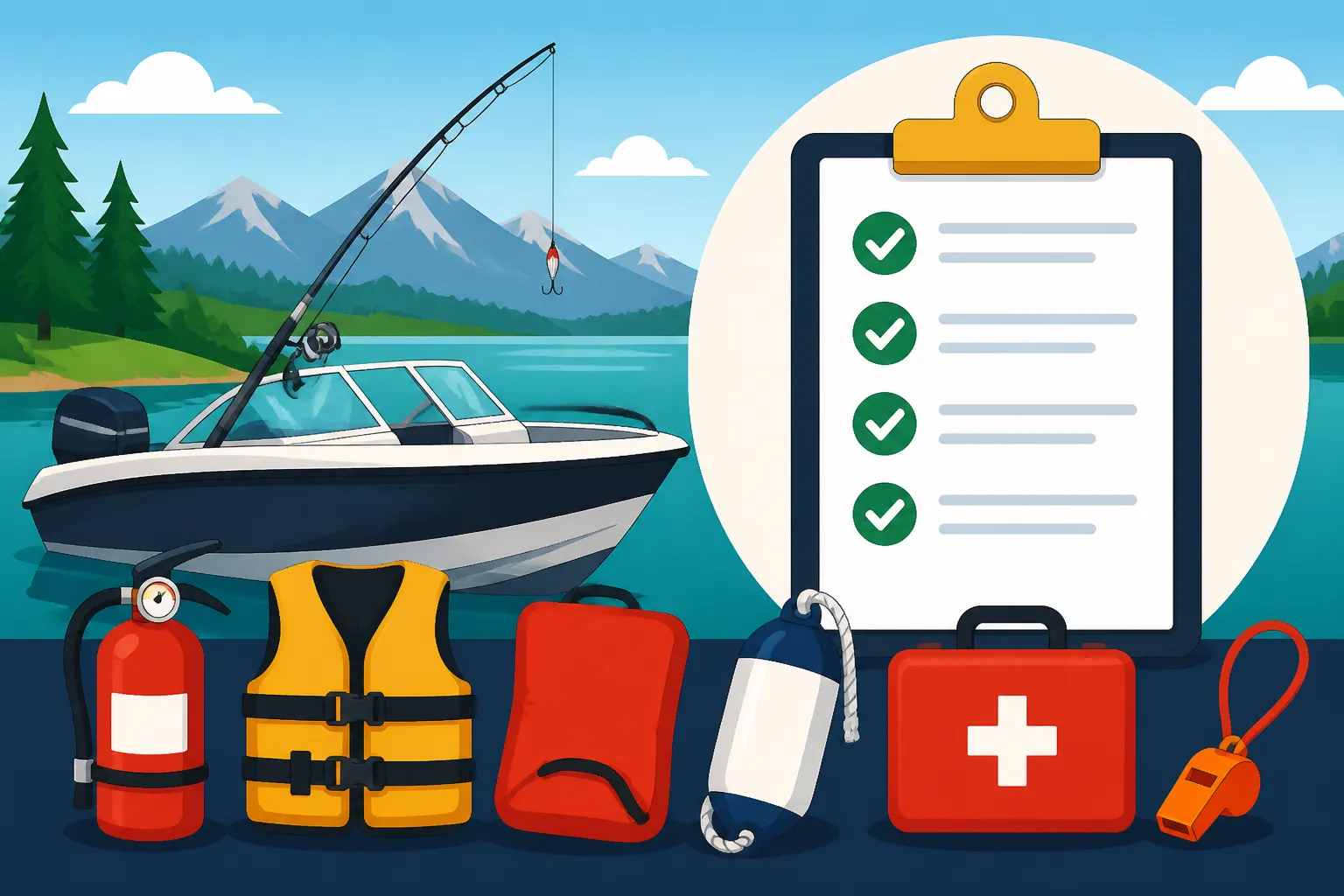
Alberta required boat safety equipment checklist
Hitting Alberta's beautiful lakes and rivers for a day of fishing or family fun is an incredible experience, but the last thing anyone wants is to have their day cut short by an unexpected inspection and a costly fine for missing safety equipment. The rules around what you must carry on your boat can feel a bit like navigating a maze, leaving many of us scratching our heads and hoping for the best. This comprehensive guide is here to clear up all that confusion, walking you through every single piece of boat safety equipment legally required in Alberta, ensuring your adventures are always safe and fully compliant.
Understanding the Legal Mandates for Boat Safety in Alberta
When you're out on the water in Alberta, whether it's a serene morning on Pigeon Lake or a bustling afternoon on Sylvan Lake, you're operating under a specific set of rules. These aren't just suggestions; they're legal requirements enforced by Transport Canada, which governs all recreational boating across Canada. Alberta follows these federal guidelines, meaning that while you're enjoying our province's stunning waterways, you're still beholden to national standards. It's not about bureaucracy; it's genuinely about keeping everyone safe. The sheer volume of traffic on some of our busier lakes, or the sudden changes in weather on larger bodies of water like Lesser Slave Lake, make these regulations incredibly important.
Knowing these rules isn't just about avoiding a ticket; it's about being prepared for the unexpected. Imagine a sudden storm whipping up waves, or a mechanical issue leaving you adrift. Having the right safety gear isn't just a legal checkbox; it's often the difference between a minor inconvenience and a serious emergency. Many seasoned anglers and recreational boaters will tell you tales of times they were grateful for a piece of equipment they almost left behind. For a deeper dive into the broader regulations, consider exploring our guide on Alberta Boating Laws for Anglers.
The Importance of Knowing Transport Canada Regulations
It’s a common misconception that provincial governments dictate boat safety equipment. In reality, Transport Canada sets the national standards, which means the requirements for a boat operating on Lake Athabasca are the same as for one on Lake Ontario. This standardization is a good thing because it means clarity and consistency, but it also means there’s no getting around these rules just because you’re in a different province. These regulations cover everything from the type and number of life jackets to distress signals and navigation lights.
Think of it this way: when you get your driver's license, you learn the rules of the road. Boating is no different. The water, while beautiful and inviting, can be unpredictable. Currents can be strong, weather can change in an instant, and unexpected obstacles can appear. Having your boat properly equipped is your first line of defense. It demonstrates responsibility not only for your own safety but also for the safety of everyone else sharing the water. Plus, being educated means you can confidently handle any situation, and frankly, it makes for a much more relaxing day on the water when you know you're prepared.
Consequences of Non-Compliance
Let's be realistic: nobody wants a fine, especially when you're trying to unwind. Peace officers, RCMP, and park rangers have the authority to conduct inspections on Alberta's waters. If they find you're missing required safety equipment, the penalties can be significant. Fines for missing essential items like a PFD or a sound-signalling device can easily run into the hundreds of dollars. It’s a pretty painful way to learn a lesson that could have been avoided by a simple checklist before you left the dock.
Beyond the monetary penalties, there’s the issue of safety. Imagine being caught without a functioning bailer and your boat starts taking on water, or not having a buoyant heaving line when someone falls overboard. These aren't just hypothetical situations; they happen. The legal ramifications might include having your vessel impounded or being ordered off the water until you can demonstrate compliance. For example, if you're found operating without proper Life Jacket Requirements for Alberta Boaters you could face a hefty Alberta life jacket fine per missing PFD. It's a quick way to ruin a fishing trip, and frankly, it’s a preventable stress. Don't risk it; a little preparation goes a long way.
Essential Safety Gear for Every Vessel Type
Regardless of whether you're paddling a canoe, zipping around on a personal watercraft (PWC), or cruising in a larger fishing boat, there's a baseline of safety equipment that's almost universally required. These are the absolute non-negotiables that form the foundation of safe boating in Alberta.
Personal Flotation Devices (PFDs) and Lifejackets
This is arguably the most critical piece of safety equipment, and the rules are very clear: you must have one approved PFD or lifejacket for each person on board your vessel. This isn't a suggestion; it's law. What does "approved" mean? It means it has been certified by Transport Canada, the Canadian Coast Guard, or the Department of Fisheries and Oceans. Look for the label!
Each PFD or lifejacket must be:
- Easily accessible: Not stowed away in a locked compartment or under a pile of gear. If you hit an unexpected wake or someone falls overboard, you need to grab it instantly.
- The correct size for the intended wearer: A child's PFD won't help an adult, and an adult's PFD will be useless (or worse, dangerous) on a child. Ensure everyone has one that fits snugly.
- In good condition: No rips, tears, frayed straps, or signs of mildew. A damaged PFD won't provide the necessary buoyancy.
The distinction between a PFD and a lifejacket is subtle but important. Lifejackets are designed to turn an unconscious person face up in the water, offering a higher degree of safety. PFDs (Personal Flotation Devices) are generally more comfortable and less bulky, offering good buoyancy but aren't guaranteed to turn you face up. For most recreational activities like fishing or kayaking, a PFD is perfectly acceptable, but ensure it's approved. You can find a wide range of approved PFDs and lifejackets suitable for all ages and activities on Amazon, making it easy to equip everyone before your next outing.
Sound-Signalling Devices
Picture this: you're out on a beautiful, clear morning on Lesser Slave Lake, and then a thick fog bank rolls in unexpectedly. How do you let other boaters know you're there? That's where a sound-signalling device comes in. Every boat is required to carry one, and it must be capable of producing a sound signal for at least two seconds and be audible for at least 0.5 nautical miles.
For smaller boats, a simple pealess whistle attached to your PFD is often sufficient. They're inexpensive, effective, and readily available. Larger boats might require a portable air horn or a fixed horn system. The key is that it must be immediately available and functional. Before you head out, give it a test blast! You don't want to discover it's broken when you genuinely need it.
Navigation Lights
If you plan on operating your boat between sunset and sunrise, or during periods of restricted visibility (like fog or heavy rain), you are legally required to have proper navigation lights. These lights are crucial for preventing collisions and letting other vessels know your position and direction of travel.
Depending on the type and size of your vessel (and whether it's anchored or underway), the specific configuration of lights may vary, but generally includes:
- Red and Green Sidelights: Visible from the front and sides, indicating your direction. Red is on the port (left) side, green on the starboard (right).
- All-Round White Light: For power-driven vessels under 12 meters, this light is visible from all directions and indicates you are underway.
- Masthead Light and Stern Light: For larger vessels, these are separate lights.
Operating without these lights at night is incredibly dangerous and a serious violation. It makes your boat virtually invisible to others, turning a pleasant evening cruise into a high-risk situation. Always check your lights are working before an evening trip, and carry spare bulbs if possible.
Bailer or Manual Bilge Pump and Anchor
While not every single vessel requires an anchor, most do, and nearly all require a way to remove water from the boat.
- Bailer or Manual Bilge Pump: Most boats are susceptible to taking on water, whether from rain, spray, or a minor leak. A bailer (a scoop-like device) or a manual bilge pump is required on all power-driven boats and on all boats over 6 meters. Even for smaller human-powered boats that aren't self-bailing, it's a smart addition. You can find efficient manual bilge pumps easily on Amazon.
- Anchor: For any power-driven vessel, or any pleasure craft over 6 meters (including sailboats), an anchor system is required. The anchor must be appropriate for the size and weight of your vessel and the anticipated conditions, with at least 15 meters (50 feet) of rope, chain, or a combination of both. An anchor is indispensable for holding position while fishing, waiting out rough weather, or if you experience engine trouble and need to prevent drifting. If you're planning a trip on a river like the Bow River, a good anchor is essential for holding your spot in the current.
Differentiating Requirements by Boat Length and Power
The Canadian Small Vessel Regulations classify boats by length and propulsion type, and this classification dictates additional safety equipment requirements. It's not a one-size-fits-all situation, so understanding your vessel's category is crucial.
Boats Under 6 Meters (20 feet) Including PWCs
This category covers a vast number of recreational vessels in Alberta, from small aluminum fishing boats to canoes, kayaks, stand-up paddleboards (SUPs), and personal watercraft (PWCs). While some of these are human-powered, if they have an engine (even a small electric trolling motor), they fall under the "power-driven" rules.
For vessels in this category, in addition to the PFDs for everyone on board and a sound-signalling device, you'll generally need:
- Bailer or manual bilge pump: Unless the boat is self-bailing (like many kayaks or inflatable boats).
- Buoyant heaving line: At least 15 meters (50 feet) long, designed to be thrown to someone in the water. This is a critical piece of rescue equipment.
- Watertight flashlight: If operating at night or in restricted visibility. This is for seeing and signalling.
Personal Watercraft (PWCs) have specific considerations. While they fall under this length category, riders must also wear a PFD, and there are specific Alberta PWC operator minimum age rules. It's also critical for PWC operators to hold a Alberta Pleasure Craft Operator Card Requirement which demonstrates basic boating knowledge. You could face an Alberta maximum fine for no Pleasure Craft Operator Card if caught without it.
Boats 6 Meters to 9 Meters (20-30 feet)
This category often includes larger runabouts, cabin cruisers, and many dedicated fishing boats that frequent Alberta's larger lakes like Cold Lake or Gull Lake. Beyond the basic requirements for smaller vessels, these boats have a few extra mandatory items:
- Fire Extinguisher: A Class 5BC or greater portable fire extinguisher is required. It must be accessible and in good working order. With onboard engines and often more fuel, the risk of fire is higher, making this an indispensable item.
- Anchor System: A properly sized anchor with sufficient chain and rode (at least 15 meters/50 feet) is mandatory.
- Watertight flashlight or flares: While a flashlight is often fine, some might opt for approved pyrotechnic distress signals (flares), especially if venturing further offshore. If carrying flares, ensure they are not expired.
- Magnetic compass: If your boat is 8 meters (26.2 feet) or longer and you are not operating solely within sight of navigation marks. While GPS is common, a compass is a crucial backup for navigation.
For anyone looking to upgrade their vessel in this range, our guide on Best Boats for Alberta Lakes and Rivers might offer some useful insights.
Boats Over 9 Meters (30 feet) to 12 Meters (39 feet)
These are larger pleasure craft, often used for extended trips or by those who prioritize comfort and space. The safety equipment list expands even further to address the increased complexity and range of these vessels.
In addition to everything required for smaller boats, these vessels must carry:
- Visual Distress Signals (Flares): Specific types of flares are often mandated (e.g., three Type B flares and two Type C flares), and they must be unexpired. These are crucial for attracting attention in an emergency, especially in vast waters.
- Radar Reflector: If the vessel is 12 meters (39 feet 4 inches) or longer and not operating solely within sight of navigation marks. This helps other vessels, especially larger commercial ships, detect your boat on their radar, significantly reducing collision risk.
- Extra Fire Extinguisher: Often, a second portable fire extinguisher (Class 5BC or greater) is required, or a fixed fire extinguishing system in the engine compartment.
It's clear that as boats get larger and travel further, the emphasis on robust safety and communication equipment grows.
Here’s a handy table summarizing the general requirements for common recreational boat lengths:
| Equipment Item | Under 6 Meters (20 ft) | 6-9 Meters (20-30 ft) | 9-12 Meters (30-39 ft) | Notes |
|---|---|---|---|---|
| PFD/Lifejacket | 1 per person | 1 per person | 1 per person | Approved, accessible, correct size, good condition. |
| Sound-Signalling Device | Yes | Yes | Yes | Whistle (small boats), air horn, or bell. |
| Bailer / Manual Bilge Pump | Yes (if not self-bailing) | Yes | Yes | Required for power-driven boats & all boats > 6m. |
| Buoyant Heaving Line (15m) | Yes | Yes | Yes | Must be accessible, suitable for throwing. |
| Watertight Flashlight | Yes (if operating at night) | Yes (or flares) | Yes (or flares) | For night operation or restricted visibility. |
| Navigation Lights | Yes (if operating at night) | Yes | Yes | Appropriate for vessel type & operation. |
| Anchor System | Yes (for power-driven) | Yes | Yes | Appropriate size/weight, 15m+ line/chain. |
| Fire Extinguisher (5BC) | No | 1 | 2 (or fixed system) | Accessible, charged, unexpired. |
| Magnetic Compass | No | Yes (if >8m, offshore) | Yes (if >8m, offshore) | Backup for electronic navigation. |
| Visual Distress Signals (Flares) | No (flashlight often sufficient) | Recommended / May be req. | Yes (specific types) | Must be unexpired. |
| Radar Reflector | No | No | Yes (if >12m, offshore) | Helps other vessels detect you on radar. |
Beyond the Essentials: Smart Choices and Best Practices
While meeting the minimum legal requirements is crucial, true safety on the water often means going a step further. Many experienced boaters carry additional gear and follow practices that significantly enhance their safety and preparedness.
Carrying a Pleasure Craft Operator Card (PCOC)
Although not a piece of equipment you carry in the traditional sense, holding a Alberta Pleasure Craft Operator Card Requirement is a legal requirement for operating most motorized pleasure craft in Alberta, regardless of engine size. This card proves you’ve completed a boating safety course and understand the rules of the road (or, rather, the rules of the water). It's essentially your boating license. While you can study and take the exam online through various accredited providers, it's a foundational piece of your safety toolkit. Think of it as a crucial mental piece of safety equipment, ensuring you know how to react in an emergency, understand navigation rules, and safely interact with other boats. For those who still need to get certified, checking out our article on Alberta required boater safety course rules is a great next step.
Communication and Navigation Aids
Beyond the legally mandated items, a good boater will consider additional communication and navigation tools, especially if venturing into more remote areas or larger waters.
- VHF Radio: For communicating with other boats, marine rescue services, and monitoring weather channels. Unlike cell phones, VHF radios work even when out of cell tower range, which is common on many large Alberta lakes.
- Cell Phone (in waterproof case): While not as reliable as a VHF in all situations, a cell phone is excellent for emergencies within cell service range and for staying connected. Always keep it protected in a waterproof bag or case.
- GPS Device/Chartplotter: While a magnetic compass is a legal backup, a modern GPS chartplotter offers real-time positioning, detailed maps, and can mark fishing spots or hazards. Many popular models are available on Amazon.
- First Aid Kit: Not always a legal requirement, but absolutely essential. A well-stocked marine first aid kit should include bandages, antiseptic wipes, pain relievers, gauze, and even an emergency blanket. Minor cuts from hooks or slips on a wet deck are common, and being able to treat them immediately can prevent a small issue from becoming a major problem.
Pre-Departure Checklist and Maintenance
The best safety equipment in the world is useless if it's not working or easily accessible. Develop a routine pre-departure checklist to inspect all your safety gear before every trip.
- Are PFDs accessible and in good condition?
- Is the fire extinguisher charged and unexpired?
- Are navigation lights working?
- Is the sound-signalling device functional?
- Is your boat registration current? (You can find details on Alberta Boat Registration Rules here).
Beyond this, regular maintenance of your vessel is paramount. Check your engine, fuel lines, battery, and steering systems. A boat that is well-maintained is inherently safer than one that isn't. Preventing mechanical breakdowns before they happen is a proactive approach to safety that can save you a lot of grief on the water.
Remember, safety isn't just about avoiding fines; it's about making sure every trip out on Alberta's incredible waters is enjoyable, memorable, and most importantly, safe for everyone on board.
Disclaimer
The information provided in this guide is for general informational purposes only and does not constitute legal advice. While we strive to ensure accuracy, boating regulations are subject to change. Always consult the most current Transport Canada Small Vessel Regulations and the Alberta Guide to Sportfishing Regulations (if applicable to your activity) or a qualified marine professional for the definitive and most up-to-date requirements. Your safety on the water is your responsibility.