Best canoe for a multi-day river trip
Planning a multi-day river trip in Alberta can be an incredible adventure, but nothing kills the vibe faster than an ill-suited canoe that's too heavy to portage, too unstable for rapids, or too small for all your gear. This guide will dive deep into choosing the absolute best canoe designed to make your extended backcountry paddling experiences on Alberta's diverse rivers truly unforgettable, ensuring you're prepared for whatever our beautiful province throws your way.
Understanding the Unique Demands of Multi-Day River Trips in Alberta
When you're embarking on a multi-day river trip in Alberta, you're not just heading out for a casual paddle. You're entering a world where reliability, capacity, and performance truly matter. Our rivers, from the gentle stretches of the North Saskatchewan to the more challenging waters of the Bow River or the Athabasca, present a varied set of conditions that demand a canoe capable of handling it all. You'll likely encounter everything from calm, winding sections to swifter currents, potential headwinds across wider lakes, and even the occasional riffle or small rapid.
The sheer volume of gear required for an overnight or multi-day trip is a significant factor. You're packing not just fishing tackle and a few snacks, but also tents, sleeping bags, cooking equipment, food, water, extra clothing, safety gear, and potentially even specialized camera equipment or comfort items. This isn't a single-day fishing excursion where a small, nimble craft might suffice; you need a workhorse that can comfortably swallow a substantial load without compromising stability or performance.
Moreover, the duration of your trip means you'll be spending long hours in the canoe. Comfort becomes paramount. An uncomfortable seating position or a cramped interior can turn a scenic journey into a miserable endurance test. The ability to shift weight, stretch, and easily access frequently used items without upsetting the boat are all crucial aspects that a purpose-built multi-day canoe can offer. Think about the cumulative effect of a poorly chosen canoe over several days – it can quickly erode the joy of the adventure.
Why a Standard Recreational Canoe Might Fall Short
Many folks, especially those new to extended paddling, often wonder if their existing recreational canoe will be up to the task. While a basic aluminum or plastic canoe is perfectly fine for an afternoon jaunt on a calm lake or a short river float, they often fall significantly short for multi-day river expeditions in Alberta. The design compromises made for affordability and general-purpose use become glaringly obvious when you push these boats to their limits.
For starters, capacity is a huge issue. Recreational canoes typically have less freeboard and a shallower hull design, meaning they can't carry as much weight before water starts lapping dangerously close to the gunwales. Add a few days' worth of gear, and you'll find yourself overloaded, unstable, and very wet in even moderate chop or current. This lack of inherent buoyancy with a heavy load makes them unsafe and incredibly inefficient, as you'll be constantly worried about swamping.
Furthermore, the materials and construction of many recreational canoes aren't designed for the rigours of river travel, especially if you anticipate any shallow sections or accidental bumps against rocks. Thin plastic hulls can deform or crack, and even aluminum can dent severely. You need something more robust, something that can take a beating and keep going without major structural damage. The last thing you want is a compromised hull dozens of kilometres into the wilderness.
Finally, maneuverability and tracking become critical. Shorter, wider recreational canoes, while stable when lightly loaded, often track poorly in a straight line, making long days of paddling against wind or current exhausting. They might also lack the responsiveness needed to navigate around obstacles in a river effectively. When you're paddling for hours on end, every bit of efficiency and control makes a huge difference to your energy levels and overall enjoyment.
Essential Characteristics of a Multi-Day River Trip Canoe
When you're looking for a canoe that can truly handle Alberta's rivers for an extended journey, certain characteristics move from "nice-to-have" to "absolutely essential." These attributes are carefully engineered into expedition-grade canoes to provide the optimal blend of performance, durability, and comfort needed for the backcountry. It's about finding that sweet spot where you're efficient on the water, secure with your gear, and confident in your boat's ability to tackle diverse conditions.
Thinking about the long stretches of open water on a lake connection or the winding, sometimes swift currents of a river like the Red Deer, your canoe needs to be versatile. It should be able to hold a line without constant corrective strokes, yet be responsive enough to turn quickly when you need to avoid a submerged log or navigate a tight bend. This balance is often found in the hull design, which dictates how the canoe interacts with the water and how it carries a load.
The construction material is another major player. Alberta's waterways can be unforgiving. From rocky riverbeds to abrasive sandbars, your canoe will inevitably come into contact with various surfaces. The material needs to be tough enough to withstand these impacts without catastrophic failure, yet ideally light enough that portaging isn't a back-breaking ordeal. It's a careful trade-off between ruggedness and weight, and understanding your typical trip profile will help you make the best choice.
Material Matters: Durability vs. Weight
The choice of canoe material is perhaps one of the most significant decisions for a multi-day river trip, directly impacting its durability, weight, and ultimately, its performance and ease of use. You'll find a few main players in the market, each with its own set of pros and cons that need to be weighed against the demands of your planned adventures. Consider whether your trips involve long portages, shallow rocky sections, or mostly deep, clear water.
Composite Materials (Fiberglass, Kevlar, Carbon Fiber): These canoes are typically the lightest options, especially Kevlar and carbon fiber models. They are incredibly stiff, which translates to excellent paddling efficiency and tracking. Fiberglass is a more affordable composite, while Kevlar offers superior impact resistance and is significantly lighter. Carbon fiber is the lightest and stiffest, but also the most expensive and can be susceptible to point impacts if not reinforced. The trade-off is often price and repairability; while relatively easy to patch, a major composite crack can be more involved to fix in the field than a plastic gouge. You might find these higher-end models at specialty paddle shops, though you can certainly research options online.
Royalex / T-Formex: Royalex used to be the gold standard for river tripping canoes due to its excellent blend of durability, weight, and flexibility. It could absorb impacts from rocks and flex rather than crack. While Royalex is no longer manufactured, several brands have developed similar thermoformed ABS plastics, with T-Formex being a prominent successor. These materials offer fantastic abrasion resistance and impact absorption, making them ideal for rocky rivers or frequent use. They are heavier than Kevlar but lighter than polyethylene and generally very user-friendly for repairs. Many experienced river trippers swear by the durability of these materials, preferring them for their peace of mind when encountering unexpected obstacles.
Polyethylene (Plastic): The most common and generally most affordable material, polyethylene canoes are incredibly durable and impact-resistant. You can drag them over rocks, bump them into obstacles, and they'll likely just bounce back. However, this toughness comes with a significant weight penalty. Polyethylene canoes are the heaviest option, making portaging a real chore. They can also "oil can" or deform in hot weather or when strapped down tightly for extended periods. While robust, their flexibility can also make them less efficient paddlers due to hull flex. For very short, very rough trips where portaging is minimal and budget is key, they can be considered, but for multi-day trips with portages, their weight is often a deal-breaker.
Here’s a quick overview:
| Material Type | Durability (Impact) | Weight (Portaging) | Paddling Efficiency | Cost | Best For |
|---|---|---|---|---|---|
| Kevlar / Carbon | Good (stiff) | Excellent (light) | Excellent | High | Long distances, minimal rock impacts, serious paddlers |
| Fiberglass | Good | Good (medium) | Good | Medium-High | General touring, occasional light impacts |
| T-Formex (Royalex) | Excellent | Good (medium-heavy) | Good | Medium | Rocky rivers, frequent use, all-around reliability |
| Polyethylene (Plastic) | Excellent (flexible) | Poor (heavy) | Fair | Low | Very rough use, minimal portages, budget-conscious |
Hull Design: Length, Width, and Rocker
The hull design of a canoe is where its personality truly shines, determining how it moves through the water, how much gear it can carry, and how it responds to your paddling strokes. For multi-day river trips, you're generally looking for a canoe that balances efficiency, stability, and capacity. These three factors are heavily influenced by the canoe's length, width, and "rocker."
Length: Longer canoes generally track straighter and are faster over long distances, which is a huge advantage on expansive lakes or long, straight river sections. A typical multi-day tripping canoe might be anywhere from 16 to 18 feet long. This length provides ample space for gear and two paddlers, distributing the load effectively. However, longer canoes are also less maneuverable in tight turns and can be more cumbersome on small, winding streams or during portages. Shorter canoes (under 16 feet) are more agile but sacrifice speed and cargo capacity, making them less ideal for extended expeditions unless specifically designed for whitewater.
Width: A wider canoe inherently offers more initial stability, which is comforting when you're loaded down with gear or navigating choppy water. This extra width also contributes to a larger carrying capacity. However, too much width can slow the canoe down and make it more difficult for paddlers to reach the water efficiently, leading to a less powerful and more tiring stroke. A good tripping canoe will find a balance, being wide enough for stability and gear but still narrow enough to paddle effectively. You'll often see them around 34-36 inches at their widest point.
Rocker: Rocker refers to the upward curve of the canoe's keel line from bow to stern. A canoe with more rocker will be highly maneuverable, spinning and turning with ease – ideal for navigating technical rapids or winding streams. However, a lot of rocker also means less contact with the water, which reduces tracking and makes it harder to paddle in a straight line, especially in windy conditions. Conversely, a canoe with minimal or no rocker will track incredibly well, requiring fewer corrective strokes, but will be much harder to turn quickly. For multi-day river trips, a moderate amount of rocker is generally preferred, offering a good compromise between straight-line efficiency and reasonable maneuverability. This allows you to cover distance on flat sections while still being able to navigate mild current or obstacles.
When you're comparing designs, think about the rivers you typically paddle. If you're mostly on wide, slow-moving rivers or connecting lakes, a longer, straighter hull will be more efficient. If your trips involve more winding, faster-moving water with potential obstacles, a slightly shorter boat with a bit more rocker might be more forgiving. Alberta Fishing Regulations App and Zone Lookup, Explained can give you an idea of the types of waters you might be exploring.
Key Features for Multi-Day Comfort and Utility
Beyond the fundamental material and hull design, the "creature comforts" and practical features of a canoe can significantly impact your experience on a multi-day river trip. These aren't just aesthetic choices; they contribute to ergonomics, safety, and the efficient management of your gear in the backcountry. From how you sit to where you tie down your dry bags, every detail matters when you're living out of a boat for several days.
Think about those long paddling days. A comfortable seat can mean the difference between enjoying the sunset from your canoe and constantly shifting to alleviate pressure points. The ability to properly secure your gear isn't just about convenience; it's a critical safety measure, preventing items from shifting, getting lost if you capsize, or becoming waterlogged. Even small details, like well-placed thwarts or a sturdy yoke, contribute to the overall functionality and ease of use, especially when you're tired and navigating challenging sections of a river.
It's easy to overlook these details when you're caught up in the excitement of a new boat, but seasoned paddlers will tell you they are invaluable. Consider how you'll interact with the canoe not just while paddling, but also during loading, unloading, and portaging. A canoe that is well-thought-out in its features will make every stage of your trip smoother and more enjoyable, allowing you to focus on the beauty of Alberta's wilderness rather than frustrations with your equipment.
Comfortable Seating and Ergonomics
Spending hours upon hours in a canoe, day after day, demands comfortable seating and thoughtful ergonomics. Old-school cane seats, while traditional, can become uncomfortable quickly without added padding. Look for canoes that offer more advanced seating options or, at the very least, allow for easy customization. Drop-in bucket seats with backrests are a game-changer for many, providing support and comfort that reduces fatigue on long paddles.
If your canoe comes with basic cane or webbed seats, consider investing in comfortable seat pads or backrests. These can be found at outdoor retailers like Bass Pro Shops or even on Amazon, and they make a world of difference. Proper posture in a canoe isn't just about comfort; it's about efficient paddling. Being able to sit upright with good back support allows you to engage your core muscles more effectively, leading to a stronger and less tiring stroke.
Beyond the seats themselves, consider the general interior layout. Are the thwarts (cross-braces) positioned in a way that allows for leg room and comfortable paddling positions for both the bow and stern paddler? Can you easily shift your weight or stretch your legs without bumping into gear? A well-designed interior prevents cramped conditions and allows for better weight distribution of your gear, which contributes to stability and paddling performance.
Portage Yoke and Tie-Down Points
For multi-day river trips in Alberta, you're almost guaranteed to encounter situations where you need to get your canoe off the water – whether it's a designated portage trail around rapids, a beaver dam, or simply moving your boat up the bank at a campsite. A comfortable and effective portage yoke is absolutely non-negotiable. This is the central crossbar that sits on your shoulders, allowing you to carry the canoe.
A well-designed yoke will typically have contoured pads that distribute the weight evenly across your shoulders, minimizing pressure points. Some canoes feature fixed yokes, while others offer sliding yokes that can be adjusted for balance or even removed if desired. If your canoe comes with a simple, unpadded yoke, consider aftermarket pads from a paddling supply store. Carrying a canoe, especially a loaded one, is already a strenuous activity, and a good yoke makes it considerably less painful.
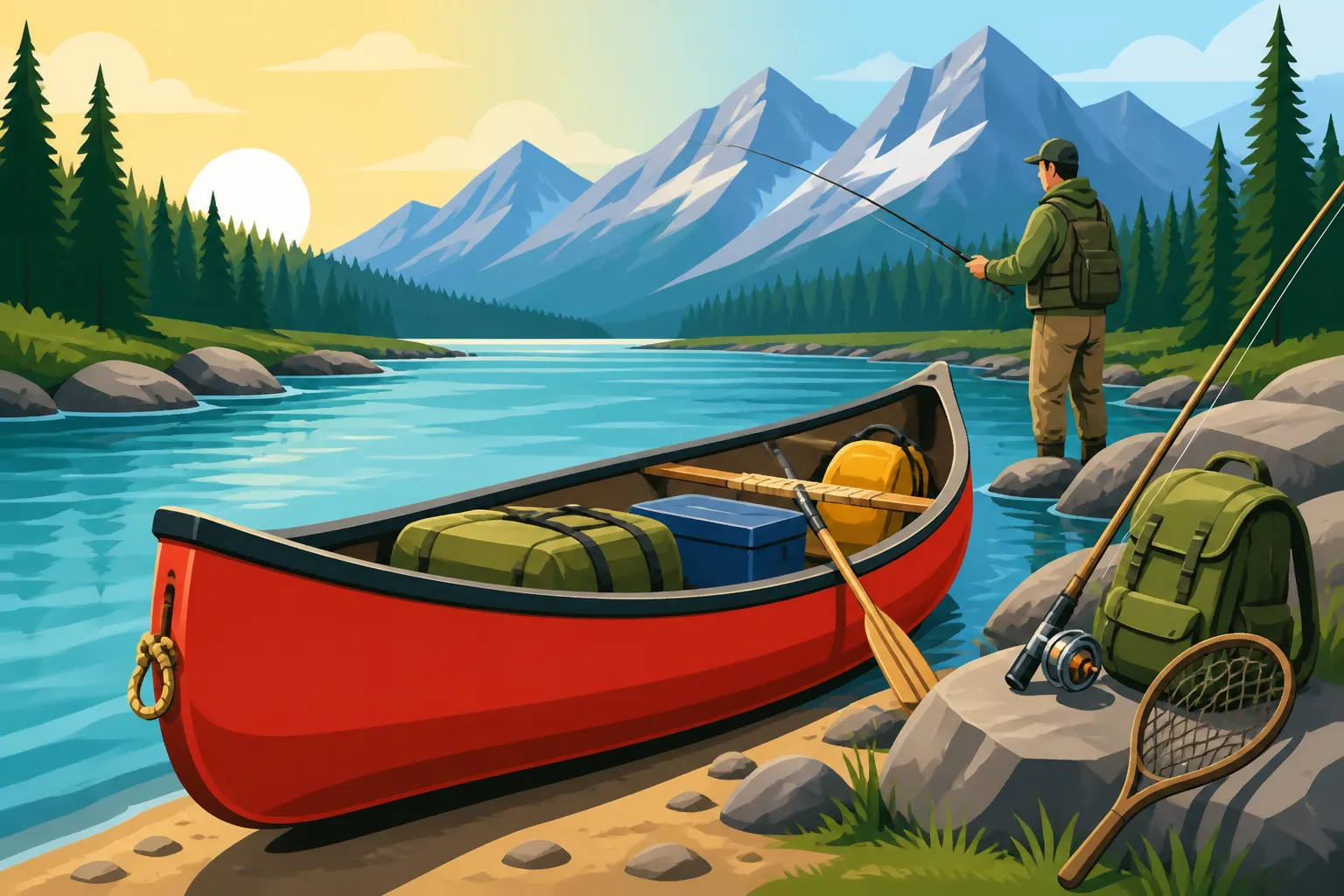
Equally important are ample and strategically placed tie-down points within the canoe. D-rings, grab loops, and lashing points are crucial for securing your dry bags, cooler, and other gear. When you're paddling on a river, especially one with current or potential rapids, gear needs to be firmly secured to prevent it from shifting around or, worse, being lost if the canoe takes on water or flips. Imagine trying to retrieve loose items in a fast-moving river – it's a nightmare scenario. Using cam straps or bungee cords to lash everything down to these points is standard practice for any serious multi-day trip. This also contributes to the overall stability of the canoe by keeping the weight low and centralized.
Outfitting Your Canoe for the Long Haul
Choosing the right canoe is just the first step; outfitting it properly for a multi-day river trip is equally vital. This goes beyond just paddles and life jackets; it involves a comprehensive approach to gear management, safety, and comfort that ensures you're prepared for anything Alberta's wilderness might throw your way. Think of your canoe as a mobile base camp – every item needs its place, and every contingency should be considered.
The success of a multi-day trip often hinges on how well your gear is protected and organized. Wet sleeping bags or lost cooking equipment can quickly turn an enjoyable adventure into a survival challenge. This means investing in reliable dry storage solutions and having a system for how and where everything is packed. Moreover, beyond just your personal gear, having the right safety equipment and a repair kit can be the difference between a minor inconvenience and a serious emergency in a remote setting.
Finally, while your canoe is your vessel, the tools you use to propel and steer it are just as important. The right paddle can enhance efficiency and reduce fatigue, while having a spare is a non-negotiable safety item. Considering how you'll access water, manage waste, and navigate ensures that your trip is not only comfortable but also responsible and leaves no trace.
Essential Gear Storage and Protection
When you're out on the river for days, keeping your gear dry and organized is paramount. Wet clothes, food, or sleeping bags are miserable at best, and dangerous at worst. This is where high-quality dry bags and barrels come into play. Dry bags come in various sizes and are typically made from durable PVC or nylon with a roll-top closure. You'll want several different sizes to compartmentalize your gear: a large one for sleeping bags and clothes, smaller ones for electronics and personal items.
Dry barrels, often 30-60 litres, are incredibly robust, waterproof, and bear-resistant, making them ideal for food and other critical supplies, especially in bear country. They're also rigid, which means they stack well and protect fragile items better than soft dry bags. You can find these at many outdoor and paddling outfitters, and they are well worth the investment. Remember that everything you value needs to be inside a dry bag or barrel and securely tied into the canoe. This protects your gear from splashes, rain, and potential capsizing.
Consider a well-organized system. Pack items you'll need during the day (lunch, rain gear, camera) in easily accessible smaller dry bags, perhaps stowed under the bow or stern deck. Overnight gear should be packed towards the centre of the canoe to help with weight distribution. Using different coloured dry bags can also help you quickly identify what's what. Always pack a first-aid kit in a waterproof container that is easily accessible.
Paddles, Safety Equipment, and Repair Kits
Beyond your canoe, your paddles are your primary means of propulsion and control. For multi-day trips, having at least one spare paddle securely tied into the canoe is not just a good idea, it's essential. Losing a paddle mid-river, especially in current or wind, can quickly become a serious problem. Choose paddles that are comfortable for extended use; wood paddles offer a nice flex, while composite paddles can be lighter and very durable. Consider your height and the canoe's width when choosing a paddle length for optimal efficiency.
Safety equipment is non-negotiable. Every person in the canoe must have a properly fitting life jacket, and it should be worn, not just stowed. Life Jacket Requirements for Alberta Boaters outlines the specifics. In addition to PFDs, you'll need a bailer or pump, a throw bag with a rescue rope, a signaling device (whistle), and a watertight flashlight if there's any chance of being out after dark. A repair kit specific to your canoe material (e.g., epoxy for composites, patch kit for Royalex/T-Formex) is also critical, along with duct tape, zip ties, and a multi-tool. Small tears or punctures can happen, and being able to make a field repair can save your trip.
Navigation is key, so bring detailed maps of the river system you're on, a compass, and a GPS device (with extra batteries!) or a reliable smartphone app. Tell someone your float plan, including your route, put-in and take-out points, and estimated return time. Consider carrying a satellite messenger for emergencies, particularly if you're venturing into remote areas without cell service. For any boat with a motor, remember to review Alberta Pleasure Craft Operator Card Requirement to ensure you meet all legal obligations.
Water Purification and Camp Essentials
When you're out for multiple days, carrying all your water can be incredibly heavy and impractical. A reliable water purification system is essential for multi-day river trips in Alberta, allowing you to safely replenish your supply from the river or streams. Options include pump filters, gravity filters, or chemical tablets. Many paddlers carry a combination – a pump filter for daily use and tablets as a lightweight backup. Always ensure you're drawing water from the best available source, ideally flowing water away from human or animal activity, and treat it thoroughly.
Your camp essentials will include a lightweight tent, sleeping bags appropriate for the expected temperatures, and sleeping pads for comfort. A compact cooking system (stove, fuel, pots, utensils) is also necessary. For food, think about non-perishable, high-energy options that are easy to prepare. Consider dehydrated meals to save space and weight. A small, packable cooler can keep fresh items for a day or two, but for longer trips, non-perishable is the way to go. You can find many great camping and hiking gear options at outdoor retailers or on Amazon that are perfect for canoe camping.
Finally, remember leave-no-trace principles. Pack out everything you pack in, including all garbage and food scraps. Be mindful of human waste and ensure you're properly burying it away from water sources and campsites. Minimize your impact on the environment to ensure these beautiful Alberta waterways remain pristine for future generations of paddlers.
Disclaimer
This article is for general informational purposes only and does not constitute professional advice. Laws, prices and regulations vary by location and change over time. Consult a qualified professional for guidance on your specific situation.