Best net for landing a big pike from a boat
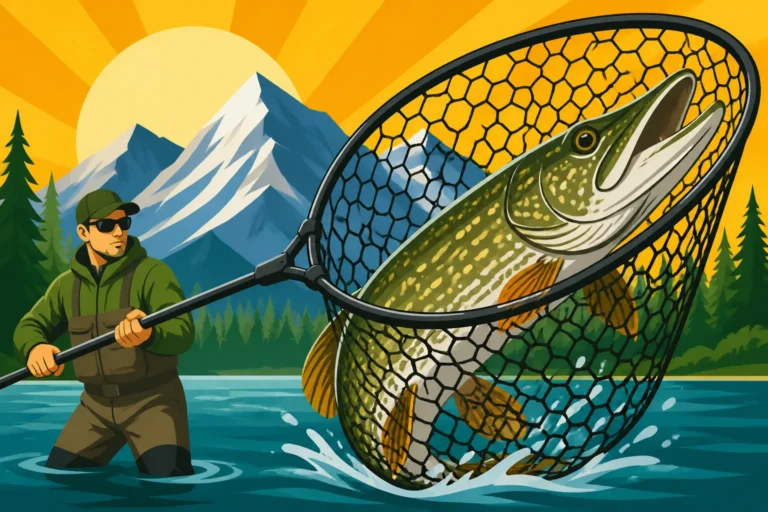
You've been there, right? That heart-stopping moment when a truly impressive northern pike hammers your lure, the fight is on, and you eventually guide that magnificent, toothy torpedo right up to the side of your boat. Your heart is pounding, the adrenaline is surging, and you just know this one is a new personal best. But then… the net. You scoop, it's too small, the fish thrashes, the hooks get tangled, and in a flash, it's gone, leaving you with a broken leader and a story of "the one that got away." That crushing disappointment is real, and it happens far too often when anglers don't have the right tools. This guide is all about helping you avoid that heartbreak by choosing the absolute best net for safely and effectively landing big pike from your boat here in Alberta.
Why a Dedicated Pike Net is Non-Negotiable
Trying to land a trophy northern pike with a flimsy, small-hooped trout net is like trying to catch a grizzly bear with a butterfly net – it's just not going to end well. Big pike are powerful, aggressive, and their mouths are full of razor-sharp teeth. They demand a specialized approach, and a proper landing net is at the top of that list.
The Frustration of Lost Fish and Damaged Gear
Imagine you've spent hours, maybe even days, targeting a specific pike fishing spot in Alberta, perhaps on Lesser Slave Lake. You've dialed in your Best Baits for Walleye on Lesser Slave Lake or perfected your Best Lures for Northern Pike in Alberta. You finally get that big strike, fight the fish perfectly, and bring it to the boat. Your buddy grabs the little panfish net, and the drama unfolds. The pike is simply too long for the hoop, its body drapes over the sides, and its powerful tail gets leverage to give one last, explosive shake. Snap! The hooks catch in the fine mesh, ripping a hole, and the fish is gone. Not only have you lost a potential trophy, but your net is now shredded, and potentially, your lure is gone too, or worse, deeply embedded in the net. It's a truly deflating experience that could have been avoided with the right gear.
Beyond the loss, there's the damage. Pike teeth are no joke. They can easily slice through thinner netting, leaving you with a useless piece of equipment mid-trip. Trying to extract hooks from delicate mesh that's been shredded by a thrashing pike is a nightmare, often damaging your expensive lures in the process. A dedicated pike net is designed to withstand this abuse, making sure your gear lasts and your fish stays secure.
Safety for You and the Pike
Landing a big pike isn't just about protecting your gear; it's also about protecting yourself and the fish. A thrashing pike with treble hooks flailing around can be incredibly dangerous. Those hooks can easily embed themselves in your hands, arms, or even your face, turning a triumphant moment into a trip to the emergency room. A long, sturdy net keeps the fish at a safe distance from you until it's subdued.
From the fish's perspective, a proper net is crucial for its survival, especially if you're practicing catch and release, which is common for many of Alberta's larger, older pike. Pike have a delicate slime coat that protects them from disease. Rough handling, allowing the fish to flop around on the bottom of the boat, or using abrasive knotted nets can strip this slime coat, leaving the fish vulnerable. Furthermore, soft, knotless, rubberized netting prevents damage to their fins and gills, and significantly reduces the chance of hooks tearing their mouth or eyes during the netting process. We want these magnificent creatures to swim away strong and healthy, ready to be caught another day. This commitment to fish welfare is why many of us spend hours learning How to Catch Bull Trout and Release Them Safely for other sensitive species, and the same care should apply to pike.
The Limitations of "All-Purpose" Nets
Many anglers start with a generic, all-purpose landing net. These often have smaller hoops, shorter handles, and softer, sometimes knotted, mesh. While they might be perfectly adequate for a 12-inch rainbow trout or a small perch, they are simply no match for a large northern pike. A pike that is 35 inches or longer will barely fit into a standard trout net, if at all.
The netting material is another huge differentiator. Many cheaper nets use string or nylon mesh that can absorb water and odors, quickly becoming slimy and smelly. More importantly, those materials are prime candidates for hooks to get deeply embedded, turning hook removal into a frustrating, time-consuming ordeal. This isn't just an inconvenience; it can be fatal for a fish that is held out of water too long while you struggle with pliers. For truly effective and responsible Northern Pike Fishing in Alberta, an all-purpose net simply won't cut it. You need something built for the job.
Key Features of a Great Pike Net
So, what exactly should you be looking for when you're ready to invest in a net specifically designed for Alberta's big northern pike? It boils down to a few critical features that ensure efficiency, safety, and fish welfare.
Net Opening Size and Hoop Shape
When dealing with a big pike, size absolutely matters. You need a net with a generous opening, both in width and length, to easily engulf the entire fish, headfirst. A minimum hoop size of 24×28 inches is a good starting point for serious pike anglers, and many prefer even larger, perhaps 30×34 inches or more. The goal is to avoid the scenario where half the fish is in the net and the other half is flopping wildly outside, gaining leverage to escape.
The shape of the hoop is also important. Many pike nets feature an elongated, tear-drop, or rectangular hoop design rather than a round one. This shape better accommodates the long, slender body of a pike, allowing you to scoop it more effectively and cradle the fish fully within the net. A wider, deeper hoop means less chance of the fish bending sharply and damaging itself, or worse, leveraging itself out of the net. You want to make sure the net can handle a fish that might be approaching Northern Pike Growth Rate to Trophy Size.
Handle Length and Material
Reach is paramount when netting a big pike from a boat. A longer handle allows you to extend the net far enough to confidently scoop the fish without having to lean precariously over the side of the boat, especially if you're fishing from a larger craft or alone. Handles typically range from 3 to 8 feet, and many models feature telescoping handles that can extend to provide extra reach when needed, and then collapse for easier storage.
The handle material is equally important. It needs to be strong and rigid enough to support the weight of a large, thrashing pike without bending or breaking. Aluminum is a popular choice for its balance of strength and lightness, making it manageable to wield. Some high-end nets might feature composite materials for even greater durability. A good grip on the handle, often textured or rubberized, is also essential, particularly when your hands are wet or cold.
Netting Material and Depth
This is arguably the most crucial feature for pike fishing. Forget the thin, knotted nylon mesh. For pike, you want a net with a rubberized, knotless mesh. Here's why:
- Fish Protection: The smooth, rubberized coating is much gentler on the pike's delicate slime coat and fins, minimizing harm during the netting process. This is vital for catch and release, ensuring the fish has the best chance of survival.
- Hook Resistance: This is a game-changer. Treble hooks from your lures slide right off rubberized mesh, drastically reducing snags. This means quicker unhooking, less stress on the fish, and no more frustrating minutes spent untangling hooks from a shredded net. Many pike anglers will tell you this feature alone is worth the investment.
- Durability: Rubberized mesh is far more resistant to the sharp teeth of a pike compared to traditional nylon, meaning your net will last much longer, even after repeated encounters with toothy critters.
- Hygiene: Rubberized nets don't absorb water or odors, making them easier to clean and preventing that lingering "fishy" smell in your boat.
The depth of the net is also important. A deep net bag helps to fully contain the pike once it's scooped, preventing it from jumping out and giving it enough room to rest calmly while you prepare for release or photography. You want enough depth to cradle the entire fish without it being cramped.
Portability and Storage on the Boat
Even the best net is useless if it's cumbersome to store or too slow to deploy when a fish is on. Consider how the net will fit into your boat's storage compartments or if it can be securely mounted out of the way but still easily accessible.
- Telescoping Handles: As mentioned, these are fantastic for adjustability. They allow you to collapse the net to a shorter length for storage, then quickly extend it when a fish is on. This is a huge benefit for smaller boats or when space is at a premium.
- Folding Hoops: Some nets feature hoops that can fold down, reducing the overall footprint. This is less common on heavy-duty pike nets due to the need for structural rigidity, but it's an option to consider if storage is a severe constraint.
- Fixed Handles: While less compact, fixed-handle nets can often be more robust and quicker to deploy since there's no extension mechanism to deal with. If you have ample rod holders or dedicated net clips on your boat, a fixed-handle net might be a great, no-fuss option.
Ultimately, the best net is one that's always ready to go. You want to be able to grab it, extend it if necessary, and have it ready by the time that trophy pike makes its way to the boat.
Types of Nets Suited for Big Pike
With the key features in mind, let's look at the general categories of nets you'll encounter and how they stack up for Alberta's pike fishing.
The Classic Deep-Hoop Boat Net
This is the workhorse for many serious pike anglers. These nets typically feature a large, sturdy hoop (often rectangular or tear-drop shaped) and a robust, sometimes fixed, handle. They are built for maximum durability and fish capacity. The netting will almost always be rubberized and knotless.
- Pros: Unmatched strength and capacity, quick deployment (if fixed handle), excellent for large fish. You can find many great options at outdoor retailers like Bass Pro Shops.
- Cons: Can be bulky to store if the handle is fixed and long. May require dedicated mounting points on your boat.
- Ideal Use: Anglers with larger boats, those frequently targeting trophy pike, or professional guides who need a net that can handle abuse day in and day out. If you're out on big water like Cold Lake chasing large lake trout and accidentally hook a monster pike, this is the net you'd want.
Telescoping Handle Nets
These nets offer a fantastic balance of reach and portability. The handle extends and retracts, giving you a long reach when fighting a fish, and then collapsing to a much more manageable length for stowing away. Many quality pike nets now come with this feature.
- Pros: Versatile reach, compact storage, still offers excellent strength with quality construction. Available from numerous brands and easily found on platforms like Amazon.
- Cons: The telescoping mechanism can sometimes seize up if not properly maintained, especially with saltwater exposure (though less of a concern in Alberta's freshwaters). May have a slight bit more "flex" than a truly rigid fixed-handle net, but modern designs are very strong.
- Ideal Use: General boat fishing for pike, situations where storage space is a concern, or when you need variable reach (e.g., fishing with different boat setups or from different positions in the boat). This is a popular choice for anglers who fish a variety of Alberta's best fishing lakes.
Considerations for Kayak or Smaller Boat Anglers
If you're fishing from a kayak, canoe, or a very small jon boat, your net choice needs extra consideration. Space is at an extreme premium, and you often need to net a fish solo.
- Compact Netting: You'll still want a rubberized, knotless net, but the overall hoop size might need to be slightly smaller for maneuverability. However, don't compromise too much on depth.
- Shorter, Sturdy Handles: A handle that is too long will be impossible to manage in a kayak. Look for a net with a shorter, perhaps 2-3 foot fixed handle, or a telescoping handle that compacts down to a very short length.
- Secure Attachment: A leash or clip system is vital to prevent your net from floating away if dropped.
- Kayak-Specific Designs: Some brands offer nets designed specifically for kayak anglers, often featuring a lanyard, buoyant handles, and streamlined shapes.
- One-Handed Operation: Practice deploying and using your net with one hand, as you'll often be using the other to manage your rod or paddle. This is essential for safety and efficiency.
For kayak anglers, the priority shifts slightly to maneuverability and quick, solo deployment, but the core features of robust construction and fish-friendly netting remain the same. These anglers might find solutions designed for smaller craft to be helpful, such as the ones you can find with a quick search on Amazon for "kayak landing net."
| Net Type | Handle Length | Hoop Size (Typical) | Netting Material | Ideal for | Pros | Cons |
|---|---|---|---|---|---|---|
| Fixed Handle Boat Net | 4-8 feet (rigid) | 28-36 inches (elongated) | Rubberized, Knotless | Large boats, trophy pike, guides | Maximum strength, quick deployment, huge capacity | Bulky storage |
| Telescoping Handle Net | 3-8 feet (extendable) | 24-34 inches (oval/rect) | Rubberized, Knotless | General boat fishing, varied situations, smaller boats | Versatile reach, compact storage, good strength | Mechanism can require maintenance, potentially less rigid than fixed-handle |
| Kayak/Small Boat Net | 1.5-3 feet (often fixed) | 18-26 inches (round/oval) | Rubberized, Knotless | Kayaks, canoes, small jon boats, solo anglers | Highly maneuverable, compact, one-handed operation | Smaller capacity, less reach |
Using Your Pike Net Effectively and Safely
Having the right net is only half the battle; knowing how to use it properly is just as important. A good netting technique minimizes stress on the fish and ensures a clean, safe landing every time.
Proper Netting Technique
When that big pike is finally tiring and close to the boat, here's how to make the landing a success:
- Prepare the Net: Make sure your net is fully extended (if telescoping) and ready. Have it in the water, just slightly ahead of the fish's anticipated path, with the hoop opening facing towards the fish.
- Guide the Fish Headfirst: The most effective way to net a pike is to guide it headfirst into the net. This prevents the fish from seeing the net and making a last-ditch escape attempt. When the pike is close, lower your rod tip and lead the fish directly into the waiting net. Don't chase the fish with the net; let the fish swim into it.
- Scoop with Authority: Once the fish's head and a good portion of its body are past the hoop, lift the net with a swift, confident motion. Get the entire fish into the net. This traps the fish securely and prevents it from thrashing its tail outside the net, which can lead to escapes.
- Keep it Submerged (Initially): If possible, keep the netted pike in the water for a few moments, especially if you're planning a quick release. This allows the fish to stay oxygenated and reduces stress. If you need to bring it into the boat for photos, do so carefully and quickly.
Practicing this technique, even with smaller fish, will make you more confident and effective when that truly giant pike finally bites.
Handling the Pike Once Netted
Once the pike is in the net, your work isn't done, especially if you plan to release it.
- Secure the Net: Make sure the net handle is secure and the fish can't accidentally flop out.
- Unhook Quickly and Carefully: With a big pike, a good set of long-nosed pliers or jaw spreaders (for toothy fish) is indispensable. These allow you to reach in and remove hooks safely without putting your fingers near those sharp teeth. The rubberized mesh of a good pike net will make this process much faster, as the hooks won't be tangled. If the fish is particularly feisty, you might consider leaving it in the water while you work to remove the hooks, only bringing it briefly out for a photo.
- Minimize Out-of-Water Time: If you're releasing the fish, get those photos and measurements done as quickly as possible. Every second out of water is stressful for the fish. Keep your hands wet when handling the fish to protect its slime coat. Consider tools like a measuring board or a specialized fish cradle that can accommodate large pike.
- Support the Fish Properly: When holding a pike for a photo, support its body horizontally with two hands – one under the belly and one near the tail. Never hold a large pike vertically by its jaw or gills, as this can cause severe internal damage.
- Gentle Release: Release the fish back into the water gently, allowing it to swim off under its own power. Sometimes, a tired fish needs a moment to revive. Hold it upright in the water, supporting its belly, and gently move it back and forth to push water over its gills until it kicks strongly and swims away. This is crucial for the survival of those majestic Lake Trout Average Size in Alberta Lakes and of course, our prized pike.
Maintenance for Longevity
Your pike net is an investment, and proper care will ensure it serves you well for many seasons on Alberta's waters.
- Rinse After Use: Always rinse your net thoroughly with fresh water after each trip. This removes fish slime, dirt, and any lake water residues that can degrade the materials over time.
- Dry Completely: Hang the net to air dry completely before storing it. Storing a wet net can lead to mildew, unpleasant odors, and material breakdown.
- Inspect Regularly: Periodically check the netting for any tears or weak spots. Examine the handle for cracks, bends, or loose components (especially on telescoping models). Address any issues promptly.
- Lubricate (if applicable): If your net has a telescoping handle, a light application of silicone lubricant on the sliding mechanism can keep it operating smoothly.
A well-maintained net is a reliable net, and reliability is key when that once-in-a-lifetime pike decides to strike. Whether you're chasing Alberta record northern pike weight or just enjoying a day on the water, having a net that you trust will make all the difference.
Ultimately, choosing the best net for landing a big pike from a boat in Alberta comes down to understanding the unique challenges these fish present and investing in gear that meets those demands. A large, deep, rubberized, knotless net with a sturdy, long handle is your best friend when battling a trophy pike. It ensures the safety of both you and the fish, prevents lost catches, and reduces gear frustration. So next time you're gearing up for a pike adventure, make sure your net is as ready as your rod and reel!
Disclaimer
This article is for general informational purposes only and does not constitute professional advice. Laws, prices and regulations vary by location and change over time. Consult a qualified professional for guidance on your specific situation.