Alberta rainbow trout daily limit
It's incredibly frustrating when you're geared up for a day of fishing in Alberta, you've found that perfect spot, and then a nagging doubt creeps in: "What's the daily limit for rainbow trout here?" The regulations can feel like a labyrinth, changing from one lake to the next, making it tough to enjoy your time on the water without worrying about breaking the rules. This guide is here to untangle that confusion, giving you a clear understanding of Alberta's rainbow trout daily limits so you can fish with confidence.
Understanding Alberta's Daily and Possession Limits for Rainbow Trout
Let's start by demystifying the basic rules surrounding rainbow trout limits in Alberta. It's not as simple as a single number for the entire province, which is often where anglers get tripped up. The general rules provide a starting point, but the real trick is knowing when and where those rules change.
The General Rule for Rainbow Trout
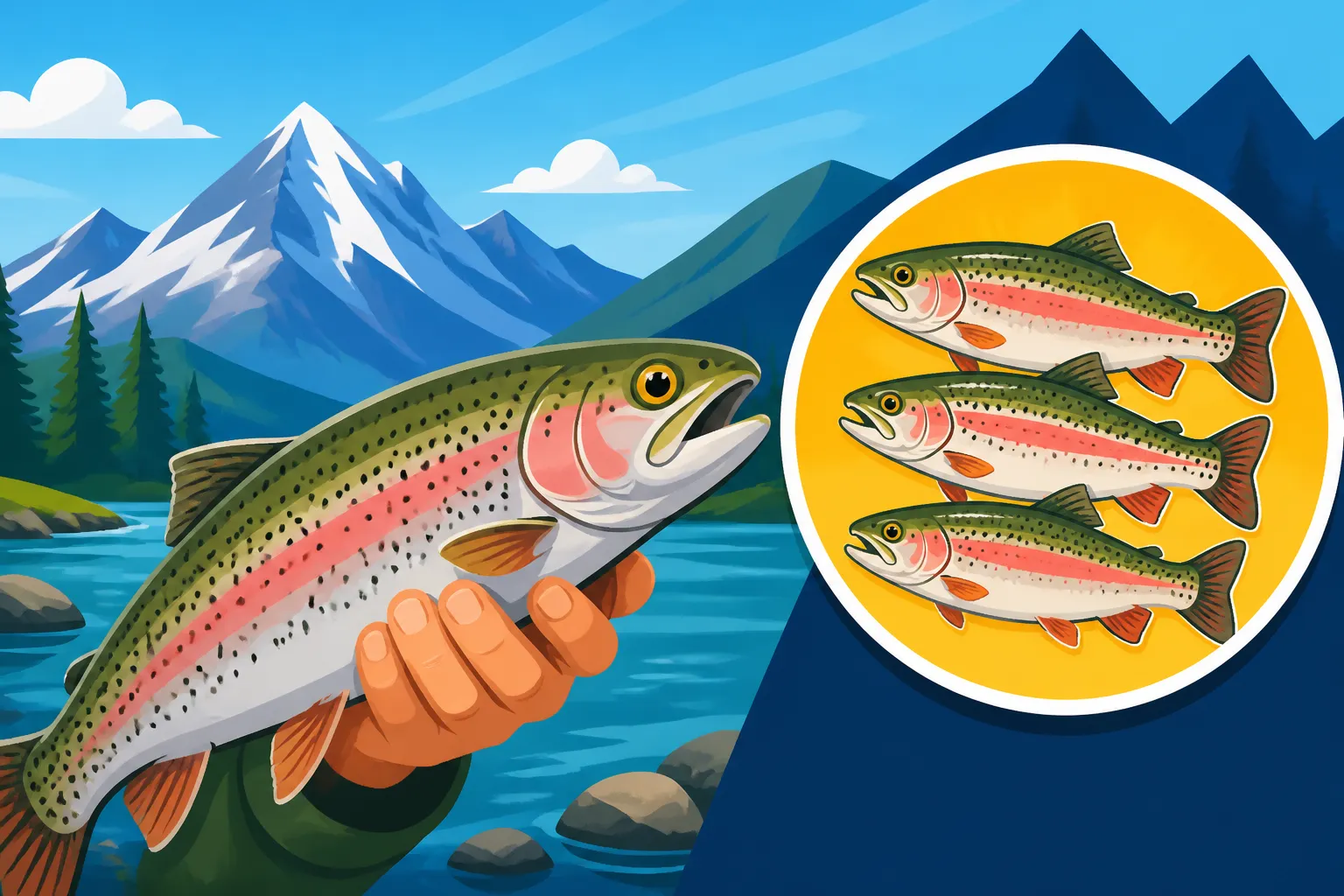
When you first dive into the Alberta Fishing Regulations Explained, you'll quickly realize that while there are provincial default limits, rainbow trout, being one of Alberta's most popular sport fish, often fall under special regulations. Generally, for many stocked ponds and lakes across Alberta, the daily possession limit for rainbow trout is 5. This means on any given day, you can legally keep up to five rainbow trout from these specific waters.
However, this "general rule" is more of a guideline for simpler, often stocked waters. It's the exception, rather than the norm, for many of Alberta's prized wild trout streams and more sensitive fisheries. If you're heading out to a well-known stocked pond for some family fun, this limit of 5 is often what applies. But if you're venturing into a more remote river or a popular fly-fishing destination, you absolutely need to dig deeper into the specific regulations for that exact waterbody. Failing to do so can lead to an honest mistake that could still result in a hefty fine.
The Difference Between Daily Limit and Possession Limit
This is a critical distinction that many anglers, even seasoned ones, sometimes misunderstand. It's not just semantics; it's a legal definition that impacts how you manage your catch.
- Daily Limit: This refers to the maximum number of fish of a particular species that you are allowed to catch and keep in a 24-hour period (from midnight to midnight). So, if the daily limit for rainbow trout is 5, you can't keep six rainbow trout today, even if you released the first one you caught. Once you've retained your limit, you must stop fishing for that species for the rest of the day in that waterbody, or switch to targeting a different species if regulations allow.
- Possession Limit: This refers to the maximum number of fish of a particular species that you are allowed to have in your possession at any given time. This includes fish that are at your fishing site, in your cooler, in your vehicle, at your camp, or even at home in your freezer. The possession limit is often, but not always, the same as the daily limit. However, if you're on a multi-day trip, say camping at a lake, your possession limit means you can't accumulate more than the stated number over several days. For instance, if the daily and possession limit for rainbow trout is 5, and you catch and keep 5 on Monday, you cannot keep any more on Tuesday if those first 5 are still in your possession (e.g., in your cooler at camp). The goal is to prevent anglers from stockpiling fish.
Understanding both these limits is paramount to staying legal and fishing responsibly. Always treat them as distinct but interconnected rules. When checking the regulations, you'll see both listed, and they are equally important.
Navigating Special Regulations for Rainbow Trout Waters
This is where the real complexity, and frankly, the beauty, of Alberta's fisheries management comes into play. While a general provincial limit exists, it's the special regulations that truly protect our diverse fish populations.
Zone-Specific and Water-Specific Regulations
Alberta's vast landscape is broken down into various fisheries management zones, like ES1, ES2, PP1, PP2, NA, and NB. Within each of these broad zones, countless individual lakes, rivers, and streams have their own specific rules that completely override any general provincial limits. This is crucial for protecting localized fish populations that might be more vulnerable, or for managing fisheries that receive heavy angling pressure.
For rainbow trout, these special regulations can manifest in several ways:
- Reduced Limits: Instead of the general 5, you might find waters with a daily limit of 2, 1, or even 0. For example, some sensitive headwater streams in the Eastern Slopes might have a limit of 1 rainbow trout. These lower limits are often in place for wild, self-sustaining populations that reproduce naturally and are more susceptible to overharvest.
- Catch-and-Release Only: Many of Alberta's most iconic trout streams, especially those known for wild rainbow trout, are designated as "catch-and-release only" waters. This means you cannot retain any rainbow trout, and any fish caught must be immediately and safely returned to the water. A good example is sections of the Bow River downstream of Calgary, which is renowned for its trophy rainbow and brown trout. To find these specific waters, you'll need to consult the detailed listings in the regulations. You can learn more about Alberta Catch and Release Only Waters in our comprehensive guide.
- Slot Limits: Occasionally, you'll encounter "slot limits." This means you can only keep fish within a certain size range (e.g., only rainbow trout between 30 cm and 45 cm). Fish smaller or larger than the specified slot must be released. This management tool is designed to protect both juvenile fish and large, spawning adults, encouraging the harvest of mid-sized fish that are often more abundant.
- Gear Restrictions: While not directly a "limit," gear restrictions often go hand-in-hand with reduced or catch-and-release limits. You might find "single, barbless hook" rules on certain trout streams, intended to minimize harm to fish that are destined to be released.
The golden rule here is always, always, always check the specific regulations for the exact lake, river, or stream you plan to fish. You can find detailed breakdowns of these zones and their season dates in our article on Alberta Zone-Specific Season Dates, Explained. Ignorance of the regulations is not considered a valid excuse by enforcement officers.
Stocked Ponds vs. Wild Trout Streams
This distinction is perhaps the most significant factor influencing rainbow trout limits in Alberta. The province manages two very different types of trout fisheries, each with its own conservation goals and, consequently, its own set of rules.
- Stocked Ponds and Lakes: Alberta's Fish Culture Section does a fantastic job of stocking hundreds of ponds and lakes across the province, particularly in accessible areas near communities. These waters are often managed as "put-and-take" fisheries, meaning they are regularly stocked with hatchery-raised rainbow trout (and sometimes other species like brook trout or tiger trout) primarily for recreational angling and harvest.
- Limits: Because these fish are raised specifically to be caught, and often don't reproduce naturally in these environments, the daily limits tend to be more generous. This is where you'll most often find the general limit of 5 rainbow trout applying. These waters are perfect for families, beginners, or anyone looking to bring home a meal. You can explore many of these options by checking out our List of Alberta stocked trout lakes.
- Examples: Many smaller reservoirs and ponds in the Calgary and Edmonton regions, like those managed by the Alberta Environment and Protected Areas (AEPA) or through local stocking programs, will typically adhere to these higher limits.
- Wild Trout Streams and Lakes: These are the natural jewels of Alberta's fishing landscape, home to self-sustaining populations of native trout species, including wild rainbow trout, bull trout, cutthroat trout, and brook trout. These fisheries are far more sensitive to angling pressure and habitat disturbance.
- Limits: For wild rainbow trout, limits are almost always significantly lower, often 1 or 2 fish, or even catch-and-release only. The goal here is conservation – to protect the genetic integrity of wild stocks and ensure their long-term survival. These streams are a testament to Alberta's natural beauty and biodiversity.
- Examples: Pristine sections of the Bow River, Crowsnest River, or other mountain streams might have very stringent rules to protect their wild rainbow trout populations. Catching a wild, vividly coloured rainbow from one of these streams is a different experience entirely from a stocked pond, and the regulations reflect that value.
Always be aware of whether you're fishing a stocked waterbody or a wild fishery. The responsibility is on you, the angler, to know the difference and adhere to the appropriate regulations.
| Waterbody Type | Typical Rainbow Trout Daily Limit | Common Associated Regulations |
|---|---|---|
| Stocked Ponds/Lakes | 5 | Few gear restrictions, open for harvest |
| Wild Trout Streams/Rivers | 0 (Catch & Release) or 1-2 | Often single barbless hooks, specific open seasons |
| Special Regulation Waters | Varies (0, 1, 2, slot limits) | Highly specific, always check details |
Practical Tips for Staying Compliant
Nobody wants to accidentally break the law. It can ruin a perfectly good fishing trip and lead to some serious consequences. Luckily, staying informed in Alberta is easier than ever with the tools available.
How to Easily Check Current Regulations
The single most important piece of advice for any angler in Alberta is to always check the most current regulations before you head out. These can change annually, and sometimes even within a season, so relying on memory or an old guide is a recipe for trouble.
- The Alberta Guide to Sportfishing Regulations: This is your bible. Published annually, it contains all the detailed rules, zone maps, and waterbody-specific regulations. You can pick up a physical copy at most fishing tackle shops, sporting goods stores like Cabela's or Wholesale Sports, or government offices. However, the most up-to-date version is always available digitally. You can learn more about Reading the Alberta Guide to Sportfishing Regulations in our dedicated article.
- MyWildAlberta Website: The official online portal, MyWildAlberta.ca, is an invaluable resource. Here, you can find the complete, most current version of the Sportfishing Regulations, along with updates and important notices. It's navigable and allows you to search for specific waterbodies.
- AlbertaRegulations App: For the tech-savvy angler, the official AlbertaRegulations app for smartphones (available on both Apple App Store and Google Play) is a lifesaver. You can download the regulations guide directly to your device, allowing you to access all the rules even when you're out of cell service. This is particularly useful in remote areas. Consider getting a good quality waterproof phone case, easily found on Amazon, to protect your device while keeping the regulations handy. It's just a smart way to ensure you always have the latest info right at your fingertips. For those who prefer a physical backup, remember that Printing or Carrying a Digital Fishing License in Alberta is often permitted, and the same applies to regulation summaries.
Before you cast your first line, make it a habit to quickly verify the regulations for your chosen fishing spot. A few minutes of preparation can save you a lot of grief and ensure you're compliant with your Alberta Fishing License Guide for 2026.
Consequences of Exceeding Limits
The repercussions for not adhering to daily or possession limits for rainbow trout (or any species) in Alberta can be severe. Enforcement officers take these regulations seriously because they are fundamental to maintaining healthy fish populations and ensuring sustainable angling for everyone.
- Fines: The most immediate consequence is a significant fine. These aren't just minor tickets; fines can range from hundreds to thousands of dollars per offense, depending on the severity and whether it's a first or repeat offense.
- Equipment Seizure: In more serious cases, officers have the authority to seize your fishing equipment, including rods, reels, boats, and even vehicles used in the commission of the offense. Imagine having your prized fishing setup confiscated – a devastating blow for any passionate angler.
- License Suspension: Your fishing license can be suspended, meaning you'll be prohibited from fishing in Alberta for a specified period, sometimes even for multiple years. This also often impacts your ability to obtain a Wildlife Identification Number (WIN) card, which is essential for purchasing any future licenses.
- Criminal Charges: For very serious or repeated violations, criminal charges can be laid, leading to court appearances and a criminal record.
It's clear that the penalties are designed to be a strong deterrent. The cost of a fine far outweighs the perceived benefit of keeping a few extra fish. Always remember that the regulations are in place for a reason: to protect the very resource that brings us so much enjoyment. If you're unsure about a rule, err on the side of caution. Remember, you also need a valid WIN card to purchase a fishing license, as explained in Alberta WIN Card, Explained.
Responsible Angling Practices Beyond the Limit
Fishing is more than just catching fish; it's about being a steward of our natural resources. Even when the regulations allow you to keep a limit of rainbow trout, practicing responsible angling ensures the health and vitality of Alberta's waters for years to come.
Catch and Release Best Practices
For many anglers, especially on wild trout waters like the Bow River, practicing catch and release is a core philosophy. Even on stocked waters where you can keep fish, releasing a portion of your catch or being selective about which fish you keep can contribute to better fishing experiences for everyone.
To maximize the survival of released rainbow trout:
- Minimize Fight Time: Bring the fish in quickly to avoid over-exhaustion.
- Handle with Care: Keep the fish in the water as much as possible. If you must remove it, use wet hands, support its weight horizontally, and avoid squeezing its internal organs or gills.
- Use Barbless Hooks: Crimp down the barbs on your hooks. Barbless hooks make removal much easier and faster, reducing stress and injury to the fish. Many specific regulations, especially on wild trout rivers like sections of the Crowsnest River, mandate barbless hooks for this very reason.
- Proper De-hooking Tools: Carry a pair of long-nosed pliers or forceps for easy hook removal. These can be found readily on Amazon and are an essential part of any responsible angler's kit. For a quickly removed hook, the fish has a much better chance of survival.
- Knotless Net: Use a rubberized, knotless landing net. Traditional knotted nets can strip the protective slime coat from fish, making them susceptible to disease. A good knotless net, also available on Amazon, is a small investment for a big impact on fish health.
- Revive the Fish: If a fish is lethargic, hold it gently in the water, facing into a gentle current, until it regains its strength and can swim away on its own. Don't just toss it back.
- Be Mindful of Water Temperatures: In hot summer months, water temperatures can become lethal for trout, even with careful catch-and-release. Consider limiting your fishing to cooler parts of the day or targeting different species if water temperatures are high.
By adopting these practices, you're not just following the rules; you're actively participating in the conservation of Alberta's incredible rainbow trout fisheries. Our guide on Rainbow Trout Fishing on the Bow River offers more specific tips for this world-class fishery.
Reporting Violations and Supporting Conservation
As anglers, we all have a role to play in protecting Alberta's fish and wildlife resources. This extends beyond our own practices to actively contributing to conservation efforts.
- Reporting Poaching and Violations: If you witness someone exceeding limits, fishing illegally, or engaging in other suspicious activities, it's your responsibility to report it. You can contact the Report a Poacher line at 1-800-642-3800. Providing detailed information, such as vehicle descriptions, license plates, locations, and the nature of the offense, can be invaluable to enforcement. Your anonymity is protected, and your actions help safeguard the resource for everyone.
- License Fees Fund Conservation: Remember that the money you spend on your Alberta Fishing License Guide for 2026 goes directly back into fisheries management. These funds support stocking programs, habitat restoration projects, research, and enforcement efforts by Alberta Environment and Protected Areas. Every license purchased is a direct contribution to keeping Alberta's fisheries healthy and thriving. For those looking to upgrade their gear for better conservation practices, like specialized scales to ensure fish are within slot limits, a quick search on Amazon can provide many options.
Being a responsible angler means understanding the rules, following them diligently, practicing ethical catch-and-release, and acting as an advocate for the fish and their habitats. This collective effort ensures that the joy of catching rainbow trout in Alberta will be there for generations to come. From the Best Fishing Lakes in Alberta to the Best Fishing Rivers in Alberta, our shared efforts make a difference.
Disclaimer
The information provided in this guide is for general informational purposes only and is not a substitute for the official Alberta Guide to Sportfishing Regulations. Regulations are subject to change, and it is the angler's sole responsibility to consult the most current official guide published by Alberta Environment and Protected Areas before fishing. Always verify specific rules for the waterbody you intend to fish.