Alberta fishing license GST calculation
Navigating the world of fishing licenses in Alberta can feel a bit like trying to untangle a particularly stubborn knot in your fishing line – confusing, frustrating, and sometimes, you just want to know the bottom line. Many anglers, myself included, have wondered about the exact cost, only to be surprised by an extra fee at checkout. This guide is here to demystify one such element: the Goods and Services Tax (GST) that applies to your Alberta fishing license, ensuring you know exactly what you're paying for.
The Basics of Alberta Fishing License Costs
Before we dive into the nitty-gritty of GST, it’s essential to understand the overall landscape of purchasing an Alberta fishing license. It's not just a single price; there are various components that contribute to your total cost, and knowing these will help you anticipate the final figure. Many folks just see the advertised price and then get a little sticker shock when they go to complete their purchase, so let's break it down.
Components of a Fishing License Purchase
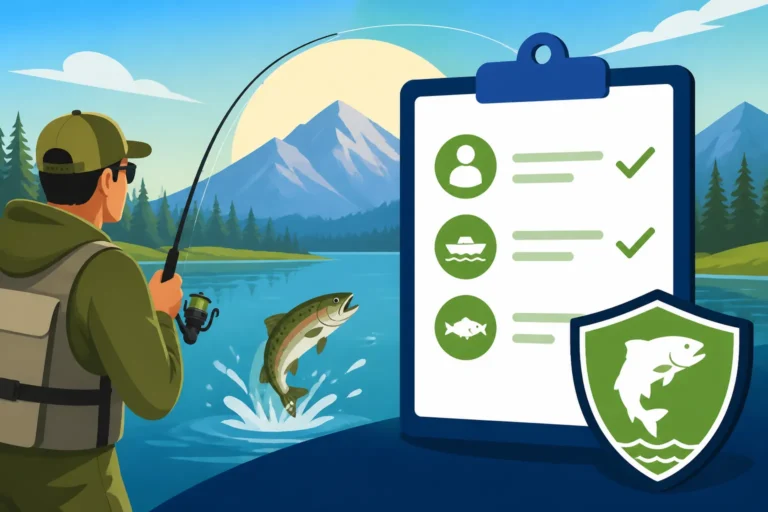
When you set out to acquire your Alberta fishing license, you're usually looking at a few key elements that make up the final price. The primary cost, of course, is the license itself, which varies based on your residency status and the duration of the license. Beyond that, there's the mandatory Wildlife Identification Number (WIN) card. This card is a requirement for anyone 16 years of age and older who wants to purchase a hunting or fishing license in Alberta. It's a unique identifier that ties all your licensing to one profile. Think of it as your angler's ID, and it has its own associated fees, both for initial purchase and renewal.
It’s crucial to remember that these aren't just arbitrary charges; they are part of a system designed to manage and conserve Alberta's rich fish populations and natural habitats. The funds generated from these licenses and fees contribute directly to fisheries management, stocking programs, enforcement, and research. Without these contributions, the incredible fishing opportunities we enjoy in Alberta might not be sustainable for future generations. So, while it can sometimes feel like a lot of hoops to jump through, each step serves a purpose in protecting what we love about fishing here. For a detailed overview of all the requirements, you might want to check out the comprehensive guide on an Alberta Fishing License Guide for 2026.
Common License Types and Their Base Prices
Alberta offers several types of fishing licenses to cater to different needs, primarily differentiating between residents and non-residents, and the duration of their fishing plans. For Alberta residents, an annual sportfishing license is the most common option, allowing you to fish from April 1st of one year to March 31st of the next. There are also specific exemptions, such as those for youth under 16 or seniors over 65, though a WIN card is still often required even if the license itself is free. You can find more details about these exemptions and their requirements in the article about Alberta Youth Fishing License Exemption Under 16 or Alberta Senior Fishing License Exemption at 65.
For those visiting our beautiful province, non-resident options include annual licenses, as well as shorter-term licenses like 1-day or 7-day permits, which are perfect for a quick fishing trip or a longer vacation. Each of these license types has a base price set by the provincial government. For instance, a resident annual sportfishing license might have a base price in the range of $28-$30, while non-resident annual licenses are significantly higher, reflecting the different funding models for residents versus visitors. These base prices are what we start with before any additional taxes or fees are applied, which is where GST comes in. Understanding How Much Does an Alberta Fishing License Cost can help you budget for your angling adventures.
Understanding GST: What It Is and Why It Applies
The Goods and Services Tax (GST) is a federal tax levied on most goods and services sold in Canada. It's something we encounter almost daily, from our groceries to our gas, and yes, it applies to certain government services as well. Many people don't realize it applies to licenses, often assuming government-issued permits are exempt. However, the federal government's rules on GST are quite broad, and fishing licenses fall under their scope.
The Role of Goods and Services Tax
The GST is a 5% tax that applies to the supply of most goods and services in Canada. It's a consumption tax, meaning the end consumer (in this case, you, the angler) pays the tax. Businesses and organizations collect the GST on behalf of the government and then remit it. This system ensures that a portion of the money spent on a wide array of economic activities contributes to federal revenue, which then helps fund various public services across the country.
When you purchase your fishing license, whether it's through the MyWildAlberta online portal or from a local vendor, that vendor is acting as an agent for the government, collecting the necessary fees and the applicable GST. It's a standard part of doing business in Canada, even for services related to provincial regulations. So, while you might not think of a fishing license as a "good" or "service" in the traditional retail sense, from a tax perspective, it very much is. This ensures consistency across different types of purchases and helps standardize tax collection across provinces, even for things like regulatory permits.
How GST Affects Government Services and Licenses
It might seem counterintuitive that a government-issued license would be subject to a federal tax. However, the Canada Revenue Agency (CRA) guidelines specify that GST applies to fees for permits, licenses, and registrations issued by governments unless a specific exemption applies. In the case of Alberta's fishing licenses, there isn't a general exemption, so the 5% GST is added to the base cost of your license and any associated fees.
This means that whether you're buying a basic annual resident license or one of the shorter-term options for non-residents, that 5% will be tacked on. This also applies to your WIN card purchase or renewal. For many, this detail can be a surprise when they see the final total. It’s not just a provincial decision; it’s a federal mandate for how these transactions are taxed. This is why knowing about it beforehand helps in budgeting accurately for your fishing season. If you're looking to understand the full breakdown of costs, including the WIN card, the article Alberta WIN Card Activation Fee, Explained provides even more detail.
Practical Examples: Calculating GST on Your License
Now that we understand what GST is and why it applies, let's look at some real-world examples to help you calculate the exact cost of your Alberta fishing license. This will take the guesswork out of your purchase and ensure you're prepared for the final tally, whether you're buying online or in person.
Step-by-Step GST Calculation
Calculating GST is quite straightforward once you have the base price of your license and any associated fees. The current GST rate in Canada is 5%.
Here’s a simple breakdown:
- Identify the Base Cost: This is the advertised price of your fishing license (e.g., $28.00 for an annual resident license) plus any mandatory fees like a WIN card activation or renewal fee (e.g., $8.00).
- Add all Pre-Tax Costs: Sum up your license base price and any WIN card fees. For instance, if your resident annual license is $28.00 and your WIN card renewal is $8.00, your subtotal before tax is $36.00.
- Calculate the GST: Multiply this subtotal by 0.05 (which is 5%). So, $36.00 x 0.05 = $1.80.
- Determine the Final Price: Add the calculated GST to your subtotal. In our example, $36.00 + $1.80 = $37.80.
It’s always a good idea to perform this quick calculation yourself, especially if you’re purchasing from a vendor where the final price isn’t immediately clear. The MyWildAlberta portal, where most anglers now buy their licenses, typically displays the base price, the GST amount, and the total clearly before you finalize your purchase, which is a great feature. Knowing how to do this manually empowers you to double-check any charge.
Scenarios for Different License Types
Let's walk through a few scenarios for different types of anglers, keeping in mind that actual license prices can vary slightly from year to year. For the sake of these examples, we'll use approximate 2026 prices.
Scenario 1: Alberta Resident Annual Sportfishing License + WIN Card Renewal
- Base License Cost: $28.00
- WIN Card Renewal Fee: $8.00
- Subtotal (pre-tax): $28.00 + $8.00 = $36.00
- GST (5% of $36.00): $1.80
- Total Cost: $37.80
Scenario 2: Non-Resident Canadian Annual Sportfishing License + New WIN Card
- Base License Cost: $50.00 (approximate, always check current rates for Alberta non-resident Canadian fishing license cost 2026)
- New WIN Card Fee: $10.00 (approximate, see Alberta WIN Card, Explained for current details)
- Subtotal (pre-tax): $50.00 + $10.00 = $60.00
- GST (5% of $60.00): $3.00
- Total Cost: $63.00
Scenario 3: Non-Resident Non-Canadian 1-Day Sportfishing License (with existing WIN card)
- Base License Cost: $20.00 (approximate, always check current rates for Alberta non-resident 1-day fishing license cost)
- WIN Card Fee: $0.00 (assuming it's already active)
- Subtotal (pre-tax): $20.00
- GST (5% of $20.00): $1.00
- Total Cost: $21.00
As you can see, the GST might seem like a small addition on its own, but it can add up, especially if you're bundling it with a new WIN card or multiple licenses for a family trip. This transparent calculation helps you plan your fishing budget accurately. If you're comparing costs between resident and non-resident options, the article on Resident vs Non-Resident Fishing License Costs in Alberta can be very enlightening.
Here's a table summarizing these example calculations:
| License Type | Base License Cost | WIN Card Fee (New/Renewal) | Subtotal (Pre-Tax) | GST (5%) | Total Cost |
|---|---|---|---|---|---|
| Resident Annual Sportfishing (w/ WIN Renewal) | $28.00 | $8.00 | $36.00 | $1.80 | $37.80 |
| Non-Resident Canadian Annual (w/ New WIN) | $50.00 | $10.00 | $60.00 | $3.00 | $63.00 |
| Non-Resident Non-Canadian 1-Day (existing WIN) | $20.00 | $0.00 | $20.00 | $1.00 | $21.00 |
Note: All prices are illustrative approximations for 2026 and should be verified with the official Alberta Environment and Protected Areas website or the MyWildAlberta portal for the most current rates.
Important Considerations Beyond GST
While understanding the GST calculation is key, there are a few other financial and practical considerations that can influence the overall cost and convenience of your Alberta fishing experience. Being prepared for these can save you headaches and ensure your trip goes smoothly from start to finish.
WIN Card and Other Fees
The WIN card, as mentioned, is a mandatory component for most anglers aged 16 and up in Alberta. It's not just a one-time purchase; it typically needs to be renewed every five years. The renewal fee is generally slightly less than the initial purchase fee. Forgetting to renew your WIN card can cause a last-minute scramble when you're trying to buy your license, so it's a good idea to keep track of its expiry date. You can easily manage your WIN card and purchase licenses through the MyWildAlberta online portal, making the process relatively painless. This online system is a huge convenience, a far cry from the days when you might have had to drive to a specific vendor.
Beyond the WIN card, there are sometimes additional opportunities or programs that might have their own fees. For instance, the Alberta Walleye Special Harvest Licence Program involves a draw and, if successful, a separate license to keep walleye in designated lakes. While these are optional, they are part of the broader licensing framework and would also be subject to GST if they are a chargeable service. Always consult the current Alberta Guide to Sportfishing Regulations for any special licenses or permits you might need for specific species or locations. Being aware of all these potential costs helps you avoid any unexpected surprises down the road.
Comparing Online vs. In-Person Purchase Costs
When it comes to actually buying your fishing license, you essentially have two main avenues: online through the MyWildAlberta portal or in person at an authorized license vendor. For the most part, the base price of the license and the GST calculation will remain identical, regardless of where you make your purchase. The 5% federal GST applies universally to the transaction.
However, there can be subtle differences in the overall experience and sometimes, minor additional costs. For online purchases, you might not incur any additional transaction fees, or they might be negligible. The MyWildAlberta portal is designed for direct sales, and it's efficient. This is often the preferred method for many anglers, especially since you can easily How to Buy an Alberta Fishing License Online and then simply print your license or carry a digital copy on your phone.
For in-person purchases at a private vendor, while the license price and GST are the same, some vendors might impose a small convenience fee, although this is becoming less common. Also, consider the cost of travel to and from the vendor. For those living in rural areas, a trip to the nearest vendor might involve significant gas costs. So, while the license cost itself remains consistent, the ancillary expenses can vary. For example, if you need a specific type of fishing gear or even a new pair of polarized sunglasses for your trip, you might find yourself browsing for those items on a site like Amazon after securing your license online, rather than making multiple trips to different physical stores. This highlights the convenience of online services, not just for licenses but for all your fishing needs.
It's important to remember that having your license in hand, or readily accessible on your digital device, is non-negotiable before you cast a line. The penalties for Fishing Without a License in Alberta: Penalties can be quite severe, so ensuring you've correctly purchased and have proof of your license, including understanding all the associated costs like GST, is paramount for an enjoyable and lawful fishing experience in Alberta.
Disclaimer
The information provided in this guide is for general informational purposes only and does not constitute legal or financial advice. While we strive to keep the information accurate and up-to-date, regulations and fees, including GST calculations, can change. Always consult the official Alberta Environment and Protected Areas website, the MyWildAlberta portal, or the current Alberta Guide to Sportfishing Regulations for the most accurate and up-to-date information regarding fishing licenses, WIN cards, and associated costs, including Goods and Services Tax.