Best whitefish spots on the Athabasca River
The Athabasca River, a majestic waterway stretching across Alberta, offers incredible fishing opportunities, but finding the best spots for elusive mountain whitefish can feel like searching for a needle in a haystack. Many anglers get frustrated trying to pinpoint where these finicky fish hold, especially with the river's vast and varied landscape. This comprehensive guide will break down the prime whitefish locations on the Athabasca, explain their habits, and share effective techniques to help you consistently find and catch these exciting fish.
Understanding Athabasca River Whitefish and Their Habits
Mountain whitefish in the Athabasca River are a truly unique and often underestimated sport fish. They might not jump like a rainbow trout or fight with the brute force of a pike, but their subtle takes and challenging nature make them a rewarding target. To consistently find them, you need to understand their preferred habitat and seasonal movements.
Identifying Mountain Whitefish vs. Lake Whitefish in the Athabasca
Before we dive into specific spots, it’s crucial to know what you’re looking for. While both are "whitefish," the Athabasca River primarily hosts mountain whitefish. They are distinct from lake whitefish, which prefer stiller, deeper lake environments, though you might encounter lake whitefish in the lower, slower sections of the river system or in connected lakes.
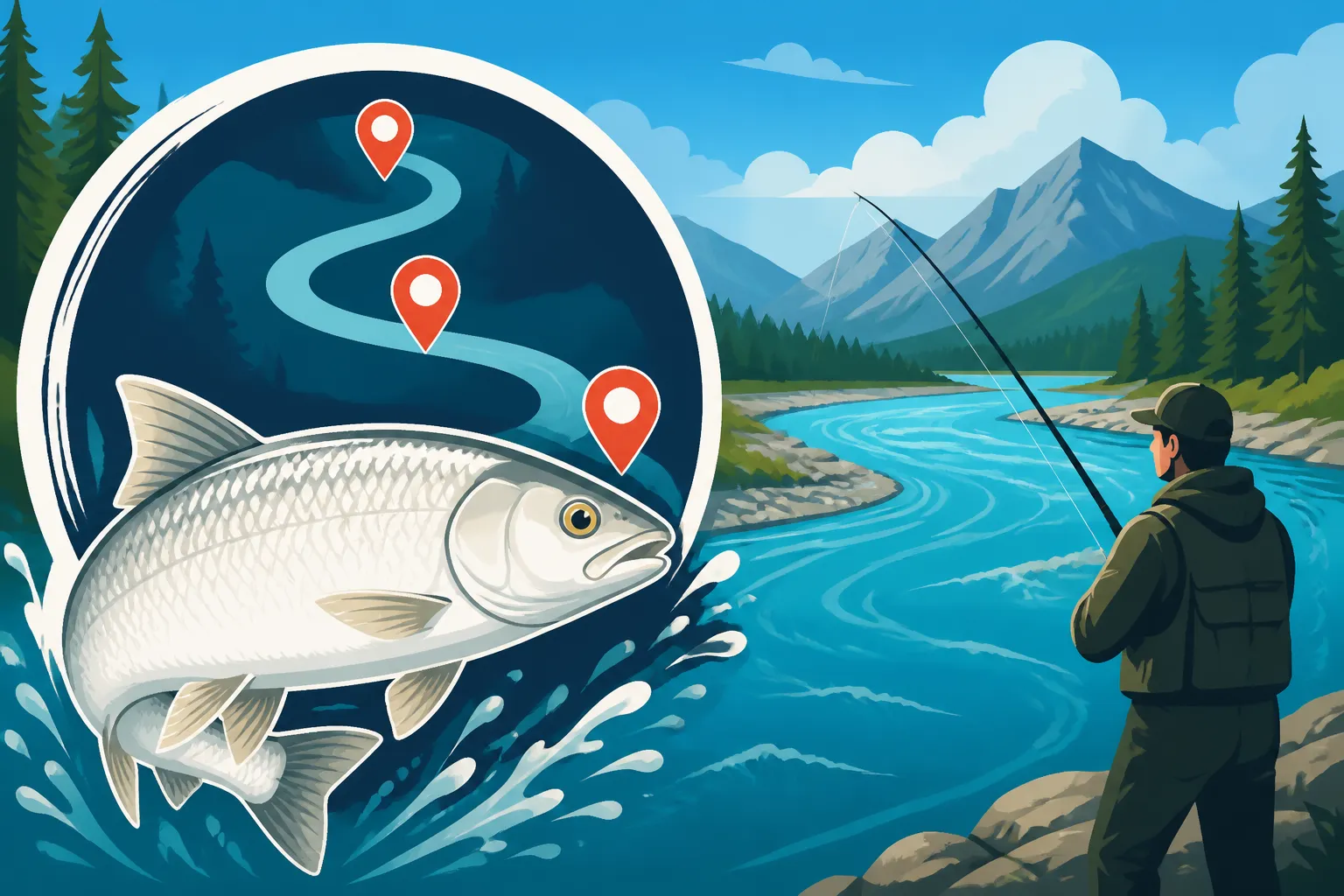
Mountain whitefish (Prosopium williamsoni) are characterized by their sleek, silvery bodies, a small, trout-like mouth, and relatively large scales. They have an adipose fin, just like trout and salmon, which can sometimes lead to misidentification. Their mouth is subterminal (it's located on the underside of their head), which is perfect for sifting through river bottoms for insects. They rarely exceed 2-3 pounds in the Athabasca, though larger specimens are certainly out there. In contrast, lake whitefish are typically deeper-bodied, have a smaller mouth, and are found in the lakes and larger, slower river sections further downstream. For a deeper dive, check out our guide on Rocky Mountain Whitefish vs Lake Whitefish Identification If you're keen to learn more about the species itself, our article on Mountain Whitefish in Alberta Rivers.
Seasonal Movements and Feeding Patterns
Mountain whitefish are creatures of current. They thrive in clean, well-oxygenated water with gravel or cobble bottoms where aquatic insects abound. Their primary diet consists of nymphs, larvae, and small crustaceans, which they opportunistically snatch from the drift or pick off the riverbed.
- Spring (Post-Runoff): After the initial spring runoff subsides, usually by late May or early June, whitefish become very active. They'll spread out through the river, focusing on feeding in moderately flowing runs, riffles, and behind current breaks. The water might still be a bit cloudy, so slightly larger or brighter patterns can be effective.
- Summer: As water levels drop and clarity improves, whitefish will concentrate in deeper runs, pools, and current seams. They become more selective feeders, keying in on specific insect hatches. Early mornings and evenings are often the most productive times.
- Fall: This is arguably the best time to target Athabasca whitefish. They feed aggressively to bulk up for winter, and their spawning season often takes place in late fall. They can be found in large schools, often staging in deeper pools and runs before moving to gravelly spawning beds. Water temperatures are ideal, and insect activity can be quite high.
- Winter (Ice-Free Sections): While much of the Athabasca freezes, certain sections with strong current or geothermal influence may remain open. Whitefish will school up in deep, slow pools, often near current breaks, where they can conserve energy. Ice fishing isn't common for whitefish on the main Athabasca River, but open-water fishing in winter can be productive if you find them. To understand general timing, consult our Alberta Fishing Seasons by Zone and Month.
Prime Whitefish Locations on the Athabasca River
The Athabasca River is long, originating in Jasper National Park and flowing northeast through Alberta before emptying into Lake Athabasca. Whitefish are present throughout much of its length, but certain sections offer better access and higher concentrations.
Key Sections Near Jasper and Hinton
The upper Athabasca River, particularly within and just outside Jasper National Park, offers some of the most pristine and picturesque whitefish angling. This stretch is characterized by clearer, colder water and a more dramatic mountain backdrop.
- Jasper National Park: While fishing regulations within the park are unique and often more restrictive (e.g., specific lure restrictions, catch-and-release only in many areas), the Athabasca River here holds healthy populations of whitefish. Look for long, gravelly runs, especially those with consistent, moderate current. Popular access points near Jasper townsite, like those accessible from Highway 16, can be productive. Remember to always consult the Alberta Fishing Regulations Explained, and specifically the park regulations, before casting a line.
- Hinton Area: As the Athabasca leaves Jasper National Park and approaches Hinton, it begins to pick up a bit more size and a slightly different character. This area is known for excellent bank access and a mix of riffles, runs, and deeper pools. The sections around the Old Entrance B&B or the Hinton Golf Club often provide good opportunities. Many anglers find success float fishing or wading in this stretch. When planning your trip, you might find booking a local guide helpful. Services like FishingBooker can help you connect with experienced outfitters in the Hinton area who specialize in Athabasca River fishing and can put you right on the fish. They know the subtle nuances of the river's flow and where whitefish tend to stack up.
Exploring Mid-River Stretches Towards Whitecourt
Moving downstream from Hinton, the Athabasca widens and becomes less mountainous, transitioning into more forested and agricultural landscapes. This mid-river section still offers fantastic whitefish opportunities, often with less angling pressure than the upper reaches.
- Between Hinton and Whitecourt: This lengthy stretch of river is less fished but can be incredibly rewarding for those willing to explore. Access here is often through Crown land or by seeking permission from private landowners. Focus on areas where the river features prominent gravel bars, deeper scour holes on the outside bends, and long, consistent runs. The confluence areas with tributaries like the McLeod River can be particularly productive, as these confluences often concentrate baitfish and insects, drawing in whitefish. Drifting in a boat or even a sturdy kayak can be an excellent way to cover water and find active fish in this section. Our guide on Best Kayaks for Alberta Fishing might offer some ideas for suitable watercraft.
- Whitecourt Area: Around Whitecourt, the river becomes even wider. Public access points and boat launches become more common. The river here tends to have more distinct deep pools and slower runs interspersed with gravelly stretches. The areas near town bridges or where smaller creeks enter can be hot spots. Whitefish in this section might be slightly larger on average due to the increased food availability and slightly slower current allowing for more growth. Identifying optimal fishing access is key here, and our article on Best fishing access on the Athabasca River will provide more detailed entry points.
Downstream Opportunities Near Fort McMurray
Further downstream, as the Athabasca flows north towards Fort McMurray and beyond, it takes on an even broader, more powerful character. While lake whitefish become more common in the lower reaches and Lake Athabasca itself, mountain whitefish can still be found in the Athabasca River proper, particularly in sections with good current and suitable substrate.
- Fort McMurray Vicinity: Around Fort McMurray, the river is significantly larger. Fishing here often requires a boat to effectively cover water. Look for whitefish in areas with strong current seams, below rapids, or in the calmer waters adjacent to fast-moving channels. The deep bends and the mouths of larger tributaries further north can also hold good numbers. While the focus here often shifts to pike and walleye, whitefish are still a viable target, particularly in cooler water periods.
- Lower Athabasca & Delta: As the river approaches the Athabasca Delta and Lake Athabasca, the water slows considerably, and the habitat changes. While whitefish are abundant in Lake Athabasca, the species composition in the very lower river starts to shift more towards lake whitefish. However, don't discount the possibility of finding mountain whitefish in the last remaining stretches of consistent current. If you're looking for a more comprehensive resource, the Reading the Alberta Guide to Sportfishing Regulations is an invaluable tool for understanding zone-specific rules.
Effective Techniques for Athabasca Whitefish
Mountain whitefish can be incredibly selective, making them a fun challenge for anglers. While they will sometimes hit aggressively, more often than not, a subtle presentation is key.
Fly Fishing Strategies for Clear Runs
Fly fishing is one of the most effective and enjoyable ways to target Athabasca River whitefish, especially in the clearer upper and mid-river sections. Their diet consists primarily of aquatic insects, making fly patterns a natural choice.
- Nymphing: This is often the most productive fly fishing method for whitefish. Whitefish spend most of their time feeding on insect nymphs drifting near the river bottom. A dead-drift presentation with weighted nymph patterns is crucial. Use a strike indicator to detect subtle takes and ensure your flies are getting down deep enough. Patterns like Prince Nymphs, Hare's Ears, Pheasant Tails, and any local stonefly or caddisfly imitations in sizes #12-18 are usually excellent choices. For more specific insights, check out Best Techniques for Whitefish on Fly.
- Dry Fly Fishing: While less common than nymphing, whitefish will readily rise to dry flies during a hatch, especially in calm eddies or slower runs. Look for consistent surface activity, and then match the hatch with appropriate patterns. Small caddis, mayflies, or ant patterns can be very effective. This can be some of the most exciting whitefish fishing.
- Streamer Fishing: Sometimes, whitefish will take small streamers, particularly if they are aggressively feeding on baitfish or larger aquatic insects. Small Sculpin patterns or Woolly Buggers in black, olive, or brown can sometimes entice a strike, especially when swung through deeper runs.
Spin Fishing with Light Tackle
Spin fishing can be just as effective for whitefish, especially for those who prefer conventional gear or when conditions (like higher, murkier water) make fly fishing difficult. The key is using light tackle and presenting small baits or lures naturally.
- Bottom Bouncing/Drifting Bait: This technique mimics a naturally drifting nymph or small organism. Use a light spinning rod with a sensitive tip. A small split shot or bottom-bouncing rig with a single hook baited with a piece of worm, a maggot, or even a small PowerBait worm can be deadly. Cast upstream and let your bait drift naturally along the bottom, keeping just enough tension to feel subtle bumps.
- Micro Jigs and Small Spinners: Tiny jigs, often used for panfish, can be incredibly effective for whitefish. Jigs tipped with a small piece of worm or scented plastic work well. Also, small inline spinners (like Mepps Aglias or Panther Martins) in sizes #00 to #1, retrieved slowly near the bottom, can trigger strikes. Metallic colors like silver or gold, or natural patterns, are good starting points. The trick is to fish them slowly and maintain contact with the bottom.
- Float Fishing: Using a small float or bobber to suspend a small jig or bait just off the bottom in a current can be very effective, especially in runs where you want to keep your offering in the strike zone for longer. Cast upstream and let the float drift naturally downstream, reeling in slack as needed.
Essential Gear and Tackle Recommendations
Having the right gear makes all the difference when targeting whitefish on the Athabasca.
- Rods and Reels: For fly fishing, a 3 to 5-weight rod, 8.5 to 9 feet long, paired with a matching reel and floating line, is ideal. For spin fishing, a light to ultralight spinning rod (6 to 7 feet long) with a fast action tip and a small spinning reel spooled with 4-6 lb monofilament or fluorocarbon line will provide the sensitivity needed to detect those light whitefish bites.
- Line and Leaders: For fly fishing, a 9-foot tapered leader ending in 3x to 5x tippet is standard. For spin fishing, a fluorocarbon leader (4-6 lb test, 18-24 inches long) tied to your main line can help with stealth in clear water.
- Waders and Wading Boots: Many of the best whitefish spots on the Athabasca require wading. Good quality breathable waders and sturdy wading boots with felt or rubber soles (check local regulations for felt sole use, as they can sometimes spread invasive species) are essential for comfort and safety.
- Net: A small, soft-mesh landing net is recommended for safely landing and releasing fish, especially if you're practicing catch and release.
- Other Essentials: Polarized sunglasses are invaluable for spotting fish and reading water. A good pair of pliers for hook removal, a small tackle bag or fly vest to keep your gear organized, and appropriate layered clothing for Alberta's variable weather are also crucial.
Planning Your Athabasca Whitefish Adventure
A successful fishing trip isn't just about knowing where to go and what to use; it's also about understanding the logistics and legalities.
Navigating Access Points and Public Land
The Athabasca River offers a variety of access points, from formal boat launches to more remote walk-in areas.
- Public Access Points: In larger communities like Hinton and Whitecourt, you'll find designated public access points and boat launches. These are great starting points, especially if you plan to use a boat or simply want easy bank access. Always be mindful of private property and respect landowners.
- Crown Land: Much of the Athabasca River flows through Crown land, which is generally accessible to the public for recreational use. However, always confirm land ownership before venturing into unfamiliar areas. Maps and GPS devices are invaluable for navigating Crown land. Apps like iHunter Alberta can overlay land ownership maps onto satellite imagery, helping you identify public access points and avoid trespassing.
- Guided Trips: If you're new to the Athabasca or want to maximize your chances of success, hiring a local guide is an excellent option. Guides know the river intimately, have access to prime spots, and can provide all the necessary gear and expertise. You can find reputable guides specializing in Athabasca River whitefish through platforms like FishingBooker, which lists local charter services and guides in the area, offering a convenient way to plan a hassle-free fishing day.
Essential Regulations and Licensing
Fishing in Alberta requires adherence to specific regulations, which are designed to protect fish populations and ensure sustainable angling for everyone.
- Alberta Fishing License: Everyone over the age of 16 (and under 65, unless exempted) needs an Alberta fishing license to fish in the province. This includes residents and non-residents. You can purchase your license online through the MyWildAlberta portal or from authorized vendors. Our Alberta Fishing License Guide for 2026 with you at all times while fishing.
- Zone Regulations: The Athabasca River spans multiple management zones, and regulations can vary significantly from one section to another. Always consult the current year's Alberta Guide to Sportfishing Regulations for zone-specific rules regarding season dates, bait restrictions, and bag limits. For example, some sections might be catch-and-release only for certain species, or have specific gear restrictions.
- Bull Trout Zero Possession: While whitefish are your target, it's vital to be aware that bull trout, a threatened species, inhabit some of the same waters, especially in the upper Athabasca. If you accidentally catch a bull trout, you must release it immediately and unharmed, as there is a province-wide zero possession limit for this species. Be sure you know the difference in appearance between whitefish and bull trout, especially smaller ones.
- Conservation: Practice responsible angling. Handle fish gently, especially those you intend to release. Consider using barbless hooks, which make release easier and less harmful to the fish. Take out everything you bring in, and leave no trace of your visit.
Disclaimer
Please note that fishing conditions and regulations can change rapidly. Always consult the official Alberta Guide to Sportfishing Regulations before heading out on any fishing trip. Information provided here is for general guidance only. Personal safety is paramount; exercise caution when wading in rivers, be aware of wildlife, and inform someone of your fishing plans.