Alberta bull trout catch and release requirement
It’s a scenario many Alberta anglers dread: you’ve hooked into a beautiful, powerful fish, only to realize it might be a bull trout, a species under strict catch-and-release rules. The pressure to identify it correctly and release it safely can feel immense, especially when you’re just trying to enjoy a day on the water. This comprehensive guide is here to demystify the essential Alberta bull trout catch and release requirement, helping you understand the rules, identify these magnificent fish, and ensure their safe return to the water, keeping both the fish and your fishing privileges secure.
Understanding Alberta's Bull Trout Catch and Release Mandate
For many years now, bull trout in Alberta have been managed under a strict catch-and-release policy. This isn't just a suggestion; it's a critical regulation designed to protect a species that has faced significant challenges. Anglers often wonder why these specific rules are in place, especially when other trout species might have different regulations. The truth is, bull trout are special, and their conservation is paramount to maintaining the health of our aquatic ecosystems.
The Conservation Imperative for Bull Trout
Bull trout, once widespread across Alberta's cold, pristine waters, are now considered a "Threatened" species under Alberta's Wildlife Act. They require very specific habitats: cold, clean water, complex stream structures, and undisturbed spawning grounds. Unfortunately, human activities like habitat degradation, pollution, and historical overfishing have taken a heavy toll on their populations. The Alberta Bull Trout Zero Possession Rule was put in place to give these native fish a fighting chance to recover.
Think of it this way: every bull trout that survives to spawn contributes to the future of the species. When you're fishing in a river like the Bow or the Crowsnest, you might encounter other trout species that are more abundant, but the bull trout's numbers are still precarious. This strict catch-and-release mandate is a critical pillar of their recovery strategy, aiming to increase their breeding populations and expand their native range. It's a long game, but it’s one that dedicated anglers are vital partners in. Understanding the ecological pressure on these fish helps put the strictness of the regulations into perspective. This isn't about making fishing harder; it's about protecting a vital part of Alberta's natural heritage.
What "Zero Possession" Truly Entails
The term "zero possession" is as absolute as it sounds. It means that if you catch a bull trout, you absolutely cannot keep it, harvest it, or transport it. It must be immediately released back into the water where it was caught. This isn't just about not putting it in your cooler; it means not removing it from the water for extended photos, not putting it on a stringer, and definitely not taking it home.
The Alberta Fishing Regulations Explained document, which you should always carry (or have readily accessible on your phone), clearly outlines this. Many anglers find this rule particularly challenging because bull trout are often large, beautiful fish, making them tempting to hold up for a quick photo. However, even a short period out of the water, especially in warm conditions, can be incredibly stressful and even fatal for the fish. Imagine being held underwater; it’s a similar stress for a fish out of its element. The rule is designed to minimize any interaction that could jeopardize the fish's survival post-release. This also extends to catch limits; while some species have daily bag limits, for bull trout, the limit is always zero, regardless of the zone or time of year. If you're ever unsure if Is Keeping a Bull Trout Ever Legal in Alberta?, the answer is almost universally no.
Identifying Bull Trout Versus Other Species
One of the biggest anxieties for anglers is accidentally mistaking a bull trout for another species and inadvertently breaking the rules. Alberta's waters are home to a variety of trout, and some can look quite similar, especially to the untrained eye. Getting it right is not only crucial for compliance but also for peace of mind.
Key Physical Characteristics to Look For
Bull trout have several distinct features that set them apart, and knowing these can save you a lot of headache (and potential fines). Here’s what to focus on:
- Spots: Bull trout have light spots (yellow, orange, or reddish) on a darker body. This is a critical distinction, as most other trout species have dark spots on a lighter body. These spots are usually larger than the pupil of the eye.
- Dorsal Fin: They lack the distinct dark spots on the dorsal fin (the top fin) that you'd typically see on species like rainbow or brown trout.
- Head and Mouth: Bull trout have a proportionally large, broad, and flattened head. Their mouth extends well beyond the back of the eye, giving them a predatory appearance.
- Pectoral and Pelvic Fins: The leading edges of their lower fins (pectoral, pelvic, and anal) often have a whitish or cream-colored strip, followed by a darker, sometimes reddish, margin.
- No Red Slash: Unlike cutthroat trout, bull trout do not have the distinctive red or orange "slash" mark under their jaw.
It's helpful to have a visual reference, perhaps a laminated card or an app, that you can quickly consult. Getting familiar with these features is the best defense against misidentification.
Distinguishing Bull Trout from Similar Species
The most common mix-ups often happen with lake trout, brook trout, and sometimes even brown trout. Knowing the subtle differences is key:
- Bull Trout vs. Lake Trout: This is probably the most frequent point of confusion. Both are char, not true trout, and both can be found in similar cold waters. However, lake trout typically have smaller, worm-like markings (vermiculations) on their backs, and their caudal (tail) fin is deeply forked. Bull trout have a less-forked, squarer tail and that characteristic light-on-dark spotting, with no vermiculations. The article on How to tell a bull trout from a lake trout goes into even greater detail, and it’s a must-read for any Alberta angler.
- Bull Trout vs. Brook Trout: Brook trout, while also a char, rarely grow as large as bull trout. They have distinct red spots with blue halos along their sides, and their dorsal and caudal fins are heavily mottled or worm-like. Their leading fin edges are typically more vibrant white. Bull trout lack these red spots and heavy fin mottling.
- Bull Trout vs. Brown Trout: Brown trout have dark spots (and sometimes red spots with light halos) on a lighter body, the opposite of bull trout. Brown trout also have a much smaller head relative to their body size compared to a bull trout.
Here’s a quick comparison table to help differentiate:
| Feature | Bull Trout | Lake Trout | Brook Trout | Brown Trout |
|---|---|---|---|---|
| Body Spots | Light (yellow/orange) on dark body | Light (white/yellow) on dark body, vermiculations on back | Red spots with blue halos, some dark | Dark spots, some red with light halos |
| Dorsal Fin | No spots | Mottled/vermiculated | Heavily mottled/worm-like | Distinct dark spots |
| Tail Fin | Slightly forked to square | Deeply forked | Slightly forked to square | Slightly forked |
| Head Shape | Large, broad, flattened | More pointed, less broad | Smaller, more streamlined | Relatively smaller, conical |
| Mouth Extends | Well beyond eye | To or slightly beyond eye | To or slightly beyond eye | To or slightly beyond eye |
| Lower Fins | Whitish leading edge, dark/red margin | Less distinct coloration | Vibrant white leading edge | Less distinct coloration |
Remember, when in doubt, it’s always best to err on the side of caution and release the fish immediately and gently.
Best Practices for Safe Bull Trout Release
Catch-and-release is only effective if the fish actually survives the encounter. For a sensitive species like the bull trout, proper handling is not just good sportsmanship, it’s a conservation imperative outlined in the regulations. The goal is to minimize stress and physical harm, giving the fish the best possible chance of recovery. The guide on How to Catch Bull Trout and Release Them Safely provides an excellent foundation for these techniques.
The Importance of Proper Handling Techniques
Imagine the stress a fish goes through when hooked and fought. It's a sprint for survival, and by the time you bring it to hand (or net), it's exhausted. How you handle it in those critical moments can dictate its fate.
- Keep them Wet: The absolute golden rule. Try to keep the fish in the water as much as possible. If you must remove it for a quick, essential unhooking, do so for mere seconds. Their slime coat, vital for protection against disease, can be easily damaged by dry hands or contact with rough surfaces. Always wet your hands before touching the fish.
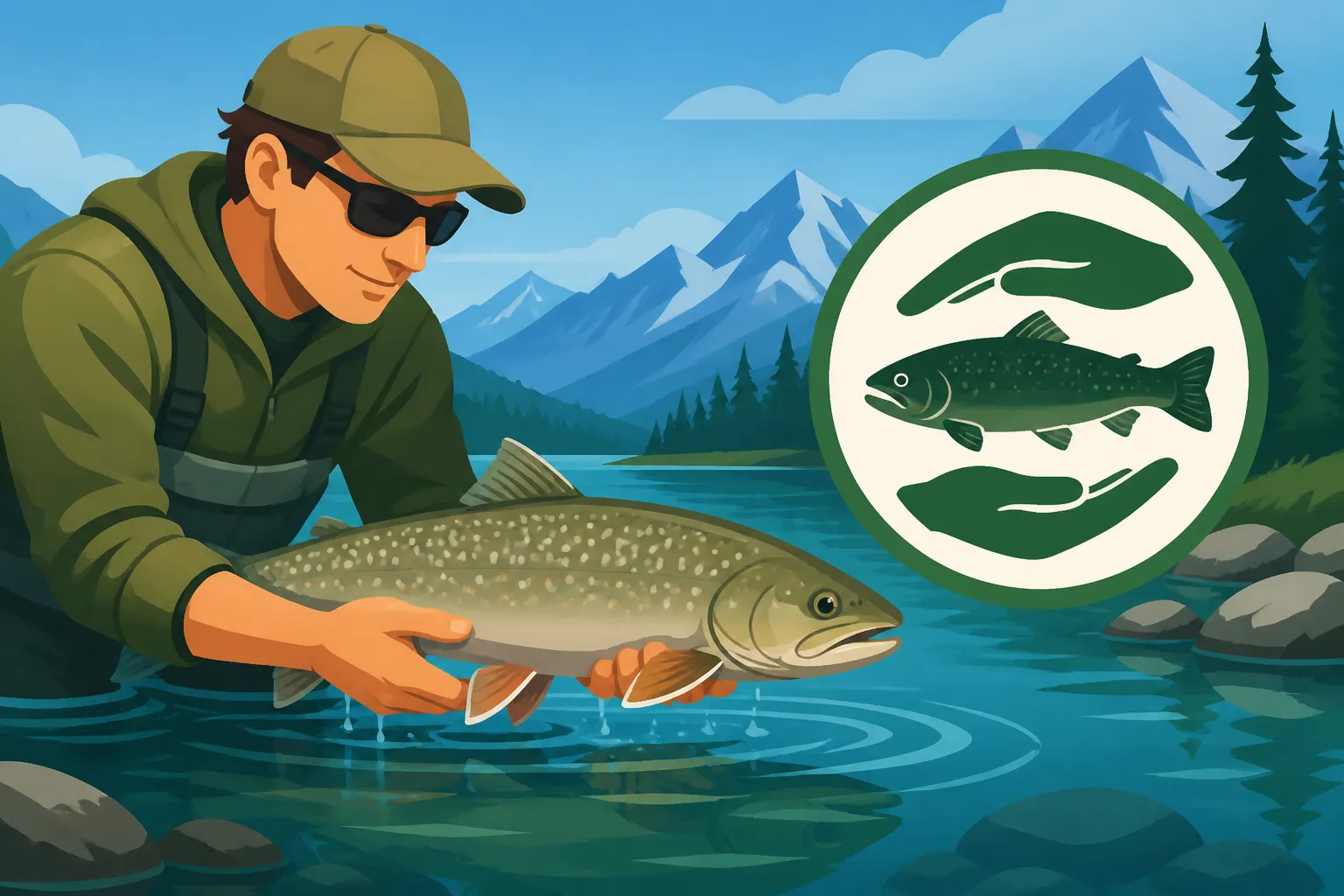
- Support Their Weight: Never hold a fish by its jaw vertically, especially larger ones. This can dislocate its jaw or damage internal organs. Support the fish horizontally with one hand under its belly and the other gently gripping the tail, allowing its weight to be evenly distributed.
- Minimize Stress: Avoid excessive squeezing or rough handling. If the fish is thrashing, keep it in the water until it calms down. A stressed fish is more susceptible to predation and disease post-release.
Many anglers find that having the right tools makes all the difference. Specialized long-nosed pliers or hemostats can allow you to reach hooks without even taking the fish out of the water. You can find a good quality pair of fishing pliers and forceps on Amazon that are specifically designed for quick and safe hook removal.
Essential Gear for Responsible Release
Having the right gear isn't just about catching fish; it's equally important for releasing them. Equipping yourself properly can make a significant difference in a bull trout's survival.
- Barbless Hooks: This is not optional in many Alberta waters, and it's always highly recommended when targeting species like bull trout. Alberta Barbless Hook Requirement Waters often include prime trout streams. Barbless hooks greatly reduce tissue damage and make hook removal quick and easy. You can either buy barbless hooks or simply crimp down the barb on your existing hooks with a pair of pliers.
- Rubberized Landing Net: A net with soft, knotless, rubberized mesh is far superior to traditional knotted nylon nets. The rubber protects the fish's delicate slime coat, fins, and scales, reducing injury and entanglement. Look for a large enough net to comfortably cradle the fish. A good Best Landing Net for Trout or Best Landing Net mesh for catch and release will prioritize fish safety. You can easily find various sizes and styles of rubberized nets on Amazon to suit your fishing needs.
- Hook Removal Tools: Long-nosed pliers, forceps, or a specialized de-hooker are indispensable. These tools allow you to quickly and safely remove hooks, especially if they're embedded deeply, without putting your fingers at risk or unduly stressing the fish.
- Line Cutters: In a worst-case scenario where a hook is swallowed and impossible to remove without causing severe harm, having sharp line cutters allows you to snip the line as close to the hook as possible. This is a last resort, but it gives the fish a better chance than trying to rip out a deeply embedded hook.
What to Do in Challenging Situations
Sometimes, despite your best efforts, things don't go perfectly. Knowing how to react in these tough situations is crucial.
- Deeply Hooked Fish: If the bull trout is deeply hooked in the gills or throat and you cannot remove the hook easily without causing significant trauma, it's generally best to cut the line as close to the hook as possible. Research suggests that a fish has a better chance of survival with a hook dissolving in its gut than with severe damage from attempted removal.
- Exhausted Fish: After a long fight, a bull trout can be extremely exhausted. When releasing it, hold the fish gently upright in the water, facing into a mild current. Gently move it back and forth to push water over its gills, essentially performing CPR. Do not release it until it can swim away under its own power. It might take several minutes. Ensure its head is downcurrent, allowing water to flow naturally over its gills.
- Uncertain Identification: If you are genuinely unsure whether the fish you've caught is a bull trout or another species, always default to the most conservative approach: assume it's a bull trout and release it immediately and carefully using the catch-and-release protocols. It’s far better to release a legal fish than to accidentally keep an illegal one.
Penalties and Enforcement for Non-Compliance
Let's be blunt: fishing regulations in Alberta are taken very seriously, especially when it comes to protected species like bull trout. Ignoring the catch-and-release mandate isn't just a minor infraction; it can lead to severe penalties that no angler wants to face.
Understanding the Legal Ramifications
The Alberta Guide to Sportfishing Regulations is not just a suggestion book; it's a legal document. Contravention of these rules, particularly regarding species like bull trout, can result in significant fines and even loss of fishing privileges. Fishing Without a License in Alberta: Penalties are substantial, but those for species violations can be even steeper.
Fines for possessing a bull trout can run into the thousands of dollars. Fisheries officers are trained and diligent. They patrol rivers and lakes, check anglers' catches, and are very adept at identifying species. It’s not uncommon for officers to be present at popular fishing spots on rivers known to hold bull trout, like sections of the Crowsnest River or Oldman River. Imagine being caught with a bull trout in your cooler after a fantastic day of fishing; that excitement will quickly turn into regret. Beyond monetary fines, a conviction could lead to a suspension of your fishing license, meaning you won’t be able to enjoy your favourite pastime for a specific period, sometimes even years. This is a common consequence for serious violations.
Avoiding Accidental Infractions
The best way to avoid penalties is, of course, to know the rules and follow them diligently. However, accidents and misidentifications can happen. Here's how to minimize your risk:
- Study the Regulations: Before every fishing trip, especially if you're venturing to new waters or targeting new species, refresh your knowledge of the current Alberta Fishing Regulations Explained. Regulations can change annually, so what was legal last year might not be this year.
- Master Identification: Spend time learning the distinguishing features of all fish species in the waters you plan to fish, particularly those with special regulations. Use field guides, online resources, and even watch videos. The more confident you are in identification, the less likely you are to make a mistake under pressure.
- Practice Catch and Release: Even when targeting species you can keep, practicing proper catch and release techniques for all fish helps build good habits. This way, if you do hook a bull trout, the release process is second nature.
- Be Honest and Cooperative: If a Fisheries officer approaches you, be polite, cooperative, and honest. They are there to protect the resource and ensure fair angling for everyone. Trying to hide something or being evasive will only make a bad situation worse. If you genuinely make an accidental mistake and immediately correct it (e.g., realize you misidentified and release the fish immediately and safely), it shows good intent.
Remember, the regulations are in place for a reason. Bull trout are a precious natural resource, and their survival depends on all of us being responsible stewards. By understanding and adhering to the catch and release requirement, you're not just avoiding a fine; you're actively contributing to the conservation of one of Alberta's most iconic native fish.
Disclaimer
The information provided in this guide is for general informational purposes only and does not constitute legal advice. Fishing regulations in Alberta are subject to change. Always consult the most current official Alberta Guide to Sportfishing Regulations before heading out on the water. Following all provincial and federal laws is the responsibility of the individual angler.